Floating and Sinking Fish Food Pellet Extruder: Models and Processing Steps
Leave a message
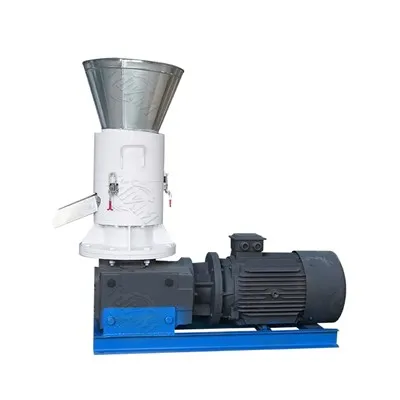
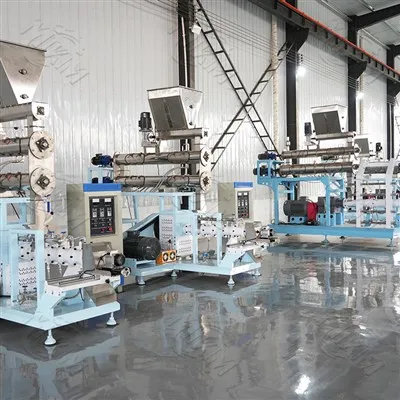
This floating and sinking fish food pellet processing machine is a complete extruder-based feed production unit for pet, aquatic and animal feed. Corn, soybean or soybean cake, and animal by-products are used as the base raw materials, and the finished pellets are shaped by a die and cut to length at the outlet.
Machine Overview and Working Principle
Pellet feed expansion equipment combines cooking and shaping in one continuous pass. Material is mixed with water, fed into the barrel, cooked by mechanical shear and steam, and forced through a die. At the outlet a rotary cutting device with variable-frequency speed regulation controls cutting speed and pellet length, and blade rotation speed can be changed while the machine is running.
Because the die can be replaced, pellet diameter and cross-section can be changed to suit different animals, including small ornamental fish pellets and larger pellets for farmed species. The machine is used by research institutes, small and medium-sized feed companies and professional farmers, and it handles both floating and sinking products.
Pellets produced on this equipment have a neat, smooth surface and float on the water surface for more than 12 hours in still water, which limits leaching of nutrients into the pond and helps keep the water cleaner. The sterilising effect of the extrusion process also supports better fish health, and producing feed on site with the same formula is commonly reported to cost 60%-80% less than buying finished expanded feed.
Model Range and Technical Parameters
| Parameter | DGP-100 | DGP-120 | DGP-135 | DGP-160 | DGP-200 |
|---|---|---|---|---|---|
| Capacity (kg/h) | 500 | 600-700 | 800-900 | 1000-1200 | 1800-2000 |
| Main motor (kW) | 37 | 55 | 75 | 90 | 132 |
| Feeder motor (kW) | 1.5 | 1.5 | 1.5 | 2.2 | 3 |
| Cutter motor (kW) | 1.5 | 1.5 | 2.2 | 2.2 | 3 |
| Screw diameter (mm) | 100 | 120 | 135 | 160 | 200 |
| Machine size (m) | 2.0 x 2.8 x 1.2 | 2.2 x 2.9 x 1.2 | 2.2 x 3.1 x 1.37 | 2.3 x 3.15 x 1.38 | 2.35 x 3.45 x 1.65 |
| Weight (kg) | 1500 | 1800 | 2000 | 2500 | 3200 |
Screw diameter sets the throughput that the barrel can carry, so the model should be chosen from the target hourly output rather than from the main motor rating alone. The smallest unit in the range starts at 500 kg/h and the largest reaches 1800-2000 kg/h.
Operating Sequence from Mixing to Seasoning
Fill the flour mixer with the raw ingredients and the water needed for the formula, then stir them thoroughly and quickly.
Transfer the mixed material to the extruder and press it into feed pellets through the die.
Move the expanded pellets to the dryer and complete the drying operation so the moisture content is stabilised.
Load the dry pellets into the seasoning drum and roll them with the required amount of oil or seasoning.
Discharge the finished pellets from the seasoning machine once the cycle is complete.
Cutting blade speed is set before the batch starts and trimmed while running, because it controls pellet length and, together with screw speed, the surface finish of the product. Keeping the feed into the barrel steady is what keeps the cut length consistent.
Floating Pellets versus Sinking Pellets
Floating pellets are produced with a high degree of expansion, so they are light and stay at the surface where surface-feeding fish take them. Sinking pellets are produced with reduced expansion and a denser structure so that they fall through the water column and reach bottom feeders, shrimps and other species that feed near the pond bed.
On the same machine the change is made through process settings: moisture and temperature in the barrel, screw and cutter speed, and the die pattern. A slow-sinking product is the intermediate setting between the two, useful when a farm stocks several species in one pond.
Applications Across Pet, Aquatic and Animal Feed
Pet food: rabbit food, puppy food, dog food, cat food, fox food and cat litter pellets
Aquatic feed: fishing bait pellets, frog feed, turtle food, floating and sinking pellets for ornamental fish and farmed species
Animal feed: puffed maize and soybean straw pellets, cattle and sheep feed
Bird food: parrot training treats and pellets in various sizes
Frequently Asked Questions
Q: What raw materials can be processed?
Corn, soybean or soybean cake and animal by-products are the main materials, and the formula can be adjusted for the target species.
Q: How is pellet length controlled?
A rotary cutting device at the outlet runs with variable-frequency speed regulation, so blade speed and therefore pellet length can be changed freely.
Q: Can the machine make both floating and sinking feed?
Yes. Expansion is set through formula, moisture and process parameters, so the same unit produces floating, slow-sinking and sinking pellets.
Q: Which model suits a small or medium feed plant?
The DGP-100 and DGP-120 cover 500-700 kg/h, while the DGP-160 and DGP-200 reach 1000-2000 kg/h for larger plants.
Q: What is the advantage of producing feed on site?
Using the same formula, self-made expanded feed is commonly reported to cost 60%-80% less than buying finished expanded feed, and the supply does not depend on outside deliveries.
Q: Is the extruded pellet easy on pond water?
Pellets that stay afloat for more than 12 hours and keep a firm surface release less material into the water, which supports cleaner ponds and better fish health.