How does a diesel fish feed pellet maker differ from an electric fish food pellet machine?
Leave a message
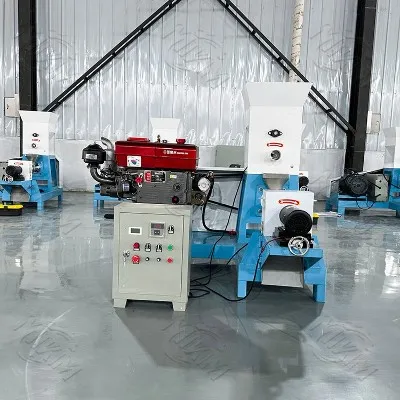
Environmental adaptability varies across multiple dimensions. Regarding temperature adaptability, diesel pellet mills, with their engine preheating devices, can start normally in temperatures as low as -20°C, while the motor windings of electric floating fish feed processing machines are prone to insulation degradation at low temperatures, leading to starting difficulties and increased failure rates. In terms of humidity and dust adaptability, diesel pellet mills have better mechanical sealing, making them more resistant to interference in damp fishponds or dusty feed workshops; the motor terminals and control systems of electric extruders are more susceptible to dust and moisture, requiring additional dust- and moisture-proof facilities, increasing operating costs. A field test at a Fujian aquaculture farm showed that diesel fish feed pellet processing operated without problems during the rainy season, while the electric extruder experienced shutdowns and repairs due to moisture entering the motor, resulting in losses exceeding 5,000 yuan.
The differences in operational threshold and maintenance difficulty are significant. Operating a diesel floating fish feed pellet making machine is relatively simple. Operators can master core skills such as throttle adjustment, raw material ratio, and daily cleaning after 1-2 days of training. Maintenance mainly involves basic tasks such as diesel refueling and filter replacement, requiring no specialized technical background. Operating an electric fish feed pellet machine involves complex procedures such as motor starting, inverter parameter settings, and temperature control system regulation. It requires professional personnel for equipment debugging and maintenance, and improper operation can easily lead to motor burnout or fluctuations in feed quality. A grassroots aquaculture cooperative reported that the training cost for diesel-powered operators is 60% lower than that for electric-powered operators, and the equipment failure rate is also lower.
Mobility and site requirements differ. Most diesel small fish feed machines are designed to be mobile, equipped with wheels and towing devices, allowing for flexible relocation based on changes in the aquaculture site, making them particularly suitable for multi-pond, dispersed aquaculture scenarios. Electric floating fish feed pellet machines, relying on fixed power lines, have poor mobility and require a dedicated production site, resulting in higher site construction costs. These differences indicate that diesel pellet machines are more suitable for small and medium-sized farmers with limited skills and dispersed aquaculture sites, while electric pellet machines are more suitable for large-scale production entities with professional technology and fixed sites.
Related equipment


about Us
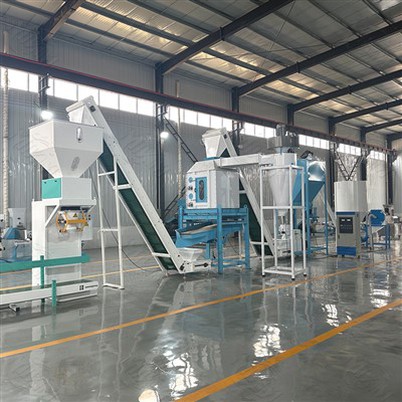
MIKIM's fish feed pellet production lines and supporting machinery offer excellent value for money. Not only are they affordable, eliminating middlemen markups and allowing small and medium-sized enterprises (SMEs) and fish farmers to purchase complete sets of equipment at reasonable costs, but they also boast exceptional efficiency. The fully automated process, from raw material crushing and precise ingredient mixing to extrusion pelleting and maturation, is completed in one continuous flow. This results in high starch gelatinization rates and uniform pellet formation, significantly improving production efficiency and feed quality, truly achieving "low cost, high output." Choosing a MIKIM fish feed pellet production line means enjoying comprehensive pre-sales and after-sales service, including 24-hour online customer support, a one-year warranty on the entire machine, professional on-site installation, commissioning, and maintenance, and a stable supply of spare parts. Customers can buy with confidence and use with peace of mind, with both excellent value and service quality!
Customer visit

Certificate of Honor

FAQ
1. What is the price of the floating fish food extruder?
The price ranges from approximately $3,500-$55,000
2. Do you provide maintenance services for your customers?
Yes, we offer comprehensive after-sales maintenance services to our customers.
If you would like to learn more about MIKIM machinery, please contact us. We offer one-stop service and welcome your inquiries!!!