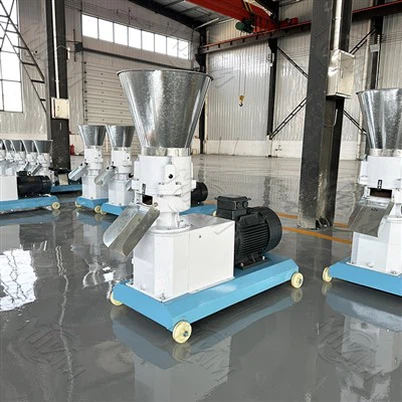
How to Operate a Dry Type Pet Food Extruder: Temperature, Screw Speed and Feed Control
Leave a message

Three Control Dimensions: Temperature, Screw Speed and Feed Rate
A dry type pet food extruder is not controlled by one knob. Barrel temperature, screw speed and feed rate interact, and any change to one shifts the other two. Temperature sets how far starch gelatinises and how much colour and aroma develop. Screw speed sets the mechanical energy pumped into the mash and therefore the viscosity and die pressure. Feed rate sets residence time and the load on the motor. The operating discipline is to change one variable at a time, wait for the barrel to stabilise, and record the effect.
Barrel Temperature Zones by Product Type
Temperature must be matched to the product, not to a single factory default. Kitten food is typically run at 120-130 C so that the starch gelatinisation rate stays above 90%, which supports digestion in young animals. Pet jerky snacks are run hotter, at 150-160 C, to develop the flavour and colour expected from the Maillard reaction. Dry kibble for adult dogs sits between those two extremes, and the exact set point depends on starch source, fat level and target bulk density.
| Product | Barrel temperature | Main target |
|---|---|---|
| Kitten food | 120-130 C | Starch gelatinisation rate above 90% |
| Pet jerky snacks | 150-160 C | Maillard flavour and surface colour |
| Adult dry kibble | 110-140 C | Cook, shape and set bulk density |
Independent Zone Control of the Barrel
The barrel is divided into zones, and each zone has its own heater and cooling circuit. The first zone is kept low, generally 60-90 C, so the mash is conveyed and pre-heated rather than cooked on the screw flights. Middle zones carry the bulk of the thermal work. The last zone and die head are trimmed to set the surface finish and control flashing at the die. A zone that is set too high locally will scorch material at the barrel wall while the screw core stays cool, producing dark specks that cannot be corrected downstream, so the temperature profile should rise smoothly along the barrel.
Screw Speed and Specific Mechanical Energy
Screw speed influences cook more than any other single variable. Raising speed increases shear, raises specific mechanical energy, reduces mash viscosity and lifts die pressure and product temperature. Because shear heating is generated inside the material, a speed increase can push the effective cook far beyond what the zone set points suggest. Practical practice is to select a base speed for the recipe, then trim it in small increments while watching motor load, die pressure and the appearance of the extrudate. When the recipe changes, reset the speed before touching the temperatures.
Feed Rate, Die Pressure and Steady State
Feed rate must track screw speed. Running the screw fast with a starved feed gives excessive shear and a scorched, low-density product; overfeeding floods the flights, raises torque and can stall the drive. Once the line is at steady state, the ammeter reading, die pressure and product temperature should each hold within a narrow band. If they are still drifting after ten minutes, the cause is usually inconsistent mash moisture or particle size in the bin rather than the extruder settings. Start-up follows a fixed sequence: heaters to set point, screw at minimum speed, feed on, then speed raised to production value. Shutdown reverses that order and the die is purged before the barrel cools, so material does not set hard inside the die.
Records, Safety and Analytical Checks
Every batch should be logged with barrel profile, screw speed, feed rate, motor current, die pressure and product temperature. Operators must be trained on the machine guarding, emergency stop and lock-out procedure; the electrical equipment of the line should comply with IEC 60204-1 and the risk assessment should follow ISO 12100:2010. Finished product is checked for moisture under ISO 6496:1999, crude protein by ISO 5983-1:2005 and crude fibre by ISO 6865:2000, with a food safety management system such as ISO 22000:2018 covering the plant.
Frequently Asked Questions
Q: Why does the product go darker when screw speed is raised?
A: Higher speed means more shear, more specific mechanical energy and a hotter mass inside the barrel, so the Maillard reaction runs further. Trim speed down or lower the last zone before adjusting the recipe.
Q: How is the starch gelatinisation rate checked?
A: By measuring the degree of cook on a sample, for example with a differential scanning calorimetry or enzymatic digestibility method. For kitten food a rate above 90% is the usual release target at a barrel temperature of 120-130 C.
Q: What causes surging at the die?
A: Starved feeding, inconsistent mash moisture, or a worn screw and sleeve. Check the feeder calibration first, then the moisture of the ground mash, then the screw and sleeve clearance.
Q: Is 150-160 C safe for all pet products?
A: No. That range suits jerky-style snacks where colour and flavour development are wanted. Diets carrying heat-sensitive vitamins or probiotics should run in the 90-100 C range instead.
Q: How long should the line be left to stabilise after a setting change?
A: Allow at least five to ten minutes. Barrel mass is large, so pressure and product temperature lag the controller set point; judging a change earlier leads to over-correction.