Things to note during feed pellet production
Leave a message
feed pellets Raw material pretreatment
1. Thoroughly clean and remove impurities
Select equipment based on impurity type: Use a vibrating screen for large impurities (weeds, stones), adjusting the screen mesh size accordingly (e.g., 8–10 mm for corn). Use a hammer mill for grains, straw, and hay.
Regular equipment maintenance: Check the vibrating screen mesh weekly for damage, remove metal impurities daily, and test magnetic field strength monthly to prevent equipment damage or harm to livestock.
2. Adjust particle size to meet requirements
Control particle size based on raw material type:
Energy feed (corn, sorghum): 0.8–2.0 mm (to ensure complete starch gelatinization)
Protein feed (soybean meal): 1.0–1.5 mm (to ensure protein digestibility)
Roughage (alfalfa, straw): 1.5–3.0 mm (to prevent loose pellets or rumen disorders)
Premix: 0.1–0.3 mm (to ensure even mixing)
Control temperature and moisture to prevent nutrient loss: Keep the temperature below 60°C during grinding to protect heat-sensitive nutrients such as vitamins, and adjust raw material moisture to 12–16% to prevent clumping or excessive dust.
livestock feed pellets Mixed stage
1. Mix ingredients in the correct sequence:
First, pre-mix trace additives (vitamins, minerals) with a small amount of carrier material (e.g., bran), then add the coarse and fine feed powders. This ensures even distribution of the trace components.
2. Prevent cross-contamination:
Before switching to a different type of feed (e.g., from dairy cattle feed to pig feed), thoroughly clean the mixer walls and discharge pipes to prevent residual ingredients from affecting the nutritional balance of the new formula.
feed granules Granulation process
1. Precise Conditioning Parameters
Temperature and moisture control: Maintain a temperature of 70–90°C and moisture content of 15–18%. Too low moisture makes pellets brittle, while too high moisture causes clogging. Use more steam for coarse feed and less steam for fine feed.
2. Equipment Compatibility and Maintenance
Die and roller matching: Select die hole diameter according to livestock type (e.g., 6 mm for calves, 8–12 mm for adult cattle).
Compression ratio: Use a high ratio of 1:8–1:10 for coarse feed to produce harder pellets, and a lower ratio of 1:5–1:7 for fine feed to prevent nutrient loss.
Regular maintenance: Check rollers regularly and replace them if uneven surfaces appear.
cooling process
1. Cooling and Drying to Standard
A counter-current cooling tower is used, where cold air flows opposite to the direction of the hot pellets. After cooling, the temperature should be ≤ ambient temperature + 5°C, and moisture content should be 12–14% to prevent mold growth. Cooling time is typically 15–20 minutes, and the pellets should feel dry and non-sticky.
2. Screening to Remove Defective Products
A vibrating screen separates the finished pellets from fines (for reprocessing) and long strands (for secondary granulation). This ensures the final pellets are uniform in size, free of cracks, and have no loose particles.
Feed pellet packaging process
Packaging Standards
Use an automatic weighing and packaging machine. Each package should clearly display the product name, ingredients, production date, shelf life, and nutritional information. Proper storage is also essential to maintain feed quality.


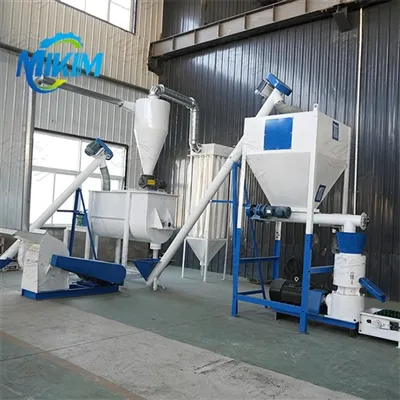
Hammer Mill
Feed grinder is a special equipment used to process crop straw, grain, soybean meal and other raw materials into powdered feed. It belongs to the category of crushing machinery and is mainly used in feed processing, biomass energy and straw comprehensive utilization.
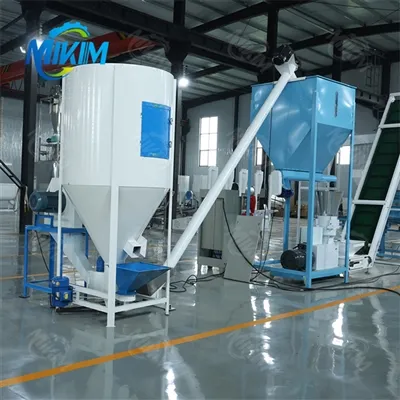
Screw Conveyor
Used for conveying grain and powdery raw materials, sealed structure, reliable, clean, hygienic, no residue.


Stainless Steel Mixer
Stainless steel mixer is suitable for mixing powdered raw materials, with high efficiency and fast mixing speed, suitable for small-scale feed.
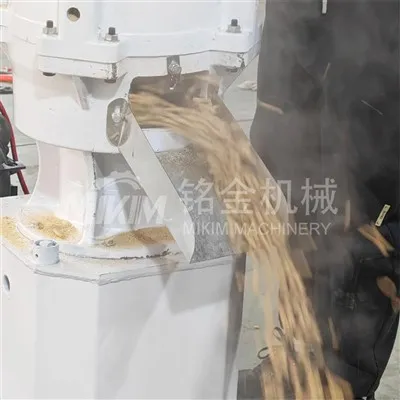
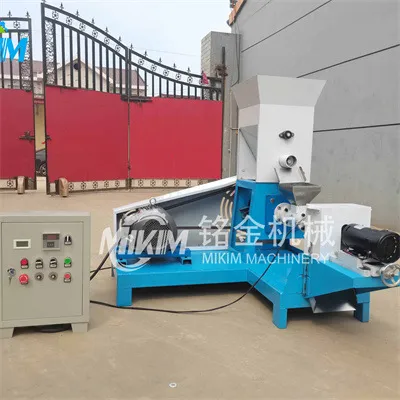
Feed Pellet Machine
Feed pellet machines are widely used in large, medium and small livestock and poultry farming. They can produce feed pellets of various specifications with simple structure, wide adaptability, small footprint and low noise.


cooler
Feed cooler is a cooling equipment that adopts the countercurrent cooling principle. The particles are cooled fully and evenly. It runs smoothly and discharges smoothly.
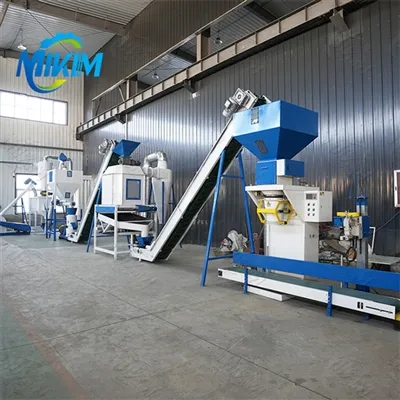
packer
The device mainly consists of three parts: automatic weighing and packaging machine, conveying device and sewing device. It is mainly suitable for quantitative packaging of granular and granular powder mixed materials.

FAQ
What are the advantages of pelletized feed?
Pellet feed is nutritionally balanced, less prone to separation, has good palatability, improves feed conversion rates, reduces waste, and is easier to transport and store.
What raw materials can the production line process?
It can handle a wide range of materials, including corn, soybean meal, rice husks, grass powder, fish meal, and additives-meeting the nutritional needs of different livestock and poultry.
What is the production capacity of the line?
Depending on the configuration, capacity ranges from 200 kg/h to 20t/h, suitable for small family farms as well as large feed mills.
For more information on process design, equipment layout, plant construction plan, single machine equipment quotation, turnkey quotation, etc., please feel free to contact us.
Equipment Photos
Certificate of Honor