


Key Features of a dog food pellet maker machine Motor
Leave a message
content
Routine Maintenance Tips: Periodic Maintenance to Extend Motor Lifespan
Routine maintenance of the dog food pellet machine should follow the principle of "periodic, comprehensive coverage." Based on the motor's operating status, develop daily, weekly, and monthly maintenance plans that are both operable and practical.
1. daily maintenance: Before starting the machine, check the motor surface and terminals for dust and material residue. Clean them thoroughly with a brush to prevent dust from clogging heat dissipation channels. Check if the terminals are loose and if the insulating tape is intact to prevent short circuits and electric shocks. After starting the dog food pellet extruder machine, continuously observe the motor's operating status and monitor its temperature (normal temperature 40-50℃). If overheating or abnormal noise occurs, immediately stop the machine and troubleshoot. After production, turn off the power, clean up any material residue around the motor, and allow it to cool naturally to avoid damaging internal components due to immediate power interruption.
2.weekly maintenance includes checking the motor's cooling fan and heat sink, cleaning dust from the cooling channels to ensure good heat dissipation; checking the linkage between the motor and the reducer, adding high-temperature grease to reduce component friction; and using a multimeter to test the motor's current and voltage to ensure they meet rated parameters and avoid overload operation.
3.monthly maintenance includes disassembling the motor's protective casing to check the wear of the stator and rotor. If wear or corrosion is found, it should be repaired promptly; checking the motor bearings, replacing them if they are stuck or worn; comprehensively checking the insulation performance of the dog food pellet making machine motor to prevent motor failure due to insulation aging; and calibrating the motor speed to ensure it matches the screw speed and optimize production parameters.


Common Faults and Preventive Measures: Addressing the Root Causes to Reduce Fault Occurrence
1. Dog food extruder machine motor overheating: Causes include blocked cooling channels, overload operation, and excessively high ambient temperatures. Preventive measures: Clean cooling channels daily to prevent dust accumulation; adjust motor power and speed appropriately to avoid prolonged full-load operation; place the motor in a well-ventilated, dry environment, avoiding high-temperature and humid conditions.
2. Motor jamming and abnormal noise: Causes include loose linkages, worn bearings, and rotor eccentricity. Preventive measures: Check linkages weekly, tighten loose parts, and add grease; check bearings monthly and replace worn bearings promptly; regularly calibrate the rotor to prevent rotor eccentricity.
3. Dog food processing machine motor failing to start: Causes include incorrect wiring, loose terminals, and incorrect voltage. Preventive measures: Strictly follow the electrical schematic diagram when wiring, distinguishing between live, neutral, and ground wires; check terminals daily and tighten loose parts promptly; ensure the power supply voltage matches the motor's rated voltage to prevent starting failure.
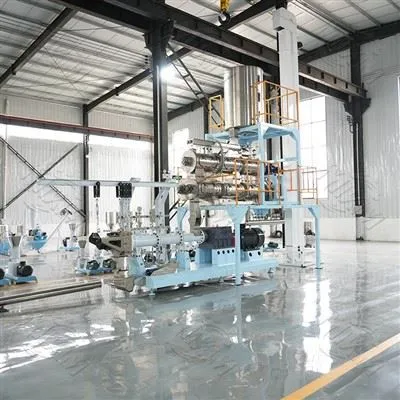

Emergency Troubleshooting: Quick Troubleshooting to Minimize Production Losses
For sudden motor malfunctions, we provide quick emergency handling techniques to help users troubleshoot and resume production in a short time, minimizing economic losses.
1. if the Homemade Dog Food Maker machine motor overheats and stops, immediately turn off the power, allow the motor to cool naturally, clean dust from the heat dissipation channels, check the motor current and voltage to check for overload, and restart and test after the motor has cooled down.
2. if the motor jams or makes abnormal noises and stops, immediately turn off the power, check the linkage parts and bearings, tighten loose parts, replace worn bearings, add grease, restart, and observe the operating status.
3. if the motor cannot start, turn off the power, check the wiring terminals and wiring method, use a multimeter to check the voltage and current, check for wiring errors, abnormal voltage, etc., correct them, and restart. It is also recommended to keep a spare motor compatible with the Homemade Dog Food Pellet Machine on hand to deal with serious malfunctions such as sudden motor burnout, shorten downtime, and ensure production continuity.
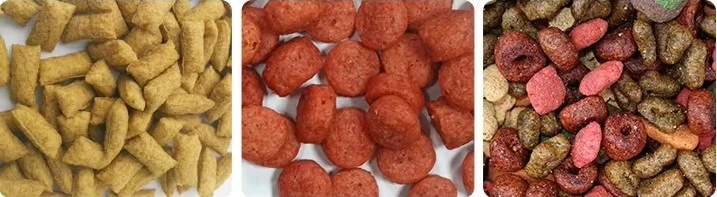
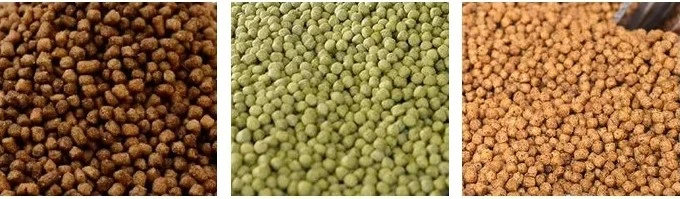
Finished Product Display
about Us
MIKIM's fish feed pellet production lines and supporting machinery offer excellent value for money. Not only are they affordable, eliminating middlemen markups and allowing small and medium-sized enterprises (SMEs) and fish farmers to purchase complete sets of equipment at reasonable costs, but they also boast exceptional efficiency. The fully automated process, from raw material crushing and precise ingredient mixing to extrusion pelleting and maturation, is completed in one continuous flow. This results in high starch gelatinization rates and uniform pellet formation, significantly improving production efficiency and feed quality, truly achieving "low cost, high output." Choosing a MIKIM fish feed pellet production line means enjoying comprehensive pre-sales and after-sales service, including 24-hour online customer support, a one-year warranty on the entire machine, professional on-site installation, commissioning, and maintenance, and a stable supply of spare parts. Customers can buy with confidence and use with peace of mind, with both excellent value and service quality!!!
Customer visit

Certificate of Honor

FAQ
1. What is the price of the Twin screw fish feed extruder machine?
The price ranges from approximately $1,500-$55,000
2. Do you provide maintenance services for your customers?
Yes, we offer comprehensive after-sales maintenance services to our customers.
To explore which twin screw pet food machine model is suitable for your product line, view our full range of equipment or contact our team for a customized production plan.


