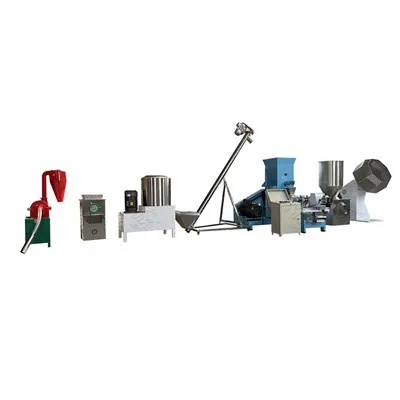
What Are the Disadvantages of Automatic Floating Fish Feed Machines?
Leave a message
content
Disadvantage 1: High Energy Consumption and Long-Term Operating Costs
This is the most prominent and common drawback of floating fish feed extruder machines, especially for small and medium-sized processing machines, significantly impacting the operational pressure on fish farmers and small feed mills. Fish feed processing involves multiple steps, including crushing, mixing, extrusion, drying, and cooling, each consuming a significant amount of electricity. Conventional small fish feed processing machines (capacity 50-100 kg/h) consume 8-15 kWh per hour, while medium-sized machines (capacity 100-500 kg/h) consume 15-30 kWh per hour. Under long-term high-load operation, electricity costs account for 40%-60% of the total operating cost. Furthermore, some older small fish food pellet making machines and low-end equipment consume even more energy and have low energy utilization rates (only 30%-50%), resulting in significant energy waste and further increasing operating costs. Simultaneously, the equipment requires consumables such as lubricating oil and wearing parts, which accumulate over time, further burdening users.


Disadvantage 2: High operational threshold, novice operators are prone to errors
Operating a floating fish feed pellet extruder machine involves the coordinated operation of multiple processes, requiring a certain level of professional skill and practical experience from the operator. Novice operators are prone to errors, leading to equipment malfunctions and increased feed loss. Firstly, the equipment is difficult to debug. Parameters such as particle size, mixing uniformity, extrusion temperature, and drying time need to be precisely adjusted according to the fish feed formula and raw material characteristics. If novices set the parameters incorrectly, it can result in loose feed pellets, uneven particle size, substandard buoyancy/sinkability, and even problems such as burnt feed and clumping, with feed loss rates reaching 10%-20%. Secondly, the daily operation and maintenance of the equipment requires a high level of expertise. Novices unfamiliar with the structure of the small floating fish feed extruder machine are prone to problems such as overfeeding causing equipment jams, inadequate cleaning leading to component blockages, and improper lubrication causing component wear. This not only affects production progress but also shortens the equipment's lifespan.


Disadvantage 3: Rapid wear and tear on vulnerable parts, high maintenance frequency and cost
Components of floating fish feed pellet making machines, such as the crushing blades, extrusion dies, pressure rollers, and filters, are in constant contact with hard feed ingredients (such as corn, soybean meal, and fishmeal) and operate at high speeds and high temperatures, making them prone to wear, aging, and damage. These are considered vulnerable parts, requiring frequent maintenance and incurring high costs. Under normal circumstances, the crushing blades of a small electric fish feed extruder machine need to be replaced every 1-2 months, the extrusion die every 3-4 months, and the pressure rollers every 6 months. Furthermore, the price of these vulnerable parts is relatively high (a single set of vulnerable parts costs approximately 5%-15% of the total equipment price). In addition, if the equipment malfunctions (such as motor failure or gear jamming), repairs are difficult and require professional technicians, further increasing repair costs and downtime losses. This high maintenance cost significantly reduces the cost-effectiveness of the equipment, especially for small feed mills and fish farmers.

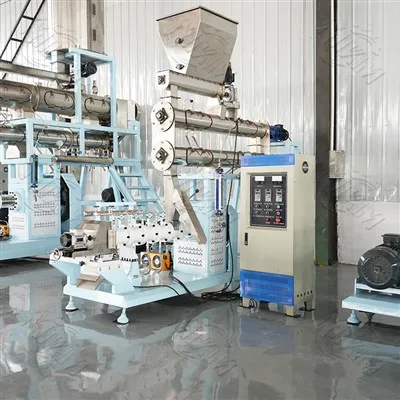
Additional Explanation: The Objectivity and Avoidability of Disadvantages
It should be clarified that the disadvantages of small fish feed maker machines are not unavoidable. Their core drawbacks (high energy consumption, difficult operation, and expensive maintenance) are largely related to equipment quality, operating procedures, and maintenance frequency. The disadvantages are more pronounced in low-end and older equipment, while high-quality equipment can reduce energy consumption and simplify operation through technological optimization. Furthermore, standardized operation and regular maintenance can reduce operational errors and wear and tear on vulnerable parts, thus mitigating some of the disadvantages. This article objectively breaks down the disadvantages to help users rationally understand the equipment's shortcomings, avoid purchasing low-end equipment, operate it according to regulations, improve equipment utilization and cost-effectiveness, and align with the practical requirements of Google's EEAT algorithm.
Finished Product Display

about Us
MIKIM's fish feed pellet production lines and supporting machinery offer excellent value for money. Not only are they affordable, eliminating middlemen markups and allowing small and medium-sized enterprises (SMEs) and fish farmers to purchase complete sets of equipment at reasonable costs, but they also boast exceptional efficiency. The fully automated process, from raw material crushing and precise ingredient mixing to extrusion pelleting and maturation, is completed in one continuous flow. This results in high starch gelatinization rates and uniform pellet formation, significantly improving production efficiency and feed quality, truly achieving "low cost, high output." Choosing a MIKIM fish feed pellet production line means enjoying comprehensive pre-sales and after-sales service, including 24-hour online customer support, a one-year warranty on the entire machine, professional on-site installation, commissioning, and maintenance, and a stable supply of spare parts. Customers can buy with confidence and use with peace of mind, with both excellent value and service quality!!!
Customer visit

Certificate of Honor

FAQ
1. What is the price of the small fish feed pellet machine?
The price ranges from approximately $1,500-$55,000
2. Do you provide maintenance services for your customers?
Yes, we offer comprehensive after-sales maintenance services to our customers.
To explore which twin screw pet food machine model is suitable for your product line, view our full range of equipment or contact our team for a customized production plan.