


Key Functions of Small Fish Food Making Machines in Aquaculture Feed Production
Leave a message
content
High-efficiency processing of conventional raw materials: improving utilization. Fish pellet making machines show significant processing effects on conventional raw materials such as corn, soybean meal, and fishmeal. Through high-temperature and high-pressure treatment, they can improve the utilization rate and nutritional value of raw materials: After extrusion, the starch gelatinization degree of corn increases from 30% to over 85%, significantly improving digestibility and absorption. Simultaneously, harmful substances such as aflatoxin in corn are destroyed at high temperatures, improving feed safety. After extrusion, anti-nutritional factors such as trypsin inhibitors and urease in soybean meal are inactivated, increasing protein digestibility by 10%-15% and preventing damage to the fish's digestive system from anti-nutritional factors. After extrusion, the degree of fat oxidation is reduced, freshness is improved, and mixing with other raw materials is more uniform, resulting in a more balanced nutrition. For example, a feed mill using an extruder to process soybean meal produced fish feed with a soybean meal protein digestibility of 88%, a 13% increase compared to unextruded feed, and a 12% increase in fish growth rate.
Resource utilization of industrial by-products: reducing feed costs. Industrial byproducts such as brewer's grains, corn germ meal, and rice bran are inexpensive, but their direct use in feed production presents problems such as high levels of anti-nutritional factors, poor palatability, and low digestibility. The high-temperature extrusion function of a small floating fish feed making machine effectively solves these problems: after extrusion, the fiber structure of brewer's grains is destroyed, the content of anti-nutritional factors is reduced by more than 60%, palatability is improved, and it can replace 20%-30% of soybean meal, reducing feed costs by 1500-2000 yuan/ton; after extrusion, fat oxidation of corn germ meal is inhibited, and protein digestibility is increased by 20%, making it a high-quality energy source for fish feed. For example, a rural cooperative uses brewer's grains, a byproduct of a local brewery, processed through a single-screw extruder and added to grass carp feed, replacing 25% of soybean meal. This reduces feed costs from 3800 yuan/ton to 3200 yuan/ton, saving over 50,000 yuan annually, while the grass carp grow well.
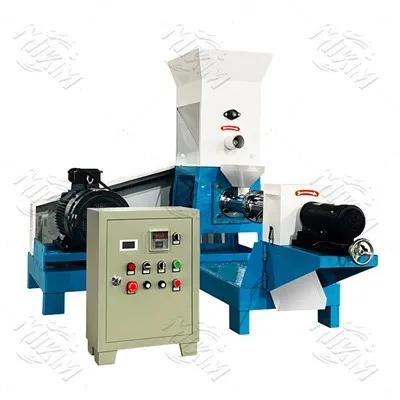
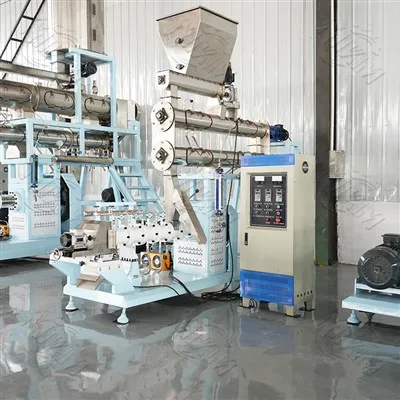
High-fiber, high-moisture raw material processing function: Expanding the range of raw materials. Conventional feed processing equipment has poor handling capabilities for high-fiber and high-moisture raw materials, easily leading to problems such as material jamming and unstable processing. However, fish feed pellet extruder machines, with their powerful extrusion and conveying capabilities, can effectively handle these raw materials. When processing high-fiber raw materials (such as formulas with a bran content of over 30%), the meshing drive of the twin-screw extruder enhances the shearing and crushing effect on the fibers, refining the fiber structure and improving digestibility. When processing high-moisture raw materials (15%-20% moisture), the frictional heating function of the single-screw extruder can quickly evaporate some of the moisture, ensuring stable extrusion results. For example, in a cattle-fish polyculture farm, high-fiber byproducts (35% bran content) from cattle feed processing are processed using a twin-screw extruder and added to fish feed. This not only solves the byproduct processing problem but also reduces the raw material cost of fish feed, achieving resource recycling.
Related equipment


about Us
MIKIM's fish feed pellet production lines and supporting machinery offer excellent value for money. Not only are they affordable, eliminating middlemen markups and allowing small and medium-sized enterprises (SMEs) and fish farmers to purchase complete sets of equipment at reasonable costs, but they also boast exceptional efficiency. The fully automated process, from raw material crushing and precise ingredient mixing to extrusion pelleting and maturation, is completed in one continuous flow. This results in high starch gelatinization rates and uniform pellet formation, significantly improving production efficiency and feed quality, truly achieving "low cost, high output." Choosing a MIKIM fish feed pellet production line means enjoying comprehensive pre-sales and after-sales service, including 24-hour online customer support, a one-year warranty on the entire machine, professional on-site installation, commissioning, and maintenance, and a stable supply of spare parts. Customers can buy with confidence and use with peace of mind, with both excellent value and service quality!!!
Customer visit

Certificate of Honor

FAQ
1. What is the price of the pet food processing machine?
The price ranges from approximately $1,500-$55,000
2. Do you provide maintenance services for your customers?
Yes, we offer comprehensive after-sales maintenance services to our customers.
If you would like to learn more about MIKIM machinery, please contact us. We offer one-stop service and welcome your inquiries!!!


