Small Floating Fish Feed Pellet Machine: Specs, Raw Materials And Advantages
Leave a message

Small Floating Fish Feed Pellet Machine: Specs, Raw Materials and Advantages
1. Product Introduction
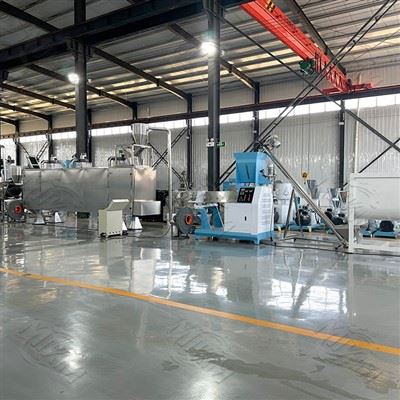
The floating fish feed pellet machine is widely used to produce high-grade aquatic feed pellets from grains for fish, catfish, shrimp and crab, and can also make pellets for cats, dogs and poultry where applicable. Puffed fish feed pellets can float on the water surface without dissolving for over 12 hours - typically 12–24 hours depending on the formula and expansion degree. According to the production scale and requirements, floating fish feed machines are classified into dry type and wet type.
2. Raw Materials
| Item | Requirement |
|---|---|
| Common materials | Corn, wheat, soybean, grain, bone powder, fish meal |
| Grinding fineness | 60–80 mesh for uniform mixing and expansion |
| Moisture (dry type) | About 13–18% |
| Moisture (wet type) | About 20–25% |
3. Typical Parameters (DGP Dry-Type Series)
| Model | Capacity | Main motor | Feeder | Cutter |
|---|---|---|---|---|
| DGP-100 | 500 kg/h | 37 kW | 1.5 kW | 1.5 kW |
| DGP-120 | 600–700 kg/h | 55 kW | 1.5 kW | 1.5 kW |
| DGP-135 | 800–900 kg/h | 75 kW | 1.5 kW | 2.2 kW |
| DGP-160 | 1000–1200 kg/h | 90 kW | 2.2 kW | 2.2 kW |
| DGP-200 | 1800–2000 kg/h | 132 kW | 3 kW | 3 kW |
Values are typical for the DGP series - confirm the exact data sheet and configuration with the supplier.


4. Advantages
- With different molds, the machine produces pellets from 0.9 mm to 10 mm diameter, matching different fish growth stages.
- Different shapes can be produced for fish, dog and cat feed by changing the die.
- Extrusion pre-treatment improves starch gelatinization and protein availability, making the feed easier to digest and reducing nutrient loss.
5. Price and Safety Notes
Price ranges from about US$2,500 to US$28,970 depending on model and configuration (example range - request an itemized quotation). Safety: the extruder outlet and barrel are hot during operation; keep hands away from the feed inlet; use motor guards; train operators and follow the manual.