


What are the advantages of using a floating pet feed making machine to produce dog food?
Leave a message
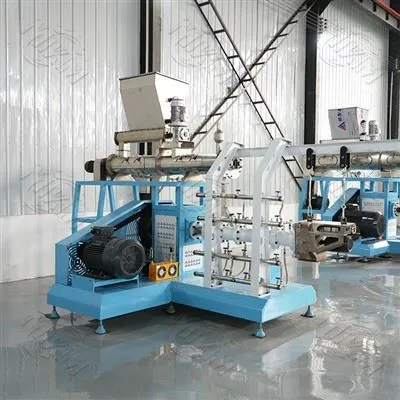
The advantages of dog food pellet making machines extend far beyond simply producing dog food. They address numerous pain points of traditional processes, offering comprehensive advantages from production to quality, which is the core reason for their mainstream adoption.
High-efficiency continuous production is one of the most prominent advantages of dog food pellet machines. Traditional steaming methods require multiple discrete steps, including raw material mixing, steaming, manual shaping, and drying, with an hourly output of only tens of kilograms and requiring extensive manual labor. Extruders, on the other hand, achieve integrated continuous production of "mixing-expansion-shaping-initial cooling." Small extruders can achieve an hourly output of 300-500 kg, while large machines can reach over 2000 kg, increasing production efficiency by more than 10 times. This continuous production mode also reduces raw material loss. Traditional processes have a loss rate of about 10%, while extruders, due to their enclosed production system, can control the loss rate to within 2%, significantly reducing production costs.
The advantages of machines for making dog feed are even more pronounced in improving dog food quality. Traditional baking methods often result in uneven temperature control, leading to localized burning or undercooking, affecting the flavor and safety of the dog food. Extruders, however, employ a segmented temperature control design in their puffing chamber, with precise temperature control in the feeding, compression, and discharge sections, ensuring each kibble is heated evenly. Simultaneously, the puffing action of the extruder creates a loose, porous internal structure in the dog food, improving palatability and facilitating saliva penetration, reducing swallowing difficulties.
Furthermore, the extruder supports post-coating processes, allowing for the even application of flavorings such as chicken oil and fish oil after the kibble has cooled, avoiding the heat-induced loss of flavorings in traditional methods, making the dog food even more appealing to dogs.
When using a dog feed floating pellet making machine to produce dog food, it's crucial to leverage its advantages. Firstly, precise parameter matching is essential. Adjust the screw speed and temperature according to the type of dog food. When producing high-fiber dog food, reduce the screw speed to 150 rpm to ensure full puffing of the raw materials; when producing high-protein dog food, increase the speed to 250 rpm to prevent excessive protein denaturation. Secondly, pay attention to equipment load. Adding hard impurities such as metal or stones to the feed inlet is strictly prohibited. A magnetic separator and screen must be installed for double filtration before feeding to prevent damage to the screw and die. Thirdly, ensure proper post-processing of the finished product. Extruded dog food is at a high temperature and must immediately enter a cooling system to lower the temperature to room temperature, while controlling the moisture content to 10%-12% to prevent moisture absorption and mold growth during storage. For dog food with added probiotics, apply them using a low-temperature spraying method after cooling to prevent high temperatures from destroying the probiotics' activity.
Related equipment


about Us
Customer visit

Certificate of Honor

FAQ
1. What is the price of the dog feed maker machine?
The price ranges from approximately $4,500-$35,000
2. Do you provide maintenance services for your customers?
Yes, we offer comprehensive after-sales maintenance services to our customers.


