What are the installation steps for a single screw fish feed pellet extruder?
Leave a message
The first step is site condition verification and optimization. Fish feed extruder machines (especially twin-screw models) typically weigh 1-5 tons, requiring stringent ground load-bearing capacity. The installation area must be hardened beforehand, with concrete strength no lower than C30 and a load-bearing capacity ≥5t/㎡. Sufficient operating space must be reserved, with at least a 1.5-meter maintenance passage around the extruder body, space for raw material conveying equipment on the feed side, and space for a cooling system connection on the discharge side. Furthermore, the site must have good ventilation and dust removal conditions, with a negative pressure dust hood installed above the extruder to prevent dust diffusion during processing; the ambient temperature should be controlled between 5-35℃, and humidity ≤75% to prevent electrical components from being damaged by moisture.
The second step is inventorying and verifying the floating fish feed machine and its accessories. After the equipment arrives, the main and auxiliary components must be checked against the packing list. Core components include the extruder main unit (barrel, screw, frame), motor, reducer, feeding system, and control system. Simultaneously, confirm the completeness of the quantities of molds, connecting flanges, bolts, nuts, and other accessories. The key components should be thoroughly inspected. The inner wall of the barrel should be free of scratches, the screw threads should be free of deformation, and the motor and reducer housings should be free of damage. If any parts are missing or damaged, contact the manufacturer immediately for replacement to avoid installation interruptions. One feed mill experienced a three-day installation halt due to a missing reducer connection bolt; installation resumed only after the bolt was purchased.
The third step is preparing the installation tools and auxiliary materials for the fish extruder machine. Required tools include: a torque wrench (range 0-500 N·m), a level (accuracy 0.02 mm/m), a 5m measuring tape, a hammer, a screwdriver set, and a pipe cutter. Auxiliary materials should include: lithium-based grease, sealant, gaskets, grounding wire, and cable trays. Special attention should be paid to ensuring the extruder motor wiring uses a dedicated cable. The cross-sectional area should be selected based on the motor power; for example, a 75kW motor requires a 25mm² copper core cable to ensure stable power supply. Simultaneously, a temporary hoisting support should be erected in advance (if the equipment weighs over 1 ton). The support's load-bearing capacity must be at least 1.5 times the equipment weight to ensure safe placement of the equipment.
Finally, the baseline marking and embedded parts inspection are performed. Based on the fish feed processing machine installation drawings, mark the installation baselines for the main unit, motor, and reducer on the ground with ink lines, ensuring that the center axes of the three are aligned, with a deviation not exceeding ±2mm. If embedded steel plates are designed, their positional accuracy and fixing strength must be checked. The horizontal error of the embedded steel plates should be ≤0.5mm/m, and they must be firmly welded to the ground fixing bolts without any loosening. Only after completing these basic preparation steps can the equipment placement stage proceed, laying a reliable foundation for subsequent installation.
Related equipment


about Us
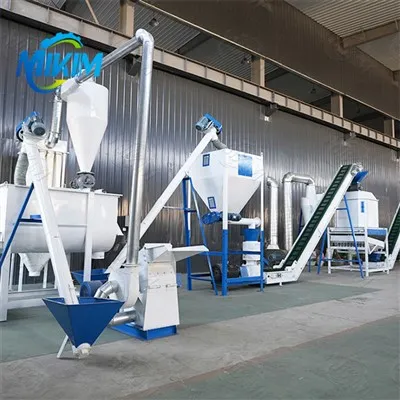
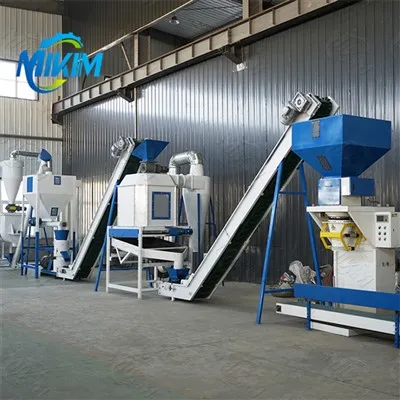
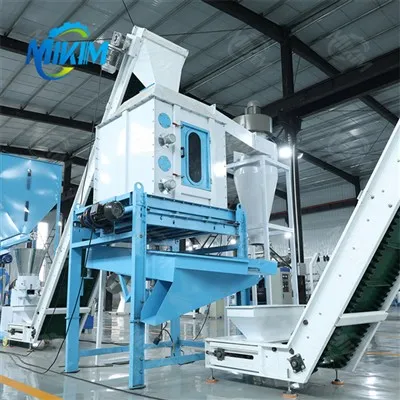
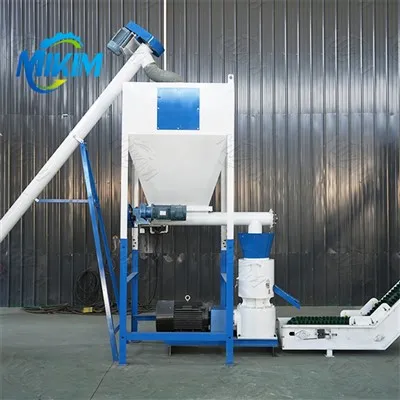
MIKIM's fish feed pellet production lines and supporting machinery offer excellent value for money. Not only are they affordable, eliminating middlemen markups and allowing small and medium-sized enterprises (SMEs) and fish farmers to purchase complete sets of equipment at reasonable costs, but they also boast exceptional efficiency. The fully automated process, from raw material crushing and precise ingredient mixing to extrusion pelleting and maturation, is completed in one continuous flow. This results in high starch gelatinization rates and uniform pellet formation, significantly improving production efficiency and feed quality, truly achieving "low cost, high output." Choosing a MIKIM fish feed pellet production line means enjoying comprehensive pre-sales and after-sales service, including 24-hour online customer support, a one-year warranty on the entire machine, professional on-site installation, commissioning, and maintenance, and a stable supply of spare parts. Customers can buy with confidence and use with peace of mind, with both excellent value and service quality!
Customer visit

Certificate of Honor

FAQ
1. What is the price of the fish feed pellet extruder?
The price ranges from approximately $3,500-$55,000
2. Do you provide maintenance services for your customers?
Yes, we offer comprehensive after-sales maintenance services to our customers.
If you would like to learn more about MIKIM machinery, please contact us. We offer one-stop service and welcome your inquiries!!!