


What are the installation steps for a fish feed making machine?
Leave a message
The first step is the installation and leveling of the floating fish extruder machine. Using a forklift or crane, slowly lift the extruder machine to its installation position, aligning the base baseline with the ground baseline, with a deviation within 1mm. Immediately after positioning, perform leveling. Place a level at four positions on the front, back, left, and right sides of the base. Adjust the height of the leveling shims under the base until the bubble on the level is centered, with a levelness error ≤0.2mm/m. After leveling, spot weld the shims to the base to prevent displacement during operation. For twin-screw extruders, pay special attention to the levelness of the barrel to ensure even force distribution on both screws and prevent jamming during operation.
The second step is the installation of the fish feed pellet extruder motor and reducer. First, lift the reducer to one side of the machine, aligning the reducer output shaft with the center axis of the extruder input shaft, with a deviation ≤0.1mm, while ensuring the gap between the two shaft end faces is controlled at 2-3mm. Secure the reducer to a dedicated bracket with bolts, and the bracket must be securely welded to the pre-embedded steel plate in the ground. Next, install the motor. The center deviation between the motor output shaft and the reducer input shaft must also be ≤0.1mm, and the two should be connected using a flexible coupling to buffer vibrations during operation. After connection, manually rotate the coupling to ensure smooth rotation without jamming. If resistance is present, readjust the center position.
The third step is the fixing and reinforcement of the core components of the fish feed pellet making machine. The main unit is fixed using a double reinforcement of expansion bolts and pre-embedded steel plates. Each main unit base must have at least 8 sets of M30 expansion bolts installed, with the bolt tightening torque controlled at 450-500 N·m. After tightening, spot welding is required to prevent loosening. The fixing bolts of the motor and reducer must be coated with thread-locking adhesive to prevent loosening due to long-term vibration. For large twin-screw extruders, diagonal braces must also be installed on both sides of the main unit. One end of the brace is welded to the main unit frame, and the other end is connected to the pre-embedded steel plate in the ground to enhance the overall stability of the equipment.
Related equipment
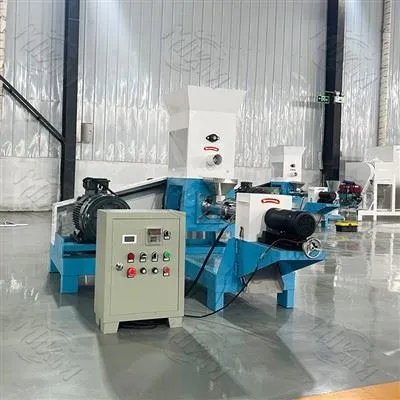
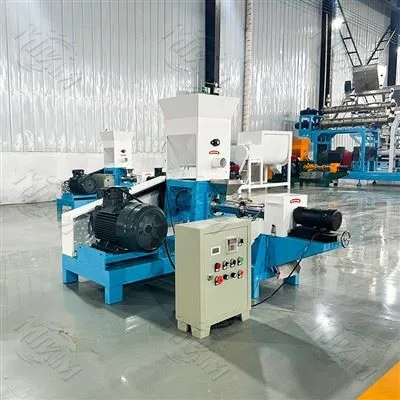
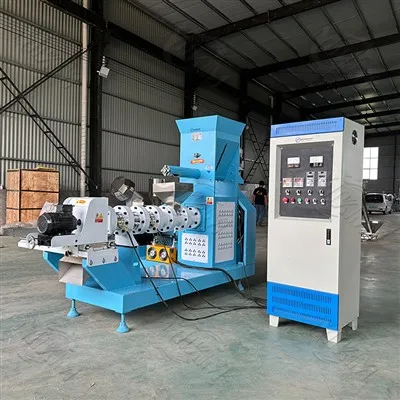

about Us
MIKIM's fish feed pellet production lines and supporting machinery offer excellent value for money. Not only are they affordable, eliminating middlemen markups and allowing small and medium-sized enterprises (SMEs) and fish farmers to purchase complete sets of equipment at reasonable costs, but they also boast exceptional efficiency. The fully automated process, from raw material crushing and precise ingredient mixing to extrusion pelleting and maturation, is completed in one continuous flow. This results in high starch gelatinization rates and uniform pellet formation, significantly improving production efficiency and feed quality, truly achieving "low cost, high output." Choosing a MIKIM fish feed pellet production line means enjoying comprehensive pre-sales and after-sales service, including 24-hour online customer support, a one-year warranty on the entire machine, professional on-site installation, commissioning, and maintenance, and a stable supply of spare parts. Customers can buy with confidence and use with peace of mind, with both excellent value and service quality!
Customer visit

Certificate of Honor

FAQ
1. What is the price of the fish feed pellet extruder?
The price ranges from approximately $3,500-$55,000
2. Do you provide maintenance services for your customers?
Yes, we offer comprehensive after-sales maintenance services to our customers.
If you would like to learn more about MIKIM machinery, please contact us. We offer one-stop service and welcome your inquiries!!!


