


How to properly install the Floating Fish Feed Extruder
Leave a message
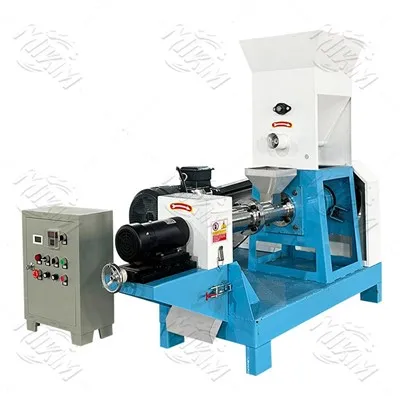
The first step is the installation and connection of the fish feed extruder machine's feeding system. The feeding system typically consists of a hopper, a screw conveyor, and a feeder. Installation must adhere to the principle of "gravity conveying and minimizing residue." The hopper should be installed above the screw conveyor's inlet. A pneumatic gate should be installed at the connection between the hopper bottom and the screw conveyor to control the feed rate. The screw conveyor must be installed with its axis aligned with the center of the feeder's inlet, with a deviation ≤3mm. The conveyor's inclination angle should be controlled within 15° to prevent material accumulation and blockage. The connection between the feeder and the extruder inlet uses a flexible connection with food-grade rubber hoses. Both ends of the hose are secured with clamps to ensure a leak-free seal and prevent feeder vibration from being transmitted to the main unit. After installation, the feeding smoothness must be tested by adding a small amount of material to the hopper, starting the feeder, and observing whether the material enters the extruder inlet evenly without jamming or leakage.
The second step is the installation and commissioning of the floating fish feed machine's conditioning system. The conditioner is a key component of the fish feed extruder, and its installation quality directly affects feed quality. First, the conditioner is hoisted to the front of the extruder inlet, ensuring a tight connection between the conditioner outlet and the extruder inlet, with a center axis deviation ≤1mm. A high-temperature resistant sealing gasket is installed at the connection, and it is secured with bolts. Next, the steam pipeline is installed. The steam pipeline should be led from the boiler and equipped with a filter, pressure regulating valve, and pressure gauge to ensure a stable steam pressure of 0.3-0.5MPa, preventing pressure fluctuations that could lead to uneven conditioning of the raw materials. The connection between the steam pipeline and the conditioner should use a stainless steel flexible hose to reduce vibration, and the pipeline should be insulated to prevent heat loss.
The third step is the coordinated adjustment of the conditioner and feeder in the fish extruder machine. The feeder and conditioner must operate synchronously. The speed ratio between the two is set through the control system to ensure thorough mixing of the raw materials and steam. Typically, the ratio of the feeder speed to the conditioner's stirring speed is 1:3, but this can be adjusted according to the characteristics of the raw materials. After installation, conduct a no-load test. Start the feeder and conditioner, and observe whether the conditioner's agitator runs smoothly and whether the steam supply is uniform. If steam leakage occurs, replace the sealing gasket. If the raw material accumulates in the conditioner, adjust the agitator speed. Finally, conduct a load test by adding raw material and introducing steam. Check the moisture content (15%-17%) and temperature (70-80℃) of the conditioned raw material to ensure it meets extrusion requirements.
Related equipment


about Us
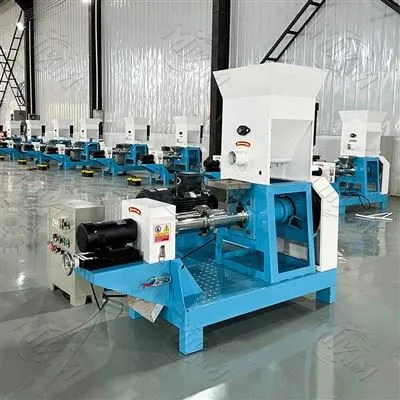
MIKIM's fish feed pellet production lines and supporting machinery offer excellent value for money. Not only are they affordable, eliminating middlemen markups and allowing small and medium-sized enterprises (SMEs) and fish farmers to purchase complete sets of equipment at reasonable costs, but they also boast exceptional efficiency. The fully automated process, from raw material crushing and precise ingredient mixing to extrusion pelleting and maturation, is completed in one continuous flow. This results in high starch gelatinization rates and uniform pellet formation, significantly improving production efficiency and feed quality, truly achieving "low cost, high output." Choosing a MIKIM fish feed pellet production line means enjoying comprehensive pre-sales and after-sales service, including 24-hour online customer support, a one-year warranty on the entire machine, professional on-site installation, commissioning, and maintenance, and a stable supply of spare parts. Customers can buy with confidence and use with peace of mind, with both excellent value and service quality!
Customer visit

Certificate of Honor

FAQ
1. What is the price of the fish feed pellet extruder?
The price ranges from approximately $3,500-$55,000
2. Do you provide maintenance services for your customers?
Yes, we offer comprehensive after-sales maintenance services to our customers.
If you would like to learn more about MIKIM machinery, please contact us. We offer one-stop service and welcome your inquiries!!!


