What are the reasons for the poor pellet forming failure of pellet feed machine?
Leave a message
Many feed mills encounter the problem of "poor pellet formation" when using pellet food makers-the produced pellets are loose and easily broken, with rough surfaces, and even a large amount of unformed powder (crush rate exceeding 15%). This not only wastes raw materials (more than 60 kg per hour) but also affects the shelf life of the feed (loose pellets are prone to moisture absorption and mold). If the cause is not investigated in time, it will lead to a significant decrease in production efficiency and increase the risk of complaints from livestock farmers.
Cause and Solution
1.Inappropriate Raw Material Moisture Content (Most Common Cause)
Cause: When the raw material moisture content is too high (over 18%), it tends to adhere to the die, resulting in loose particles and surface adhesion. When the moisture content is too low (below 12%), the raw material lacks viscosity, preventing it from tightly binding together and causing the particles to break.
Solution: Check the raw material moisture content with a rapid moisture meter. If the moisture content is too high, dry the raw material in a dryer (60-70°C) to 14%-16%. If the moisture content is too low, increase the steam usage in the conditioner (steam pressure 0.4-0.5 MPa) or add a small amount of water to the raw material (1-2 kg per 100 kg of raw material) to ensure a stable moisture content of 15%-17% after conditioning.
2. Improper fit between the ring die and roller
Cause: If the gap between the ring die and roller is too large (over 0.5mm), the raw material cannot be fully extruded, resulting in loose pellets. If the gap is too small (less than 0.1mm), the roller and ring die will rub directly against each other, causing wear and tear on the components and over-extrusion of the raw material, resulting in carbonization on the surface and loose pellets.
Solution: After shutting down the machine, use a feeler gauge to measure the gap between the ring die and roller and adjust it to 0.2-0.3mm. If the roller surface is worn (with uneven surfaces), replace the roller skin. If the ring die hole is worn (with the hole diameter expanding by more than 0.3mm), replace it with a new one (preferably one with a hardness of HRC58 or higher).
3.Insufficient conditioning temperature and time
Cause: Insufficient steam supply to the conditioner (e.g., a clogged steam line) or too short a conditioning time (e.g., excessive conditioner speed), resulting in a low gelatinization rate (less than 70%) of the raw starch, a lack of viscosity, and difficulty forming pellets.
Solution: Check if the steam pipe is blocked (if blocked, clear it with a high-pressure water gun), and ensure the steam pressure is stable at 0.4-0.6 MPa; reduce the temperature regulator speed (from 30 r/min to 25 r/min), and extend the residence time of the raw material in the temperature regulator (from 30 seconds to 45 seconds); wrap the temperature regulator with insulation cotton (5-8 cm thick) to reduce heat loss and ensure that the raw material temperature reaches 70-80℃ after temperature regulation.


Why Choose Us
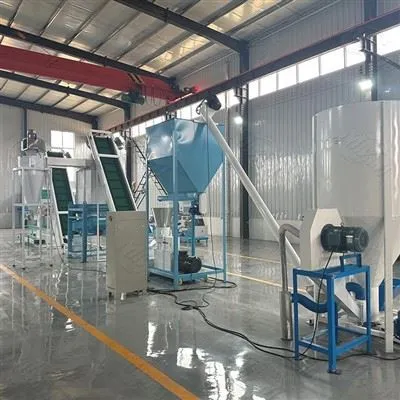
MIKIM boasts extensive experience in poultry feed pellet production lines, significantly reducing the incidence of poultry diseases. Its equipment is not only widely used across various industries domestically but also exported to Southeast Asia, Europe, Africa, and South America, earning a high reputation internationally. This global presence not only demonstrates the adaptability and competitiveness of its products, but also demonstrates the company's experience in adapting to diverse market standards and logistics conditions, enabling it to provide a stable supply chain for its overseas customers. Whether serving large domestic farms or cross-border feed companies, MIKIM can leverage its global service network to ensure a consistent, high-quality experience.
For more information on process flow design, equipment layout, factory construction plans, individual equipment pricing, or turnkey project proposals, please feel free to contact us!!!

FAQ
1. What is the price of the food pellet making machine?
The price ranges from approximately $3,000-$12,000
2. Do you provide maintenance services for your customers?
Yes, we offer comprehensive after-sales maintenance services to our customers.