Equipment Measures That Improve Feed Quality
Leave a message
Why Equipment Determines Feed Quality
Feed quality is decided at every stage of the production line, from the moment the ingredients enter the grinder to the bagging of the finished pellets. Equipment influences the consistency of particle size, the accuracy of the formula, the uniformity of mixing, and the stability of pelleting conditions. Four equipment-level measures have the largest effect: using integrated machines that reduce handling steps, adding intelligent control that holds parameters steady, protecting raw material quality before it enters the line, and keeping the machines calibrated and maintained.
Use Integrated, Multifunctional Equipment
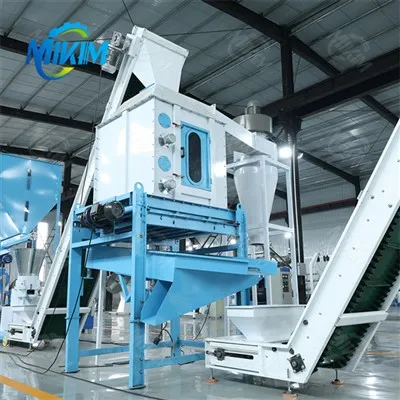
Equipment that combines several functions, such as grinding, mixing, and forming, reduces the number of handoffs between separate machines. Every transfer between machines is a chance for material loss, segregation, or contamination, and every separate machine introduces its own speed and adjustment variability. An integrated line keeps the material flow continuous and consistent, which shows up directly in uniform particle size and stable pellet quality across batches. When separate machines are unavoidable, conveyors should be sealed and cleaned on a schedule so that residue does not mix into the next batch.
Adopt Intelligent Control Systems
An intelligent control system monitors and adjusts key parameters in real time, including ingredient ratios, production time, temperature, and pressure. Automatic dosing holds the formula accurate within the tolerance set by the operator, and temperature and pressure feedback keeps conditioning and pelleting conditions stable even when the ambient environment changes. The practical benefit is that batch-to-batch variation shrinks, which is exactly what feed buyers test for. Operators should define the acceptable range for each parameter, log the readings, and review the logs periodically so that drift is caught early.
Start with Quality Raw Materials and Correct Storage
No equipment can repair a poor raw material. Moisture content, particle size, and freshness of the ingredients set the ceiling for finished feed quality, so incoming material should be checked against specifications before it enters the line. Storage matters just as much: ingredients kept in damp or warm conditions absorb moisture, grow mold, and lose nutritional value. Silos and bags should be protected from humidity, and stock should be rotated so that older material is used first. A line with accurate dosing and stable pelleting can then convert good raw material into consistently good feed.
Maintain and Calibrate on a Fixed Schedule
Regular maintenance and calibration are the difference between a line that degrades slowly and one that stays at specification. Weighing scales should be calibrated against standard weights on a fixed schedule, because an error in the scales changes the formula of every batch. Dies and rollers wear and must be inspected, the conditioning temperature sensors checked, and the conveyors cleaned. A simple weekly checklist with measured values, such as scale deviation, die hole condition, and conditioning temperature accuracy, turns maintenance from an afterthought into a controllable process.
FAQ
Which equipment measure has the largest effect on feed quality?
Accurate, calibrated dosing and mixing have the largest effect on nutritional consistency, while integrated machines reduce the variability introduced by transfers between separate units.
How does an intelligent control system improve feed quality?
It monitors and adjusts ingredient ratios, production time, temperature, and pressure in real time, which keeps batch-to-batch variation small and stable.
Why is raw material storage part of equipment management?
Moisture, warmth, and long storage degrade ingredients. Correct storage protects particle size and nutritional value, so the line converts good material into good feed.
How often should scales and sensors be calibrated?
Calibrate weighing scales against standard weights on a fixed schedule, typically at least monthly for continuous production, and check temperature sensors during weekly maintenance.
Can old equipment produce high-quality feed?
Yes, if it is maintained and calibrated to specification. Regular inspection of dies, rollers, sensors, and conveyors keeps aged equipment within the required tolerances.