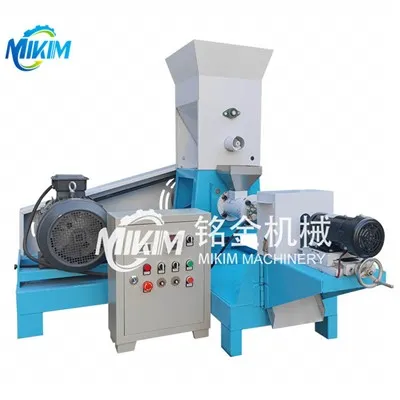
Recent Improvements in Feed Pelletizing Technology
Leave a message
Introduction: Where Pelletizing Has Improved
The pelletizing method used in feed production lines has improved substantially in three areas: mold design, automated control, and energy efficiency. Each improvement addresses a specific weakness of traditional equipment, and together they define the practical difference between a modern line and an old one. Understanding these changes helps feed plants evaluate existing equipment and plan upgrades with clear expectations.
More Flexible Mold Design
Traditional pelletizing molds mostly have fixed apertures, which makes it difficult to adapt one machine to different feed pellet types. Modular designs and molds with adjustable apertures now allow the equipment to change pellet specifications according to the characteristics of different raw materials, covering a range that previously required multiple dedicated molds. In practice, this means one machine can serve several products, and the changeover time between specifications has been shortened considerably, which improves production scheduling flexibility for plants that make multiple feed types.
Significantly Improved Automated Control
The control level of modern pelletizing equipment has improved through sensors and intelligent feedback systems. Temperature, pressure, and humidity are monitored in real time during the pelletizing process, and the control system adjusts process parameters automatically to keep pelletizing consistent and stable. Because correction happens in real time instead of after an operator notices drift, manual intervention is reduced and product uniformity improves across the whole production run.
Application of Energy-Saving Technologies
Energy consumption has been reduced through a combination of measures: high-efficiency motors, optimized transmission systems, heat recovery, and rational material conveying design. Compared with traditional equipment, newer pelletizing equipment typically consumes roughly 10%-20% less energy per unit of output, a range that depends on the machine model and operating conditions. Energy saving translates directly into lower operating cost for every ton of feed produced, which matters most for plants running long shifts.
The Combined Effect on Feed Quality
The overall contribution of a modern production line to feed quality is the sum of these three improvements. Better mold design matches the pellet size and shape to the animal; intelligent control holds the process at the optimum point throughout the run; and energy saving makes the improved process affordable in continuous operation. Feed produced on an upgraded line is more uniform, better conditioned, and cheaper per ton, which is the combination that breeding operations measure when comparing suppliers.
Frequently Asked Questions
How have pellet molds improved? Modular designs and adjustable apertures replace fixed-aperture molds, so pellet specifications can be adapted to different raw-material characteristics and feed types on the same machine.
What does the intelligent feedback system monitor? It monitors temperature, pressure, and humidity in real time and adjusts process parameters automatically to keep pelletizing consistent and stable.
How much energy does the new equipment save? Typically around 10%-20% less energy per unit of output, through high-efficiency motors, optimized transmission, heat recovery, and rational conveying; the exact figure depends on the model and duty.
Does automation improve product uniformity? Yes. Real-time correction replaces operator-detected drift, so pellet size and quality stay consistent across the entire run.
Can adjustable molds handle different animals? Yes. Adjustable apertures produce different pellet sizes for different animals and growth stages on the same equipment, reducing the need for multiple dedicated dies.
Is upgrading worth it for an old line? It depends on the equipment age and production volume. Where downtime, uniformity problems, or energy cost are significant, upgrading mold design and control often pays back faster than replacing the whole line.