What Is a Wet Type Floating Fish Feed Extruder Machine?
Leave a message

A wet type floating fish feed extruder is the industry standard for high-capacity, commercial aquatic feed production. By utilizing an external steam boiler and a pre-conditioning system, it ensures 95%+ starch gelatinization, superior water stability (floating for 12+ hours), and higher Feed Conversion Ratios (FCR). It is the preferred choice for producing premium feed for Tilapia, Catfish, Shrimp, and Ornamental fish.
What is a wet Type floating fish feed making machine?
A wet Type fish feed pellet extruder machine is an industrial machine designed to produce aquatic feed pellets through a combination of thermal, mechanical, and moisture-driven forces.
Unlike the simpler "dry-type" machines, the wet-type extruder incorporates a steam conditioner (modulator). This component pre-cooks the raw materials with pressurized steam before they enter the extrusion barrel, resulting in a more durable, digestible, and nutrient-dense pellet.
Core Technical Specifications:
- Capacity Range: 300 kg/h to over 10 tons/h.
- Pellet Sizes: 0.9 mm to 12 mm (adjustable via die change).
- Feed Types: Floating, Sinking, and Slow-sinking.
- Starch Gelatinization: >90%, significantly higher than dry extrusion.
I am interested in this product
The Science of Wet Extrusion: Why Steam Matters
The "Wet" process isn't just about adding water; it's about thermal-chemical transformation.
- Starch Gelatinization: High-temperature steam breaks down complex starches into digestible sugars, which also act as a natural binder for the pellet.
- Protein Denaturation: Steam conditioning modifies protein structures, making them easier for fish to absorb, leading to faster growth rates.
- Pathogen Elimination: The combination of high heat (up to 160°C) and pressure effectively kills Salmonella and other harmful bacteria.
Technical Comparison: Wet Type vs. Dry Type floating fish feed pellet maker machines
| Feature | wet Type floating fish food maker machine | Dry Type floating fish feed pellet extruder machine |
| Steam Boiler | Required (External) | Not Required |
| Conditioner | Included (Pre-cooking) | None |
| Pellet Quality | Premium (Smooth & Durable) | Standard (Rougher) |
| Digestibility | Very High (>90%) | Moderate (70-80%) |
| Water Stability | Excellent (12-24 hours) | Moderate (1-3 hours) |
| Best For | Commercial Feed Mills | Small Farms/Home Use |
| Initial Cost | Higher Investment | Lower Investment |
◆Learn the Key Differences Between Wet-Type and Dry-Type pet food making machines
How the Wet Extrusion Process Works (Step-by-Step)
1. Raw Material Pre-Mixing
Ingredients such as fish meal, soybean meal, corn flour, and vitamin premixes are pulverized and mixed. For wet extrusion, a fine powder (60-80 mesh) is essential for pellet consistency.
2. Advanced Steam Conditioning
The mixture enters the dual-shaft conditioner. Here, saturated steam is injected, increasing moisture to 20-30% and temperature to 80-95°C. This "pre-cooking" stage is where the quality gap between wet and dry types is created.
3. Extrusion and Shaping
The conditioned mash enters the screw chamber. High shear force and friction raise the temperature rapidly. As the material is forced through the shaping die, the sudden pressure drop causes the moisture to flash into steam, creating a porous, expanded structure that allows the pellets to float.
4. Cutting and Drying
A high-speed rotary cutter determines the pellet length. Because wet-extruded pellets have higher moisture, they must pass through a multi-layer belt dryer and a cooler to reach a shelf-stable moisture level (<10%).


Expert Tips for Maximum Machine ROI
Expert Insight from the Engineering Floor:
- Screw Wear Management: Always use high-wear-resistant alloy screws (38CrMoAl). Check screw clearance every 500 hours of operation to maintain expansion pressure.
- Steam Pressure Stability: Maintain a constant steam pressure of 0.4–0.8 Mpa. Fluctuating steam leads to inconsistent pellet buoyancy.
- The "Oil Coating" Secret: For high-energy carnivorous species (like Salmon or Trout), use a vacuum coater after the dryer to infuse fats into the porous structure without compromising floatability.
Applications: What Can You Produce?
- Floating Feed: Tilapia, Catfish, Carp, Koi, Goldfish.
- Sinking Feed: Shrimp, Crab, Lobster, Abalone.
- Slow-Sinking Feed: Salmon, Trout, Snakehead fish.

FAQ
1. Is a wet type or dry type floating fish food pellet extruder machine better for commercial use?
Answer: For commercial fish farming and feed mills, the wet Type fish feed making machine is superior. While dry types are cheaper for home use, wet type machines produce pellets with higher digestibility (90%+), better water stability (12+ hours), and a lower Feed Conversion Ratio (FCR) due to the steam pre-conditioning process.
- Key Advantage: The steam conditioner pre-cooks the starch, making it more digestible for fish.
- Production Scale: Recommended for any operation producing over 500kg per hour.
2. How do you make fish feed pellets float using a wet Type fish feed pellet machine?
Answer: Floating pellets are created through starch gelatinization and rapid decompression. When the feed mixture (containing 20-30% starch) is heated by steam and pressure, and then pushed through the extruder die, the sudden pressure drop causes the moisture to flash into steam, creating a porous, air-filled structure that makes the pellets float.
- Expert Tip: To ensure 100% buoyancy, maintain the extruder barrel temperature between 120°C and 150°C and ensure your formula has at least 20% wheat or corn flour to act as a binder.
3. How much does a wet Type fish feed extruder machine cost?
Direct Answer: A commercial-grade wet type fish feed extruder typically costs between $4,000 and $45,000 USD. The price varies based on production capacity ( kg/h ), the inclusion of a steam boiler, and whether it is a single-screw or twin-screw configuration.
- Small Scale (300-500kg/h): $4,000 – $8,000.
- Medium Scale (1-2 tons/h): $10,000 – $25,000.
- Industrial Line (5+ tons/h): $40,000+.
Note: Always factor in the cost of the steam boiler and the dryer for a complete ROI analysis.
4. What are the best ingredients for floating fish feed production?
Answer: A balanced floating feed formula requires Proteins, Energy/Binders, and Fats. For wet extrusion, the raw materials must be ground to a 60-80 mesh fineness to ensure smooth pellet formation and high buoyancy.
- Proteins (30-50%): Fish meal, soybean meal, or meat and bone meal.
- Binders/Energy (20-30%): Corn flour, wheat flour (best for floating), or rice bran.
- Fats (3-8%): Fish oil or vegetable oil (often added via oil sprayer after extrusion).
- Essential Additives: Vitamin premixes, minerals, and amino acids.
5. Can a wet Type floating fish feed pellet extruder machine also produce sinking feed?
Answer: Yes. A wet Type fish feed production equipment is highly versatile and can produce sinking feed (for shrimp and crab) by adjusting the formula and processing parameters.
- How to switch: To make sinking feed, you reduce the starch content, increase the moisture to 30%+, and lower the barrel temperature. This prevents the "popping" or expansion of the pellet, resulting in a dense, high-stability sinking feed.
6. Why are my fish feed pellets sinking too fast or crumbling?
Answer: This is usually caused by insufficient starch gelatinization or low steam pressure. If the steam conditioner doesn't reach 85-95°C, the starch won't "glue" the pellet together, leading to a weak structure and poor buoyancy.
Troubleshooting Checklist:
- Check if the steam pressure is stable (0.4-0.8 Mpa).
- Check for screw wear; a worn screw reduces the internal pressure needed for expansion.
- Ensure your wheat/corn flour ratio is not too low.
7. What is the lifespan of a wet type fish feed pellet maker machine screw?
Answer: In a professional production environment, a high-quality alloy screw (such as 38CrMoAl) typically lasts for 800 to 2,000 hours of operation before requiring replacement.
- Maintenance Tip: To extend screw life, always use a magnetic separator to remove metal fragments from the raw materials before they enter the extruder.
8.Wet Type vs. Dry Type Pet Food pellet Extruder: Which one should I choose?
Answer: Choose a Wet Type dog food pellet extruder machine for commercial production (>500kg/h) and high-quality feed. Choose a Dry Type dog food extruder machine for small-scale home farms or budgets under $3,000.
Detailed Comparison:
- Quality: Wet Type floating fish food extruder machines use steam to "pre-condition" the ingredients, resulting in pellets with 90%+ digestibility and 12+ hours of buoyancy. Dry types rely on friction heat, which can lead to uneven cooking and faster sinking.
- Cost: Wet extruders require an external steam boiler, making the initial investment higher, but the lower energy cost per ton and better feed conversion ratio (FCR) make them more profitable in the long run.
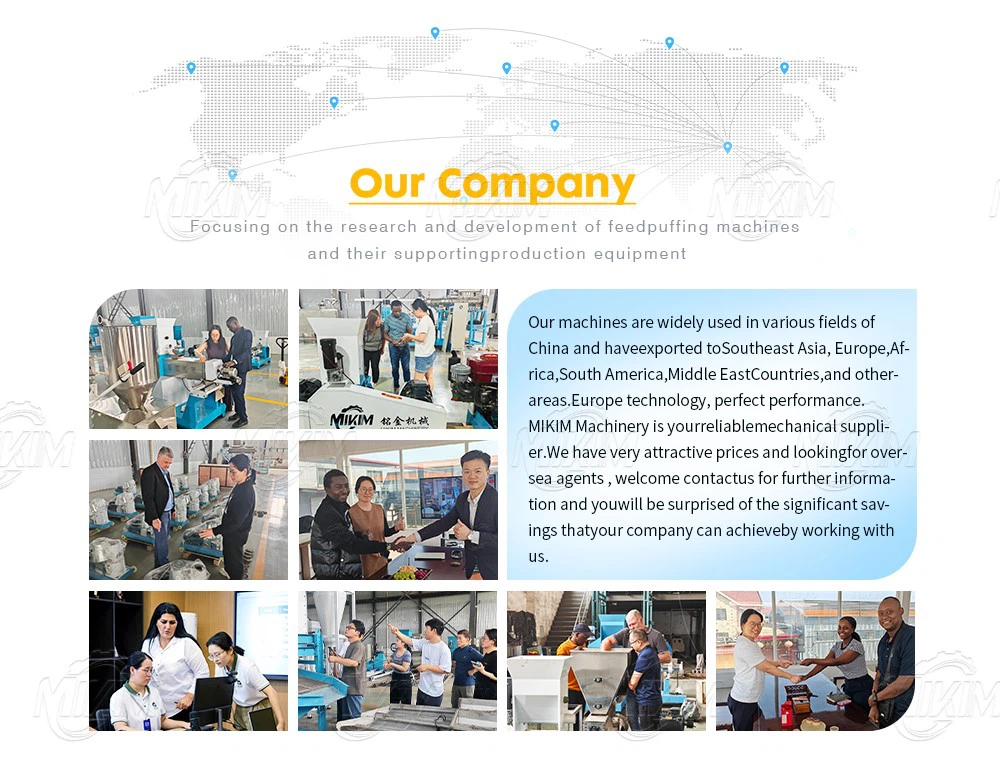
Company Introduction