


What is the standardized production process for general poultry pellet compound feed?
Leave a message
Production process description
The first step is raw material screening. Main ingredients such as corn, soybean meal, and wheat bran are passed through a vibrating screen to remove stones and metal impurities. Iron filings are then separated using a magnetic separator to prevent damage to subsequent equipment. Raw materials are also tested for moisture (controlled at 12%-14%) and mold, and unqualified raw materials are discarded.
The second step is pulverization. A hammer mill is used to crush corn and other granular materials to 1-3 mm, increasing their surface area for easier mixing and digestion.
The third step is precise batching. An automated batching system weighs each ingredient according to the formula ratio (e.g., 60% corn, 25% soybean meal, 10% wheat bran, and 5% premix). Trace additives such as vitamins and minerals are diluted to prevent uneven mixing.
The fourth step is mixing. The prepared ingredients are placed in a horizontal twin-shaft mixer and stirred for 5-8 minutes to ensure a uniformity coefficient of variation of ≤5%. The fifth step is pelleting or extrusion. For pellet production, a ring die pelletizer heats the mixture to 60-80°C and presses it into 3-5 mm pellets. For high-nutrient-demand feeds, an extruder creates porous pellets at high temperatures (80-130°C) and high pressure.
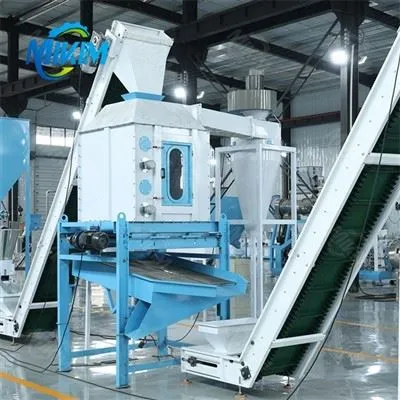
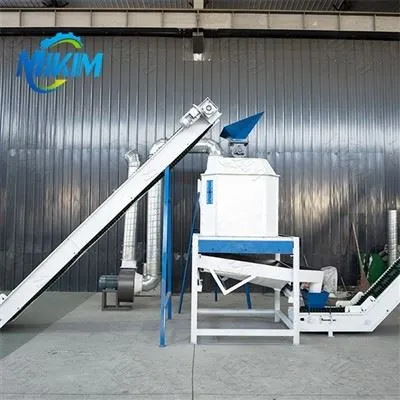
The final step is cooling and drying. The pellets are fed into a countercurrent cooler, cooled to room temperature (moisture content ≤ 12%), screened to remove fines, and then packaged and stored.


Related equipment parameters
|
|
|
|
|
|
|
|
|---|---|---|---|---|---|---|
|
|
|
|
|
|
|
|
|
|
|
|
|
|
|
|
|
|
|
|
|
|
|
|
|
|
|
|
|
|
|
|
|
|
|
|
|
|
|
|
|
|
|
|
|
|
|
|
Main Products
Ring Mold Feed Pellet Machiner


Ring Die Pellet Mill Applications
Large-Scale Feed Mills: Ring die pellet mills offer high production capacity (typically several to tens of tons per hour) and enable continuous, uninterrupted operation, meeting the large-scale production needs of pig, chicken, cattle, and other livestock feeds for large feed companies.
Stable Processing of a Single or Limited Variety Feed: The die replacement process is relatively complex, making them more suitable for the long-term production of a specific type of pellet feed (such as complete pig feed or laying hen feed), avoiding the impact of frequent die changes on efficiency.
For Applications with High Requirements for Pellet Density and Forming Quality: The ring die structure features a tighter fit between the rollers and the die, producing pellets with high hardness and uniform density, making it suitable for commercial feed production with stringent requirements for pellet physical properties.
Flat Die Poultry Feed Pellet Making Machine


Flat Die Pellet Machine Application Scenarios
Small Farms/Home Workshops: Flat die pellet machines have a low production capacity (typically tens to hundreds of kilograms per hour). With their compact size and low cost, they are suitable for small pig farms, chicken farms, or farmers processing feed for their own use, without requiring large-scale investment.
Multi-Variety, Small-Batch Pellet Production: Their simple and quick die replacement allows for rapid switching between pellets made from different raw materials (such as corn straw, soybean meal blends, and pet treats), providing high flexibility.
Mobile Processing or Field Operations: Some flat die pellet machines can be powered by small engines (such as diesel engines), eliminating the need for a fixed power source. These flat die pellet machines are suitable for on-site straw recycling, mountain farms, and other locations where stable power is lacking or mobile operations are required.
FAQ
1. What is the price of the farm feed pellet production line ?
The price ranges from approximately $11,000-$35,000
2. Do you provide maintenance services for your customers?
Yes, we offer comprehensive after-sales maintenance services to our customers.


