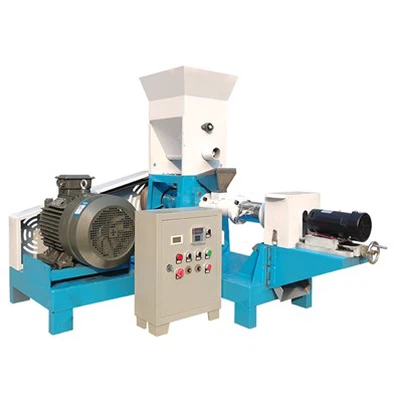
Mistakes to Avoid When Operating a Small Automatic Dog Food Machine
Leave a message
A small automatic dog food machine is simple to run, but it is also easy to run badly. The recurring failures reported by new operators are almost never mechanical design faults; they are process mistakes made before the material reaches the die or in the first minutes after start-up. Avoiding six specific errors covers most of the risk to the equipment, to output quality and to the safety of the finished product.
Error One: Skipping Impurity Removal
Raw materials may contain metal fragments, stones, string and weed seeds. If they are fed into the machine without cleaning, metal parts score the screw and the die, and a jammed fragment can stall the screw and burn out the motor. Stones and foreign vegetable matter also enter the finished kibble and can injure the animal. The correct sequence is mechanical first: screen the material on a vibrating screen to remove straw, string and dust, then pass it over a magnetic separator or through a metal detector to catch ferrous fragments. Grain components are pre-screened to remove spoiled kernels, stones and broken particles. This step costs a few minutes per batch and protects the most expensive parts of the machine.
Error Two: Poor Raw Material Selection and Storage
Freshness and consistency matter more than variety. Ingredients that are damp, mouldy or rancid carry mycotoxins and oxidation products into the feed, and high-fat material that has been stored warm becomes sticky and blocks the die. Purchase ingredients against a specification that fixes moisture, crude protein and crude fat, verify them with the analytical methods of ISO 6496 for moisture, ISO 5983-1 for crude protein and ISO 6492 for crude fat, and take samples according to ISO 6497. Store bags on pallets in a dry, ventilated room, use the oldest stock first, and reject any lot with visible mould, an off odour or caked lumps.
Error Three: Feeding Sticky or Wet Material Without Pretreatment
Fresh meat, liver, eggs and other moist ingredients cannot be fed into a dry extruder as they are. They must first be ground, mixed with a dry carrier such as cereal flour or a starch source, and blended until the mixture is crumbly rather than paste-like. Pre-blending distributes the fat and moisture and protects the extrusion process from surging and slipping. The same rule applies to added water: it is mixed into the dry blend in a measured quantity, never poured directly into the extruder barrel.
| Mistake | Immediate effect | Correct practice |
|---|---|---|
| No screening or magnetic separation | Screw and die wear, motor stall | Vibrating screen plus magnetic separator before grinding |
| Wet or raw meat fed directly | Slipping, surging, blockages | Grind and pre-blend with a dry carrier |
| Over-fine grinding | Power spikes, die blinding | Target a geometric mean diameter appropriate to the kibble |
| Wrong blend moisture | Soft or crumbly kibble | Mix to a crumbly, free-flowing consistency |
| Start-up under full load | Motor overload trip | Run empty for a short period before feeding material |
| Warm product packed directly | Mould growth, caking | Cool and dry to a stable moisture before packing |
Error Four: Over-Grinding and Incorrect Moisture
Grinding finer than the process requires raises the motor current, increases die wear and can blind the die holes with compacted powder. The fineness of a ground mixture is described by its geometric mean diameter under the method of ASAE S319.4, and it should be set to suit the target kibble size rather than reduced for its own sake. Moisture must also be deliberate: too dry and the kibble tears and crumbles, too wet and it deforms on the discharge conveyor and stores badly. Work to a fixed blend recipe with weighed water addition rather than adjusting by feel.
Error Five: Starting and Running Under Full Load
An extruder should never be started with material already compacted in the barrel, and it should never be started straight into full feed. Run the machine empty for the period stated in the manual so that the barrel reaches working temperature and the drive turns freely, then bring the feed rate up gradually. Continuous, even feeding keeps the die at a constant temperature; starving the machine and then flooding it is the most common cause of a stalled screw. If the drive stalls, clear the barrel before restarting rather than repeatedly pressing the start button, which is how motors are destroyed.
Error Six: Neglecting Hygiene and Storage Discipline
Pet food is a feed product and is handled under feed hygiene principles such as those set out in ISO/TS 22002-6, with a management framework such as ISO 22000 where the operation supplies commercial volumes. Clean the barrel, screw, die and cutter after every production run, because fat and protein residues in a warm machine are an ideal substrate for microbial growth. Cool the kibble to near ambient temperature and confirm its moisture before packing, store it in sealed containers away from moisture and direct sunlight, and record the production date on every batch. Hygiene failures and warm packing cause more customer complaints than any mechanical fault.
Frequently Asked Questions
Q: Can I put fresh meat directly into a small dog food extruder?
A: No. Fresh meat must be ground and pre-blended with a dry carrier until the mixture is crumbly. Feeding paste-like material causes surging, slipping and blockages in the barrel.
Q: Why does the motor trip shortly after start-up?
A: The most common causes are material left compacted in the barrel from the previous run, a feed rate that is too high for the die, or a start under load instead of an empty warm-up period.
Q: How fine should I grind the ingredients?
A: Fine enough for a uniform kibble, no finer. Excessive grinding raises current, accelerates die wear and blinds the die holes; the fineness of the blend is measured as a geometric mean diameter under ASAE S319.4.
Q: What does a correct blend look like before extrusion?
A: Free-flowing and crumbly, holding its shape when squeezed but not forming a paste. This consistency distributes fat and moisture evenly and keeps the extrusion load stable.
Q: Why is the finished kibble sometimes soft or crumbly?
A: Either the blend is too wet, the fat content is too high, or the die temperature is too low. Reduce added water, adjust the formula and confirm that the barrel has reached its working temperature before feeding.
Q: How should finished dog food be stored?
A: Cool it to near ambient temperature, verify its moisture content, and pack it in sealed containers in a dry, ventilated place. Product packed warm continues to release moisture and is prone to mould and caking.