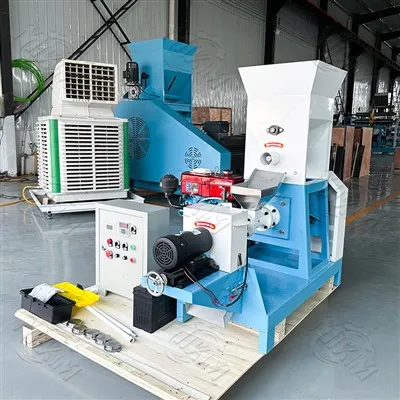
Hygiene Rules for Operating a Pet Food Extruder
Leave a message
Why Hygiene Determines Pet Food Safety
A pet food extruder mixes and cooks raw materials into a dense, moist paste. That combination of moisture, warmth and nutrients is an ideal growth medium for bacteria, so any lapse in machine control, operator behaviour or documentation moves contamination straight into the finished kibble. Hygiene management of a pet food extrusion line therefore has to cover the whole process rather than one cleaning step at the end of a shift. In practice the rules fall into three groups: machine cleaning and disinfection, personnel hygiene, and compliance records. Each group is described below with the steps used on operating pet food lines.
Pre-Production Cleaning and Disinfection
Before the first batch of a production cycle, the extruder must be fully cleaned and disinfected. Disassemble the screw, the barrel, the die and every other part that comes into contact with raw material. Soak those parts in a food-grade detergent for 30 minutes, scrub off any residue with a dedicated brush, rinse thoroughly with clean water, and then disinfect with ultraviolet light or ozone for a further 30 minutes.
Disinfection is only credible when it is measured. After treatment, verify the surfaces with sterile cotton swabs; a total bacterial count of no more than 100 CFU per square centimetre is the acceptance limit before the machine may be started. Converting cleaning into a measurable check is what separates a documented hygiene system from a routine wipe-down, and the result should be logged for every production cycle.
| Control point | Requirement | Verification |
|---|---|---|
| Pre-production cleaning | Full disassembly, 30 min detergent soak, UV or ozone disinfection | Surface swab, no more than 100 CFU per cm2 |
| Routine in-process cleaning | Feed inlet and outlet cleaned every 4 hours | Visual check plus log entry |
| Product changeover | Full disassembly and disinfection between product types | Swab test before restart |
| Personnel access | Sterile workwear, hand washing, disinfection, air shower | Daily health and access record |
| Retention sampling | Minimum 500 g of finished product per batch | Sample retained at least 6 months |
In-Process Cleaning and Changeover Control
Cleaning does not stop when production starts. The feed inlet and the discharge outlet should be cleaned every 4 hours so that raw material residue cannot build up into a bacterial reservoir. Between these intervals, operators should watch for material accumulating in dead corners of the barrel and around the die holder, because these pockets are the first places where spoilage organisms establish themselves.
Changing product type is the single highest-risk moment in the shift. When the line moves from a meat-based recipe to a grain-based recipe, protein residue left in the screw and die can carry allergens and spoilage organisms into a completely different product. Changeover cleaning must therefore follow the same disassembly, detergent soak and disinfection routine as the pre-production clean, not a shortened wash. Small traces of old material that look harmless are exactly what the routine is designed to remove.
Personnel Hygiene and Workshop Rules
Personnel practice is as important as machine cleaning, because an extruder crew is in direct contact with both raw material and finished product. Operators must wear sterile workwear, caps, masks and gloves as required, and jewellery and long fingernails are prohibited. Before entering the production workshop, each person completes hand washing, hand disinfection and an air shower.
If hands touch non-production items, or the operator leaves the post, hands must be disinfected again on return.
Eating, smoking and any activity unrelated to production are prohibited inside the workshop.
Operators must hold a valid health certificate and undergo regular health checks.
An operator showing signs of a cold, diarrhoea or another communicable illness must be removed from production immediately.
Records, Traceability and Compliance
Compliance rests on accurate records. For every batch, the crew records the raw material batch number, extrusion temperature, screw speed and production time. Records must be complete and legible and kept for at least two years so that any finished product can be traced back through the process. Raw materials and finished products are stored in separate areas, incoming materials must meet the applicable pet food standard such as the complete pet food series GB/T 31216 for dog food and GB/T 31217 for cat food, and expired or mouldy raw material is rejected outright.
Finished product is sampled as required, with at least 500 g retained per batch and a retention period of at least six months. Finally, the workshop must cooperate fully with regulatory inspection and correct any finding promptly, because an uncorrected deviation is the fastest way to turn a single hygiene incident into a sustained quality problem.
Frequently Asked Questions
Q: How often must a pet food extruder be cleaned during production?
The feed inlet and outlet should be cleaned every 4 hours, while a full disassembly and disinfection is performed before each production cycle and at every product changeover.
Q: What bacterial limit confirms that cleaning was effective?
Surface swabs taken after disinfection must show a total bacterial count of no more than 100 CFU per square centimetre before the machine is released for production.
Q: Why is changeover cleaning stricter than routine cleaning?
Residue from a meat-based recipe can carry allergens and spoilage organisms into a following grain-based batch, so changeover uses the full disassembly and disinfection routine.
Q: What should be recorded for each production batch?
Raw material batch number, extrusion temperature, screw speed and production time, retained for at least two years to support traceability of the finished product.
Q: How much finished product must be kept as a retention sample?
At least 500 g per batch, stored under the specified conditions for a minimum of six months.
Q: Can an operator with a cold continue to run the machine?
No. Any operator with a cold, diarrhoea or another communicable illness must be removed from production immediately to prevent contamination of the food.