Why is feeding fish pellets advantageous
Leave a message
Pelleted feed accelerates fish growth through precise nutrient supply and high absorption efficiency. Its high-quality protein and fat content are rapidly converted into fish body tissue, shortening the growth cycle. For example, tilapia raised on pelleted feed have a growth cycle shortened from 8 months to 6 months; crayfish fed specialized pelleted feed molt more frequently and are 20% larger than those fed aquatic plants. Furthermore, pelleted feed formulations can be adjusted according to the fish's growth stage. For juveniles, it provides easily digestible high-protein feed to promote bone development; for adults, it optimizes the energy feed ratio to accelerate fat deposition and increase meat yield. Data from a crucian carp farming facility shows that crucian carp fed pelleted feed achieved a meat yield of 65%, 10 percentage points higher than those fed natural feed.
Pelleted feed improves fish meat quality and safety. Natural feed may carry parasites, bacteria, or heavy metals, while pelleted feed undergoes high-temperature extrusion, which kills harmful microorganisms in the raw materials. Simultaneously, the standardized industrial production process avoids the risk of heavy metal contamination. In terms of improving meat quality, pelleted feed can enhance the taste of fish by adjusting the type and content of fats. For example, adding fish oil increases the content of unsaturated fatty acids in the fish, making the meat more tender; reducing the intake of low-quality fats can reduce the fishy smell. Furthermore, fish raised on pelleted feed have more uniform body shape and natural coloration, meeting market requirements for the appearance of high-quality aquatic products, which can increase the product price by 10%-20%.
Pelleted feed also improves the uniformity of fish. When feeding with natural bait, competition for food often occurs, leading to significant differences in individual growth. Pelleted feed, however, can be evenly distributed by a feeder, ensuring that each fish receives sufficient feed, controlling individual size differences to within 10%. This facilitates bulk harvesting and sales, reducing losses from unsold small fish.
Related equipment



about Us
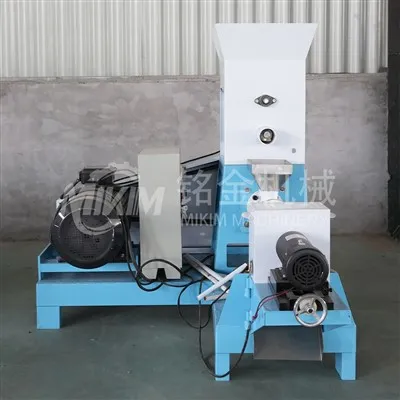
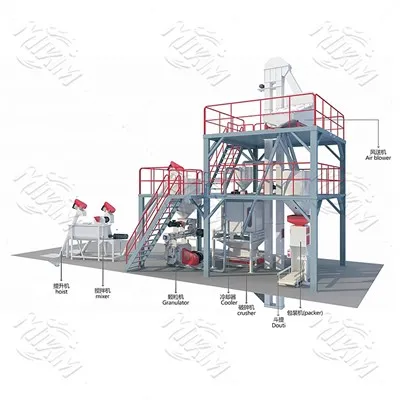
MIKIM's fish feed pellet production lines and supporting machinery offer excellent value for money. Not only are they affordable, eliminating middlemen markups and allowing small and medium-sized enterprises (SMEs) and fish farmers to purchase complete sets of equipment at reasonable costs, but they also boast exceptional efficiency. The fully automated process, from raw material crushing and precise ingredient mixing to extrusion pelleting and maturation, is completed in one continuous flow. This results in high starch gelatinization rates and uniform pellet formation, significantly improving production efficiency and feed quality, truly achieving "low cost, high output." Choosing a MIKIM fish feed pellet production line means enjoying comprehensive pre-sales and after-sales service, including 24-hour online customer support, a one-year warranty on the entire machine, professional on-site installation, commissioning, and maintenance, and a stable supply of spare parts. Customers can buy with confidence and use with peace of mind, with both excellent value and service quality!
Customer visit

Certificate of Honor

FAQ
1. What is the price of the fish feed pellet extruder?
The price ranges from approximately $3,500-$55,000
2. Do you provide maintenance services for your customers?
Yes, we offer comprehensive after-sales maintenance services to our customers.
If you would like to learn more about MIKIM machinery, please contact us. We offer one-stop service and welcome your inquiries!!!