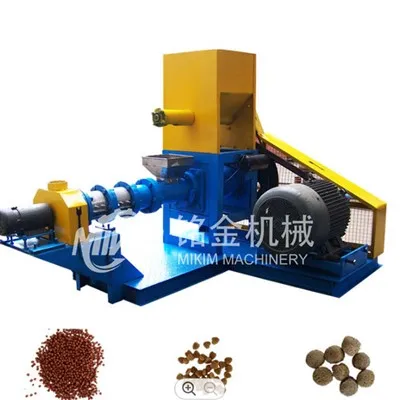
How To Make High-calcium Feed For Turtles Using An Extruded Feed Pellet Mill?
Leave a message
Usage and Procedures
Most turtle pellet mills are mini models (50-100 catties/hour). The key step is calcium powder processing:
Step 1: Start-up inspection. Focus on ensuring the die holes are clear. Calcium powder easily clumps and clogs the holes; clear them with a fine needle. Also check the screw for any remaining hard particles; turn it by hand to ensure smooth operation.
Step 2: Raw material processing and mixing. For aquatic turtles: (25% fishmeal + 20% shell powder); for tortoises: (30% alfalfa meal + 20% calcium powder). Use 200-mesh fine calcium powder. Dry mix with the other ingredients for 2 minutes, then add warm water to adjust the moisture content to 22% (slightly drier than other feeds to reduce calcium powder clumping).
Step 3: Pelletizing parameter adjustment. Temperature 130℃, pressure 6MPa. High pressure helps the calcium powder adhere to the raw materials, preventing residue from falling off. After discharge, observe the particles: if they do not disperse or lose calcium after soaking in water for 2 hours, they are qualified; if calcium powder falls off immediately after soaking, add 2% seaweed gum (a natural binder).
Step 4: Shutdown and preliminary cleaning. After shutting down the machine, first empty the remaining raw material from the hopper, then wipe the hopper with a dry cloth to prevent the calcium powder from getting damp and clumping. Then run the machine idle for 1 minute to discharge any remaining material from the barrel.
Maintenance Precautions
① Clean calcium powder residue promptly: Do not soak calcium powder on the mold and screw in water. It's easiest to remove it by brushing it off when dry. After brushing, apply a thin layer of petroleum jelly to the screw; this prevents rust and reduces calcium powder adhesion for future use.
② Regularly check mold wear: Calcium powder is hard, causing mold wear quickly. Measure the aperture with calipers every 20 uses. Replace the turtle feed mold when it wears down from 1mm to 1.2mm; otherwise, the particles will be too large for young turtles to eat.
③ Do not install molds when the machine is not in use: Remove the molds and store them separately in a dry box to avoid friction with machine parts and extend their lifespan. Reinstall them when needed, but do not tighten them too much, otherwise they will be difficult to remove next time.
④ Avoid hard particles in raw materials: Shell powder and calcium powder must be sieved before use to remove unground hard particles. These particles can scratch the screw and barrel, and can also injure the turtle's digestive system, resulting in double losses.


about Us
Qualifications and Honors

Customer visit

FAQ
1. What is the price of the dry type fish food extruder?
The price ranges from approximately $6,000-$22,000
2. Do you provide maintenance services for your customers?
Yes, we offer comprehensive after-sales maintenance services to our customers.