


How To Mix Ingredients in A Feed Pellet Machine?
Leave a message
Correct mixing is a key step to ensure feed quality and nutritional balance. The following will introduce the tips and steps for mixing ingredients in a feed pellet machine to help you better operate the feed pellet machine.
1. Nutritional balance: The feed should contain various nutrients required by animals, such as protein, carbohydrates, fat, vitamins, minerals, etc., to meet the needs of animals.
2. Digestibility: Feed raw materials should be easy for animals to digest and absorb to improve feed utilization.
3. Safety: Feed raw materials should be non-toxic and harmless to avoid harm to animals.
1. Determine the formula: Determine the appropriate formula according to the needs and growth stages of different animals. You can refer to professional feed formula tables or consult veterinarians and feed experts for advice.
2. Purchase raw materials: Determine the types and proportions of raw materials required according to the formula, select high-quality feed raw materials, and ensure the freshness and quality of the raw materials.
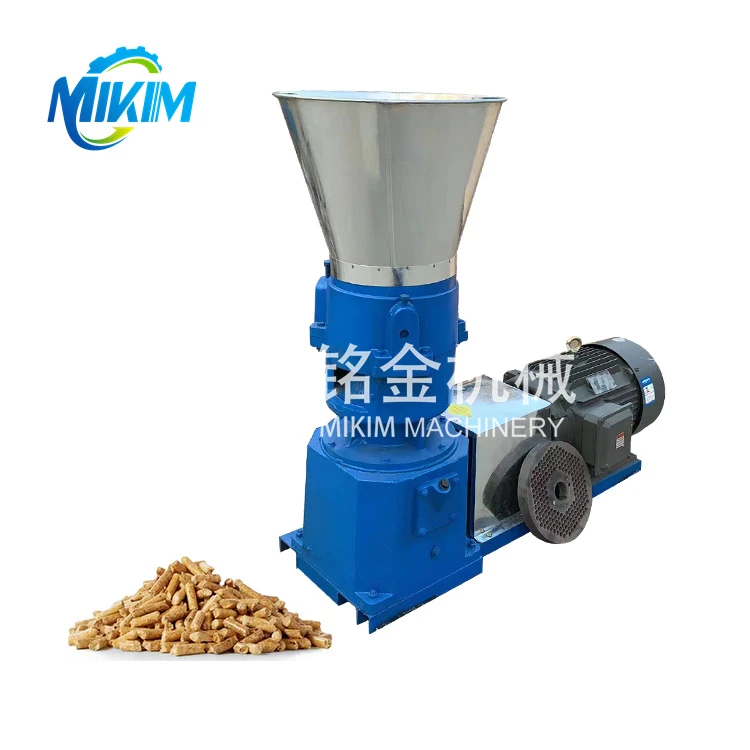
| Model | Capacity | Power | Dimensions |
| MK-250 | 100-200kg/h | 15kw | 1120*440*1060mm |
| MK-300 | 200-300kg/h | 22kw | 1280*560*1220mm |
| MK-350 | 300-400kg/h | 30kw | 1300*600*1250mm |
| MK-400 | 400-600kg/h | 37kw | 1390*650*1290mm |
| MK450 | 600-800kg/h | 45kw | 1620*700*1600mm |
3. Weighing and mixing: Weigh the various raw materials according to the proportions in the formula, paying attention to accuracy. The raw materials are then put into the feed pellet machine for mixing to ensure that the various raw materials are evenly distributed.
4. Crushing and conditioning: The mixed raw materials are crushed through the feed pellet machine to make them suitable for the molding requirements of the pellet machine. For specific raw materials, such as corn, conditioning may be required to improve the molding effect of the pellet machine.
5. Molding and cooling: The crushed and conditioned raw materials enter the pellet machine and are formed into pellets by extrusion and cutting. The pellets are then cooled by cooling equipment to improve the hardness and stability of the pellets.
6. Packaging and storage: The cooled pellets enter the packaging machine through the conveying equipment for packaging, and then stored in a dry and ventilated place to maintain the quality and nutrition of the pellets.


