Operating Procedures And Precautions For Pet Food Making Machine
Leave a message
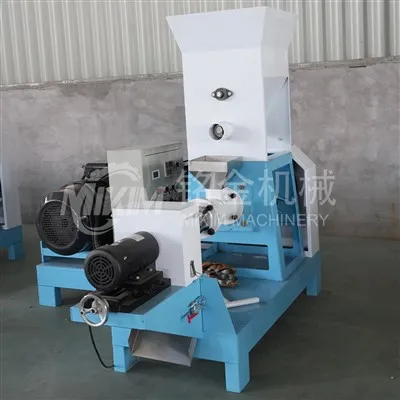
The differences in pre-operation preparation lie in equipment fixation and raw material processing volume. Small pet food pellet machines (e.g., 2kg/hour capacity) are small and lightweight, easily placed on a table or stand. They process 1-2kg of raw material at a time, and manual mixing is sufficient for uniformity. Large machines (e.g., 10kg/hour capacity) weigh over 50kg and must be secured to the ground with expansion bolts to prevent violent vibration during operation. Raw materials need to be processed in batches of 5-10kg each, requiring an electric mixer for 10 minutes to ensure uniform mixing. A raw material storage bin is also needed for continuous feeding. Power connections also differ; small machines can use a standard household outlet, while large machines require a dedicated 16A outlet for stable power.
The core difference in the debugging process lies in parameter setting. Small pet food extruder machines are mostly manually adjustable, with temperature set via a knob and a fixed speed. Debugging requires repeated testing of pellet condition to adjust the temperature. Large machines are equipped with a touchscreen control system, allowing preset parameters for different recipes (e.g., one for meat and one for grains). Debugging simply involves calling up the corresponding parameters and running the machine idle for 5 minutes to confirm temperature and speed stability. Larger machines also require checking the hydraulic system to ensure stable pressure between 0.3-0.5 MPa, preventing insufficient pressure from causing pellets to scatter.
The differences in processing flow lie mainly in feeding and monitoring. Small dog food pellet makers use manual feeding, requiring dedicated personnel to control the speed; larger machines are mostly automatically fed, with the feed rate controlled by a level sensor, requiring only periodic replenishment of raw materials, but the hopper needs to be checked every 5 minutes to prevent bridging and blockage. The monitoring focus also differs: small machines only require observation of the discharge port, while large machines require simultaneous monitoring of data such as current and temperature on the touchscreen. If the current exceeds the rated value by 10%, the feeding speed must be immediately reduced to avoid motor overload. Larger machines also require a cooling conveyor belt, allowing processed pellets to directly enter the conveyor belt for cooling, eliminating the need for manual collection and improving efficiency.
The differences in cleaning and maintenance are reflected in the frequency and method. Small pet food processing machines only require thorough cleaning after each use; larger machines, due to their high capacity, require partial cleaning every hour of operation, using compressed air to blow away residue from the feed and discharge ports, and a complete disassembly and cleaning after each day's processing. For maintenance, small machines should have lubricating oil added monthly, while large machines require weekly checks of the gearbox oil level, with timely replenishment if insufficient, and lubricating oil changed quarterly.
Why choose us?
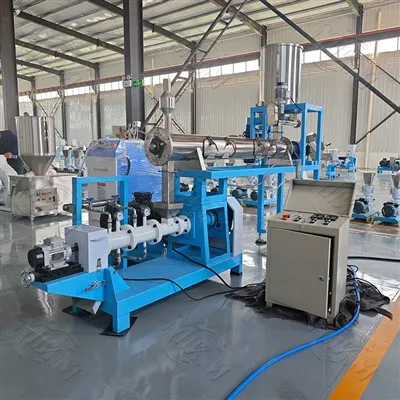
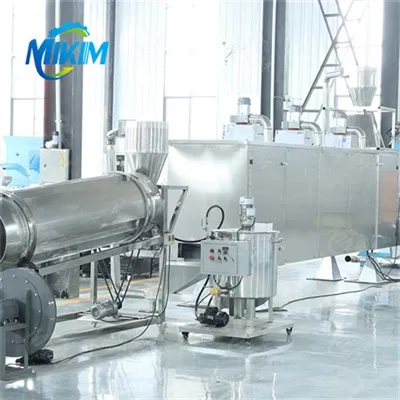
The MIKIM's floating fish feed extruder machine is constructed entirely of food-grade 304 stainless steel, fully complying with food processing hygiene standards. It is corrosion-resistant, easy to clean, and eliminates potential contamination at the source. The core screw is made of high-quality alloy steel through special heat treatment, offering outstanding wear resistance and corrosion resistance. Combined with its integrated structural design, this significantly extends its service life. The entire machine has passed CE and ISO international authoritative certifications, aligning with global quality standards and ensuring safer and more reliable processing.
Our equipment


Our Services
We offer:
One-Year Whole Machine Warranty Service
On-site Installation, Commissioning, and Technical Guidance
24/7 Online Technical Support
Qualifications and Honors

Customer visit

FAQ
1. What is the price of the pet food pellet machine?
The price ranges from approximately $1,500-$50,000
2. How do you deliver to customers?
MIKIM Machinery's machinery delivery follows a complete process of "customized preparation - safe and fast delivery - precise handover - after-sales extension", with 3-day fast delivery, multi-layer protective packaging, global logistics tracking and 1-year warranty + on-site technical service to ensure that the equipment is delivered efficiently and in good condition and put into use smoothly.