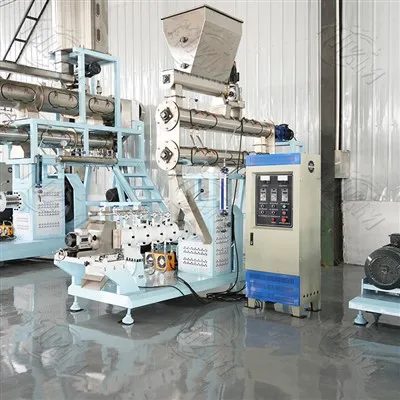
Should Policy Compliance And Environmental Preservation Be The Main Factors Taken Into Account When Selecting A Livestock Food Pellet Machine?
Leave a message
Dust control is the primary requirement for chicken meal pellet makers to meet environmental compliance standards. It must comply with the "Integrated Emission Standard of Air Pollutants" (GB 16297-1996), with dust concentration in the workshop not exceeding 10 mg/m³. When purchasing, choose pellet mills equipped with closed feeding and discharging systems, where raw material transport is via pipelines to prevent dust leakage. The equipment should also have a built-in pulse dust collector, using high-pressure airflow to collect dust inside the equipment into a dust bag, achieving a dust removal efficiency of over 99%. For equipment that integrates crushing and pelletizing, a cyclone separator should be added to the crushing stage to further reduce dust emissions.
Noise control must also comply with national standards. The "Environmental Noise Emission Standard for Industrial Enterprises" (GB 12348-2008) stipulates that noise in the production workshop must not exceed 85 decibels. The noise of the pellet mill mainly comes from the motor and transmission system. When purchasing, choose equipment equipped with a noise reduction cover, which can reduce noise by 10-15 decibels. Gear-driven equipment is 5-8 decibels quieter than belt-driven equipment and operates more stably. In addition, shock-absorbing pads should be installed on the bottom of the animal food pellet maker to reduce noise generated by vibration transmission and avoid impacting the surrounding environment.
Besides dust and noise, some regions have higher requirements for the energy consumption and emissions of manual meal pellet machines, which must comply with local industrial policies. For example, the Beijing-Tianjin-Hebei region requires feed processing equipment to meet the first-level energy efficiency standard; otherwise, registration will not be granted. Some southern regions prohibit the use of coal-fired pellet mills, requiring the selection of environmentally friendly equipment with electric or steam heating. Before purchasing, it is necessary to understand the specific policy requirements of the local area to avoid purchasing equipment that cannot be used due to non-compliance.
Environmental compliance not only avoids policy risks but also improves the production environment and enhances employee morale. Manual food pellet machines equipped with environmental protection devices have less dust and lower noise levels in the workshop, eliminating the need for employees to wear heavy protective gear and reducing employee turnover by more than 30%. Furthermore, the investment in environmental protection equipment brings long-term benefits. Dust collected by pulse dust collectors can be reprocessed and reused, reducing raw material waste. Based on a 2% dust loss per ton of feed, more than 10 tons of raw materials can be recycled annually, creating additional revenue.


about Us
We offer:
One-Year Whole Machine Warranty Service
On-site Installation, Commissioning, and Technical Guidance
24/7 Online Technical Support
Qualifications and Honors

Customer visit

FAQ
1. What is the price of the small animal feed pellet machine?
The price ranges from approximately $2,500-$50,000
2. Do you provide maintenance services for your customers?
Yes, we offer comprehensive after-sales maintenance services to our customers.