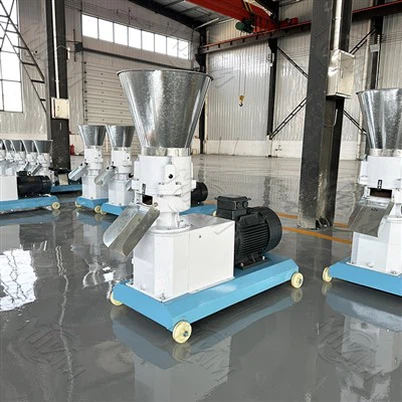
Tips For Using The Extrusion Rabbit Food Pellet Mill
Leave a message
Preparation
Fiber raw materials are key: Select a small-to-medium-sized extrusion pellet machine (150-200 catties per hour, enough for 50 rabbits for a week), with a die size of 3-4 mm (3 mm for baby rabbits, 4 mm for adult rabbits). Raw material formula: Baby rabbit feed (35% alfalfa meal + 20% soybean meal + 15% corn flour + 20% wheat bran + 5% calcium powder + 5% probiotics); Adult rabbit feed (40% timothy hay meal + 15% soybean meal + 10% corn flour + 25% wheat bran + 5% calcium powder + 5% salt).
Production Steps
Step 1: Processing the hay meal. If alfalfa or timothy hay meal has coarse stems, sift it to remove them to avoid clogging the machine; soak soybean meal and corn flour in warm water for 10 minutes beforehand to make the powder finer.
Step 2: Mixing and moistening. Pour all ingredients into a large container, add warm water and stir. Baby rabbit pellets should have a moisture content of 25% (slightly soft for easy chewing), while adult rabbit pellets should have a moisture content of 22% (slightly firm to aid in teeth cleaning). Stir several times to ensure the hay and powder are evenly mixed.
Step 3: Machine Setup. Preheat the pet food extrusion equipment for 4 minutes (110℃; rabbit feed does not require a high temperature to retain fiber nutrients). After loading the mold, run the machine empty, then add a small amount of raw material to test the pellet consistency.
Step 4: Pelletizing and Drying. Pour the raw material into the hopper, feed evenly, and cut the extruded pellets into 2-3 cm pieces. Place them on a clean cement floor to dry for 2 hours, avoiding direct sunlight to prevent nutrient loss.
Step 5: Storage. Store the dried rabbit pellets in breathable burlap sacks in a well-ventilated, dry place. They can be stored for up to 20 days. Feed them mixed with fresh hay.
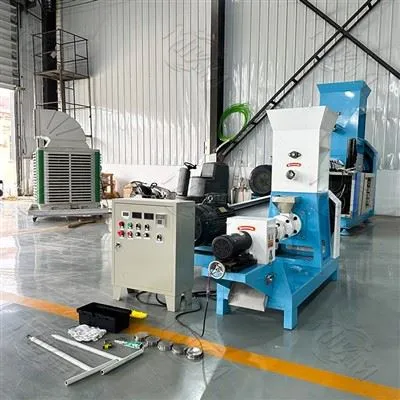


Product Parameters
|
Model |
Main motor (kw) |
Feeder (KW) |
Cutter(KW) |
Capacity (kg/h) |
Machine size (m) |
Weight(kg) |
|
DGP-40 |
5.5 |
0.4 |
0.4 |
40-50 |
1.36*1.3*0.8 |
320 |
|
DGP-60 |
15 |
0.4 |
0.4 |
120-150 |
1.36*1.33*0.86 |
420 |
|
DGP-70 |
18.5 |
0.4 |
0.4 |
200-250 |
1.36*1.33*0.86 |
550 |
|
DGP-80 |
22 |
1.5 |
0.55 |
300-350 |
2.3*1.7*1.4 |
720 |
|
DGP-90 |
30 |
1.5 |
0.55 |
400-450 |
2.3*1.7*1.4 |
1100 |
|
DGP-100 |
37 |
1.5 |
1.5 |
500 |
2*2.8*1.2 |
1500 |
|
DGP-120 |
55 |
1.5 |
1.5 |
600-700 |
2.2*2.9*1.2 |
1800 |
|
DGP-135 |
75 |
1.5 |
2.2 |
800-900 |
2.2*3.1*1.37 |
2000 |
|
DGP-160 |
90 |
2.2 |
2.2 |
1000-1200 |
2.3*3.15*1.38 |
2500 |
|
DGP-200 |
132 |
3 |
3 |
1800-2000 |
2.35*3.45*1.65 |
3200 |
about Us
Qualifications and Honors

Customer visit

FAQ
1. What is the price of the floating feed extruder machine?
The price ranges from approximately $6,000-$23,000
2. Do you provide maintenance services for your customers?
Yes, we offer comprehensive after-sales maintenance services to our customers.