

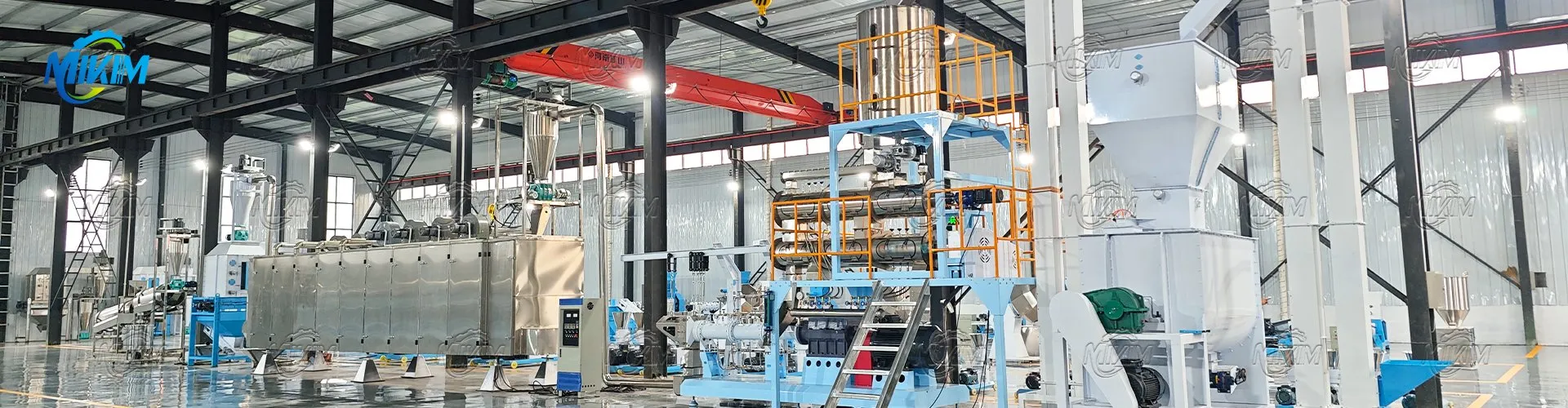
Usual Maintenance Concerns in Wet Type Fish Feed Pellet Mill Lines
Leave a message
Common maintenance issues with heating systems include damaged heating elements, temperature control malfunctions, and uneven heat distribution. In electric-heated pet food pellet machines, heating elements are prone to aging and burnout due to prolonged high-temperature operation, resulting in decreased heating power and insufficient temperature rise. Steam-heated models may experience insufficient heat supply due to unstable steam pressure or pipe blockages. Temperature control malfunctions are often caused by inaccurate thermostat calibration or temperature sensor failure, leading to excessive deviations between the actual and set temperatures. Uneven heat distribution is caused by improper installation of heating elements or damage to the barrel insulation, resulting in temperature differences exceeding ±5℃ across different sections of the barrel, affecting the gelatinization of the feed.
Problems with the cooling system of dry-type fish feed extruder lines mainly focus on poor cooling performance and equipment blockages. In air-cooled systems, a damaged cooling fan or blocked air ducts can lead to incomplete feed cooling and excessively high discharge temperatures (>40℃). In water-cooled systems, insufficient cooling water volume may result from scale buildup in water pipes or pump malfunctions, or poor water quality may cause pipe corrosion and blockages. Poor cooling can lead to feed pellet sticking and mold growth, while pipe blockage further exacerbates cooling system failure, creating a vicious cycle.
Targeted solutions need to be implemented in stages. For the heating system, damaged electric heating elements should be replaced with components of the same power rating immediately. For steam-heated models, steam pressure should be checked (stable at 0.6-0.8 MPa), and pipe blockages should be cleared. Temperature controllers and temperature sensors should be calibrated regularly, and damaged insulation layers in the casing should be replaced. For the cooling system, dust should be cleaned from air-cooled ducts and fans, and damaged fans should be replaced. For water-cooled systems, pipes should be cleaned regularly with descaling agents to remove scale, and the water pump's operating status should be checked to ensure sufficient cooling water flow. Softened water should be used to prevent pipe corrosion.
In routine maintenance, temperature and pressure data for both heating and cooling systems should be recorded hourly. The operating status of heating elements and cooling fans should be checked daily. The filters in cooling ducts and water-cooled pipes should be cleaned weekly, and the accuracy of temperature sensors and pipe sealing should be checked monthly to ensure the stable operation of both systems and guarantee feed quality.
Why choose us?
The MIKIM's floating fish feed extruder machine is constructed entirely of food-grade 304 stainless steel, fully complying with food processing hygiene standards. It is corrosion-resistant, easy to clean, and eliminates potential contamination at the source. The core screw is made of high-quality alloy steel through special heat treatment, offering outstanding wear resistance and corrosion resistance. Combined with its integrated structural design, this significantly extends its service life. The entire machine has passed CE and ISO international authoritative certifications, aligning with global quality standards and ensuring safer and more reliable processing.
Our equipment


Our Services
We offer:
One-Year Whole Machine Warranty Service
On-site Installation, Commissioning, and Technical Guidance
24/7 Online Technical Support
Qualifications and Honors

Customer visit


