


What Are The Key Points For Drying And Cooling Cattle And Sheep Feed Pellets?
Leave a message
Cattle and sheep feed pellets are primarily made from coarse fiber raw materials such as corn stalks and alfalfa. Freshly pelleted pellets are at a temperature of 50-70℃ and a moisture content of 16%-20%. Drying and cooling require reducing the moisture content to 13%-15% and the temperature to around 25℃ while preserving the toughness and structure of the coarse fibers to promote rumen motility and digestion.
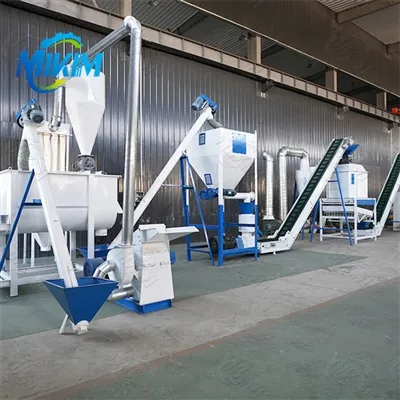
A drum dryer is recommended. The rotating drum tumbles the pellets, and hot air enters from one end of the drum, ensuring full contact with the pellets. During operation, the hot air temperature should be set to 70-80℃, the drum speed adjusted to 5-8 rpm, and the drying time 15-20 minutes. This type of equipment allows the coarse fiber pellets to dehydrate slowly in a gentle environment, avoiding damage to the fiber structure from high temperature and pressure. The tumbling process also ensures uniform dehydration. For cattle feed with a coarse fiber content exceeding 60%, lifting plates can be added to the dryer to increase the contact area between the pellets and the hot air, ensuring sufficient removal of internal moisture. For larger-scale production, a fluidized bed dryer can be used. Airflow suspends the particles for efficient drying, with the air velocity controlled at 0.9-1.1 m/s to prevent fiber breakage due to excessive wind speed.
The cooling process uses a combination of a counter-flow cooler and a vibrating screen. The particles first enter the cooler and are cooled for 15-20 minutes with room temperature air at 0.8-1.0 m/s, reducing the temperature from 45-55℃ to below 25℃. They are then screened by the vibrating screen to remove any small amount of debris generated during cooling, ensuring particle integrity. During cooling, it is important to note that cattle and sheep feed particles are relatively large and heavy; the material layer thickness in the cooler should be controlled at 80-100 cm to ensure that cold air can penetrate the layer and prevent incomplete cooling of the bottom particles. For feed for young ruminants such as calves and lambs, where the particles are finer, the material layer thickness can be appropriately reduced to 50-60 cm to improve cooling uniformity.
Key precautions include: First, fiber protection: the drying temperature must not exceed 85℃, otherwise the coarse fibers will carbonize and lose their ability to promote rumen motility. If the straw fibers in the pellets become brittle, the temperature must be lowered immediately and the drying time extended.
Second, moisture control: the moisture content of cattle and sheep feed pellets should be controlled between 13% and 15%. Too low a moisture content will result in overly hard pellets, affecting chewability; too high a moisture content will easily lead to mold growth. Moisture content can be monitored in real time using a moisture meter, and process parameters should be adjusted promptly.
Third, equipment maintenance: regularly clean residual fibers from the dryer drum to prevent them from tangling on the lifting plates and affecting rotation; the cooler filter screen should be replaced weekly to prevent dust blockage and reduced ventilation. Furthermore, during winter production, cooled pellets should be stored in a warm environment to prevent condensation caused by low temperatures.



about Us
We offer:
One-Year Whole Machine Warranty Service
On-site Installation, Commissioning, and Technical Guidance
24/7 Online Technical Support
Qualifications and Honors

Customer visit

FAQ
1. What is the price of the small animal feed machine?
The price ranges from approximately $1,500-$35,000
2. Do you provide maintenance services for your customers?
Yes, we offer comprehensive after-sales maintenance services to our customers.


