How To Dry And Cool Small Feed Pellets
Leave a message
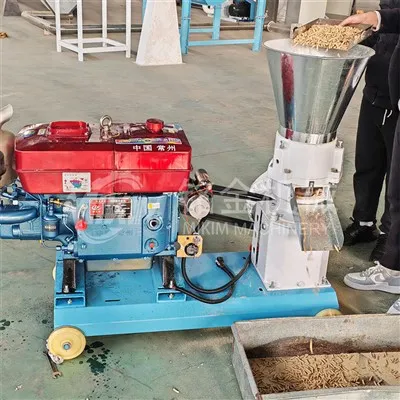
Small-scale feed pellet producers, with limited production volumes (typically 50-200 kg per batch) and capital, can adopt a drying and cooling model that prioritizes natural drying supplemented by simple equipment. The core objective is to reduce the pellet moisture content to 12%-14% and the temperature to room temperature, meeting the needs of small-scale farming.
The drying process can combine sun-drying with simple drying. On sunny days, a drying rack 30cm off the ground is erected in a well-ventilated and dry area. Breathable gauze or bamboo mats are laid on top, and the freshly made pellets are evenly spread out, with a thickness controlled at 2-3cm. The pellets are turned over every 2 hours to ensure even drying. This natural sun-drying method is extremely low-cost and suitable for pellets with low moisture content (16%-18%), with a drying time typically of 4-6 hours. On rainy days or when the pellet moisture content is high (18%-20%), a simple drying shed can be built. Hot air is generated using a coal-fired or electric heater and blown onto the pellets by a fan, maintaining a temperature of 70-80℃. The pellets are turned over every hour, with a drying time of 3-4 hours. It is important to ensure proper ventilation in the drying shed to prevent moisture buildup and excessive heat that could damage the pellets.
The cooling process utilizes a combination of natural cooling and fan assistance. After sun-drying or air-drying, the pellets will be approximately 35-45℃. They should be moved to a cool, well-ventilated area and spread out to continue cooling until the thickness is reduced to 1-2cm, allowing them to cool naturally for 2-3 hours. To accelerate cooling, an industrial fan can be placed 1.5-2 meters away from the pellets, blowing at a medium speed (0.5-0.8 m/s), for 1-1.5 hours to bring the temperature down to room temperature. For temperature-sensitive pellets such as pet food, the fan should be set to oscillating mode to prevent uneven drying due to localized high airflow.
Operational precautions must balance safety and quality. Weather conditions are crucial; natural drying should be avoided during rainy or foggy weather to prevent the pellets from absorbing moisture. If it rains suddenly, the pellets must be immediately moved indoors, spread out for ventilation, and prevent them from piling up and becoming moldy. Secondly, safety precautions are crucial. When using a simple drying shed, keep it away from flammable and explosive materials. Maintain a distance of at least 1 meter between the heating furnace and the granules to prevent fires. Wear gloves during operation to avoid burns from contact with hot granules. Thirdly, quality inspection is essential.
After squeezing the cooled granules, if they do not scatter or stick to your hand when released, the moisture content is acceptable. If the granules are sticky, they need to be dried or re-dried. Fourthly, storage requirements are critical. After drying and cooling, the granules should be immediately placed in sealed bags or storage containers in a dry, well-ventilated indoor environment to prevent moisture absorption by the granules at the bottom due to damp ground. Furthermore, small-scale production should be carried out in small batches multiple times to avoid producing too much at once, which could lead to spoilage due to delayed drying and cooling.


about Us
We offer:
One-Year Whole Machine Warranty Service
On-site Installation, Commissioning, and Technical Guidance
24/7 Online Technical Support
Qualifications and Honors

Customer visit

FAQ
1. What is the price of the small fish feed pellet machine?
The price ranges from approximately $3,500-$35,000
2. Do you provide maintenance services for your customers?
Yes, we offer comprehensive after-sales maintenance services to our customers.