

What Is The Production Process And Main Equipment For Shrimp And Crab Feed?
Leave a message
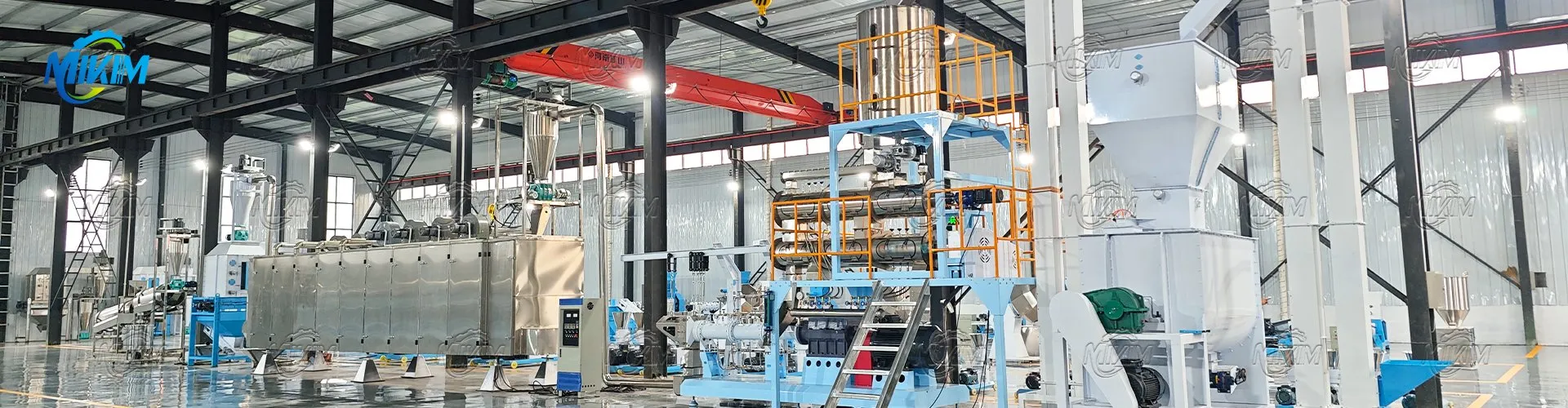
The unique growth characteristics of crustaceans such as shrimp and crabs place significantly higher demands on the physical properties and nutritional composition of their feed compared to ordinary aquatic feeds. Therefore, the pet floating food production line process must be designed around "improving foam resistance and enhancing nutrient retention," primarily including special raw material processing, precise ingredient formulation, high-pressure pelleting, and low-temperature drying. Equipment configuration must emphasize "corrosion resistance and high precision."
The special raw material processing stage is the core of specialty aquatic feeds. Shrimp and crab feed requires high calcium content, and raw materials such as shell powder and fish bone meal are added. These raw materials must be ground to a fineness of 100 mesh or higher using a ball mill to ensure uniform calcium distribution and easy absorption. The grinding time in the ball mill is controlled at 2-3 hours, and the fineness compliance rate must be above 95%. Animal protein raw materials such as fish meal and shrimp meal are prone to moisture absorption and spoilage, requiring vacuum drying at a low temperature of 50-60℃, with moisture content controlled below 8%. Simultaneously, a sealed conveyor system is used for transportation to prevent oxidation caused by contact with air. In addition, some raw materials require microencapsulation to encapsulate heat-sensitive components such as vitamin C and EPA, preventing loss during processing. The encapsulation equipment uses a spray-drying encapsulation machine with an inlet air temperature of 180℃ and an outlet air temperature of 80℃, ensuring an encapsulation rate of 90%.
Precise ingredient proportioning and high-pressure pelleting determine feed quality. A fully automated weighing system is used for proportioning, equipped with more than 10 batching bins to store different raw materials. High-density raw materials such as shell powder are weighed using a scale with a weighing sensor accuracy of 0.01kg, ensuring that the calcium content error is controlled within ±0.2%. A twin-shaft paddle mixer is used for mixing, with the mixing time extended to 5-6 minutes to ensure uniform distribution of trace components. Pelletizing is key to improving foam resistance. A high-pressure ring die pellet mill is selected, with the working pressure increased to 15-20MPa, the ring die aperture 2-3mm, and the compression ratio 1:8-1:10. High pressure densifies the feed pellets, reducing water loss. The conditioning process before pelleting employs a three-stage conditioner, gradually raising the temperature to 110-120℃ and controlling the humidity at 17%-19%, ensuring full gelatinization of the starch and the formation of a stable structure.
The drying, cooling, and finished product inspection processes emphasize meticulous attention to detail. A mesh belt dryer is used with segmented temperature control: 60-70℃ in the feeding zone, 70-80℃ in the middle zone, and 50-60℃ in the discharge zone, with a drying time of 30-40 minutes. This avoids high temperatures damaging the encapsulated components, resulting in a final moisture content of 10%-11%. Cooling utilizes low-temperature air cooling with a wind speed controlled at 1-2 m/s, slowly lowering the temperature to room temperature to prevent pellet cracking. The finished product undergoes immersion resistance testing (shrimp feed must remain submerged in water for at least 40 minutes without disintegrating) and nutritional component testing. After passing these tests, the feed is automatically packaged using a waterproof and moisture-proof composite film to ensure its preservation during storage.
Why choose us?
The MIKIM extruder is constructed entirely of food-grade 304 stainless steel, fully complying with food processing hygiene standards. It is corrosion-resistant, easy to clean, and eliminates potential contamination at the source. The core screw is made of high-quality alloy steel through special heat treatment, offering outstanding wear resistance and corrosion resistance. Combined with its integrated structural design, this significantly extends its service life. The entire machine has passed CE and ISO international authoritative certifications, aligning with global quality standards and ensuring safer and more reliable processing.
Our equipment


Our Services
We offer:
One-Year Whole Machine Warranty Service
On-site Installation, Commissioning, and Technical Guidance
24/7 Online Technical Support
Qualifications and Honors

Customer visit

FAQ
1. What is the price of the floating feed production line?
The price ranges from approximately $8,500-$50,000
2. Do you provide maintenance services for your customers?
Yes, we offer comprehensive after-sales maintenance services to our customers.


