

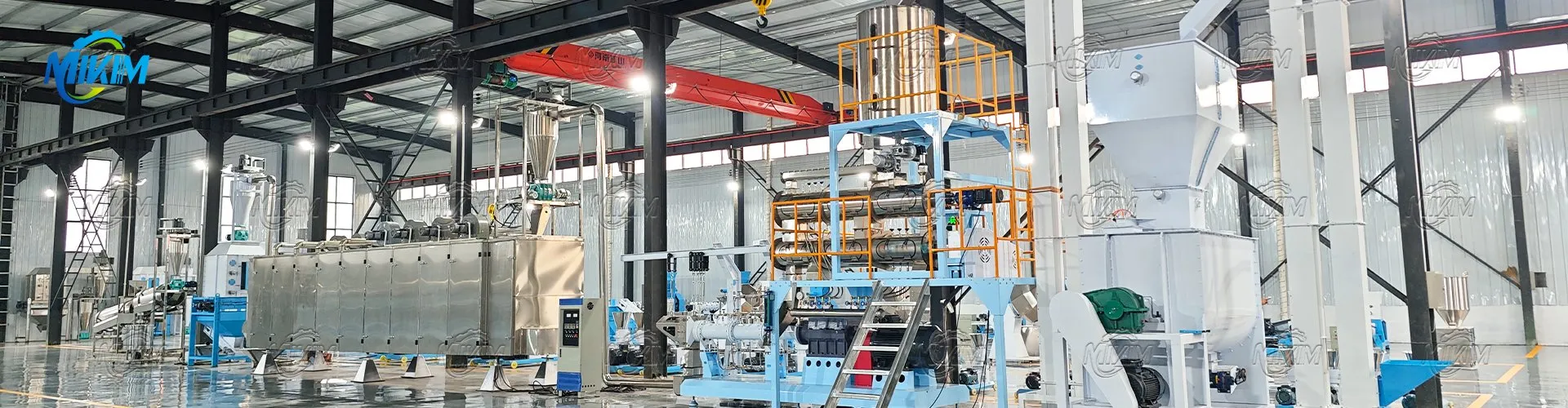
What Does The Pet Feed Pellet Making Production Line Process Include?
Leave a message
The floating pet meal production line focuses on "precise nutrition and unique flavor." Its process design encompasses raw material selection, refined processing, flavor modulation, and packaging. Some stages require specialized equipment to meet the physiological needs and dietary preferences of cats and dogs, resulting in significant differences in refinement and equipment selection compared to traditional livestock and poultry feed.
The raw material selection and pre-processing stages adhere to stringent standards. Pet food ingredients primarily consist of chicken meal, beef meal, fish meal, and fresh fruits and vegetables. Upon arrival, raw materials undergo sensory inspection and component testing. Those that pass are temporarily stored in a low-temperature cold storage (0-4℃). During pre-processing, meat raw materials are ground to 5-10mm using a meat grinder, while fruit and vegetable raw materials are diced and then dried in a vacuum dryer at 60-70℃ until the moisture content is below 10%, preserving nutrients and flavor. For grain-free pet food, starchy raw materials such as potatoes and sweet potatoes are ground to at least 80 mesh using a colloid mill to ensure a fine texture suitable for cats and dogs' digestion.
The mixing and flavoring stages of the pet food making production line are a key feature. A step-by-step mixing process is employed: meat powder and starch are first fed into a ribbon mixer and mixed for 2 minutes; then oils, amino acids, and other ingredients are added and mixed for 1 minute; finally, heat-sensitive ingredients such as probiotics and enzymes are added and mixed for 30 seconds to prevent high temperatures from destroying their activity. Flavoring requires specialized spraying equipment to coat the mixed raw materials with flavorings such as chicken essence oil and fish extracts, with the coating amount controlled at 1%-2% to improve palatability. Some high-end pet foods also require low-temperature conditioning (60-70℃) in a conditioning machine before the pellet mill to ensure no loss of nutrients.
The forming and packaging stages emphasize appearance and freshness. The forming equipment for pet food is selected according to the product type. Small ring die pellet mills with a pore size of 2-3mm and a compression ratio of 1:7 are used for pellets to ensure small, easily swallowed pellets; meat jerky is processed using a flatbed calender to press the raw materials into 1-2mm thick sheets, which are then dried in a tunnel dryer. Finished product cooling employs a combination of natural cooling and fan cooling to prevent excessive temperature from causing flavor loss. Vacuum packaging machines are used, with nitrogen filling after vacuuming to extend shelf life. The packaging must clearly label the ingredients, nutritional content, and other detailed information. Simultaneously, near-infrared spectroscopy is required during production to monitor the protein and fat content of the feed in real time, ensuring compliance with formulation requirements. Samples of each batch must be retained for a 30-day stability test.
Why choose us?
The MIKIM extruder is constructed entirely of food-grade 304 stainless steel, fully complying with food processing hygiene standards. It is corrosion-resistant, easy to clean, and eliminates potential contamination at the source. The core screw is made of high-quality alloy steel through special heat treatment, offering outstanding wear resistance and corrosion resistance. Combined with its integrated structural design, this significantly extends its service life. The entire machine has passed CE and ISO international authoritative certifications, aligning with global quality standards and ensuring safer and more reliable processing.
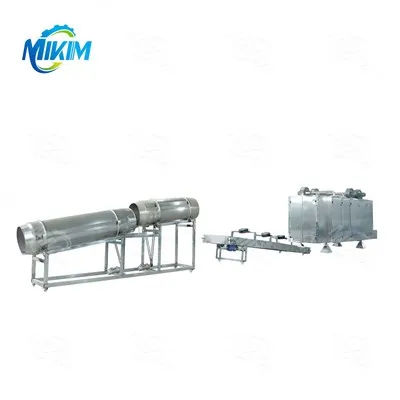
Our equipment



Our Services
We offer:
One-Year Whole Machine Warranty Service
On-site Installation, Commissioning, and Technical Guidance
24/7 Online Technical Support
Qualifications and Honors

Customer visit

FAQ
1. What is the price of the floating feed production line?
The price ranges from approximately $8,500-$50,000
2. Do you provide maintenance services for your customers?
Yes, we offer comprehensive after-sales maintenance services to our customers.


