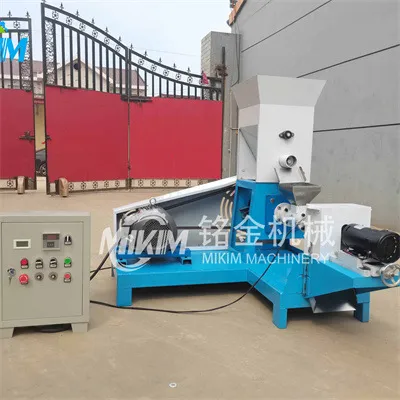
Floating Fish Feed Machines: Hidden Dangers & Safety
Leave a message

Are There Hidden Dangers Associated with floating fish food pellet extruder machines?
Yes-the mechanical injury risks of floating fish food pellet making machines are mainly concentrated in three core areas: the feeding and transmission system, the pelleting area, and the discharge area. Preventing mechanical injuries requires addressing both equipment protection and proper operating procedures. This article explains the risks and the safeguards.
1. The Three Risk Areas
1.1 Feeding and Transmission System
Components such as the feed rollers, pulleys, and gearbox rotate at high speeds during operation. If the safety guards are damaged or not installed according to regulations, operators' clothing and limbs can easily be caught in them. Especially during manual feeding, if the raw material gets stuck and is pushed directly by hand, there is a high risk of the hand being caught in the feed rollers.
1.2 Pelleting Area
The ring die and pressure rollers operate at high speeds when compressing the raw material. Some farmers remove the safety guards for convenience; when cleaning residual feed carelessly in this condition, finger cuts or even amputations can easily occur.
1.3 Discharge Area
High-temperature pellets are discharged with a high-speed airflow. If the discharge port is blocked by debris, feed pellets may splatter, causing impact injuries to the operator's eyes and face.
2. Equipment-Level Protection
- At the equipment level, it is essential to ensure that all protective devices on moving parts are in good working order:
- Enclosed covers: pulleys and gearboxes must be equipped with enclosed protective covers.
- Infrared safety sensor: the feed inlet must be equipped with an infrared sensor that automatically stops the machine when a human body approaches.
- Tempered-glass safety cover: the safety cover in the ring die area must be made of tempered glass, providing both protection and observation; the equipment cannot be started if the cover is not closed.
3. Operational-Level Procedures
At the operational level, strict safety procedures must be established:
- Use a dedicated feed pusher: during feeding, a dedicated feed pusher must be used and direct hand contact with the raw materials is strictly prohibited.
- Lockout before cleaning: the power must be disconnected and a "Do Not Energize" sign displayed before cleaning the machine; operation should commence only after the equipment has completely stopped.
- Regular guard inspection: the integrity of protective devices must be checked regularly; any damage must be addressed immediately by stopping the machine for repair, and operation with defects is strictly prohibited.
By implementing these measures at both the equipment and operational levels, the risk of mechanical injury accidents in fish feed plants is significantly reduced.