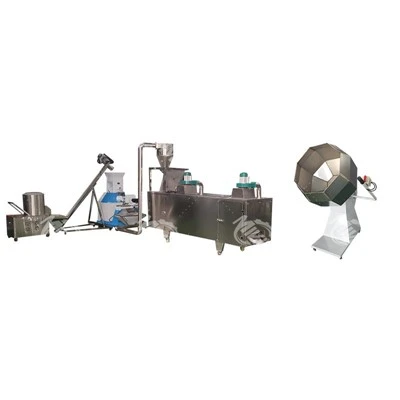
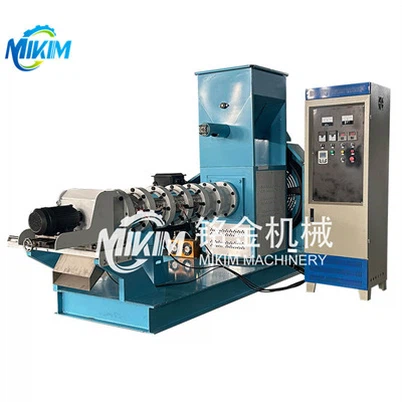
Can a Floating Fish Feed Pellet Extruder Machine Produce Floating Feed?
Leave a message
content
Key Conclusion: Floating fish feed pellet making machines can efficiently produce floating feed, suitable for most aquaculture scenarios.
First, let's clarify the core answer and dispel users' main concerns: Whether it's a small, home-style fish feed extruder or a medium- or large-scale extrusion machine, it can produce floating feed. Furthermore, the floating time (adjustable from 30 minutes to 24 hours) and pellet size (adjustable from 0.5mm to 10mm) can be adjusted according to aquaculture needs, adapting to the feeding requirements of different species and sizes of fish. Compared to traditional pellet mills, small floating fish feed extruder machines offer significant advantages in producing floating feed. No additional complex equipment is required; standardized production of floating feed can be achieved simply by adjusting equipment parameters and optimizing the formula. This makes it suitable for various users, including family fish farmers, small feed mills, and large-scale feed companies.


Core Principle: Extrusion Determines Buoyancy; Three Key Elements Are Indispensable
The core of producing buoyant feed in a small electric fish feed extruder machine is the "high-temperature, high-pressure extrusion" process. Through screw extrusion and barrel heating inside the equipment, the feed raw materials undergo physical and chemical changes, forming particles with a porous structure, thereby achieving buoyancy. This core process consists of three main elements. The process involves three stages: First, raw material maturation: Feed ingredients (corn, soybean meal, fishmeal, etc.) enter the barrel of the small fish feed making machine and are compressed under screw extrusion. Simultaneously, the barrel is heated (temperature controlled at 120-160℃), causing starch gelatinization and protein denaturation, forming a plasticized material mass. Second, high-pressure extrusion: The plasticized material mass is pushed to the die head. Due to the narrow die head aperture, the material is instantly released from a high-pressure environment to a normal-pressure environment, causing internal moisture to rapidly vaporize and expand, forming numerous tiny porous structures. Third, shaping and cooling: After cooling and drying, the porous particles solidify, preventing the rapid expulsion of trapped air. This results in feed particles with a density less than water, achieving a floating effect. The floating time can be flexibly controlled through subsequent parameter adjustments.

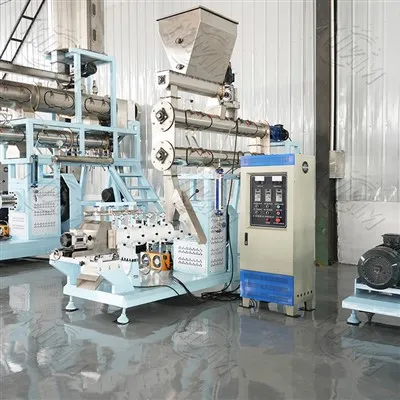
Production Advantages: Compared to traditional equipment, sinking fish feed extruder machines are more competitive in producing floating feed.
Compared to traditional pellet mills (which require the addition of flotation agents to achieve simple buoyancy, and have short floating times and are prone to disintegration), the advantages of sinking fish feed extruders in producing floating feed better meet user needs, which is also the key to their status as core equipment. First, it offers stable buoyancy. By precisely controlling the extrusion parameters, the feed's floating time can be maintained between 30 minutes and 24 hours, meeting the feeding rhythms of different fish species and preventing feed from settling and polluting the water. Second, it makes nutrients easier to absorb. During the high-temperature, high-pressure extrusion process, the starch in the raw materials gelatinizes and the proteins denature, making it easier for fish to digest and absorb after ingestion, increasing feed conversion rate by 10%-15% and reducing aquaculture costs. Third, it boasts high production efficiency. Floating feed extruder machines can produce 50-100 kg of floating feed per hour, while large-scale equipment can reach over 500 kg per hour, adapting to different production scales. Fourth, it offers flexible formulation. The proportion of raw materials can be adjusted according to fish species and growth stages (such as increasing the proportion of fishmeal or adding vitamins) while maintaining stable buoyancy, eliminating the need to rely on large amounts of flotation agents.
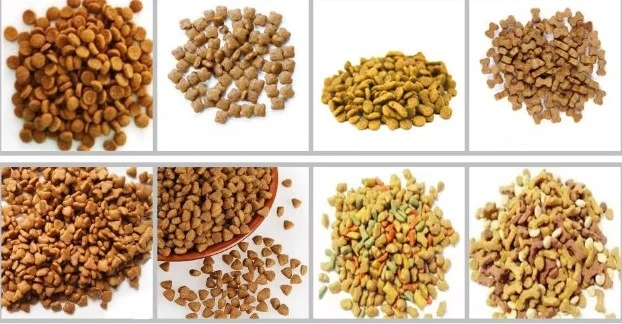
Finished Product Display
about Us
MIKIM's fish feed pellet production lines and supporting machinery offer excellent value for money. Not only are they affordable, eliminating middlemen markups and allowing small and medium-sized enterprises (SMEs) and fish farmers to purchase complete sets of equipment at reasonable costs, but they also boast exceptional efficiency. The fully automated process, from raw material crushing and precise ingredient mixing to extrusion pelleting and maturation, is completed in one continuous flow. This results in high starch gelatinization rates and uniform pellet formation, significantly improving production efficiency and feed quality, truly achieving "low cost, high output." Choosing a MIKIM fish feed pellet production line means enjoying comprehensive pre-sales and after-sales service, including 24-hour online customer support, a one-year warranty on the entire machine, professional on-site installation, commissioning, and maintenance, and a stable supply of spare parts. Customers can buy with confidence and use with peace of mind, with both excellent value and service quality!!!
Customer visit

Certificate of Honor

FAQ
1. What is the price of the floating feed making machine?
The price ranges from approximately $1,500-$55,000
2. Do you provide maintenance services for your customers?
Yes, we offer comprehensive after-sales maintenance services to our customers.
To explore which twin screw pet food machine model is suitable for your product line, view our full range of equipment or contact our team for a customized production plan.