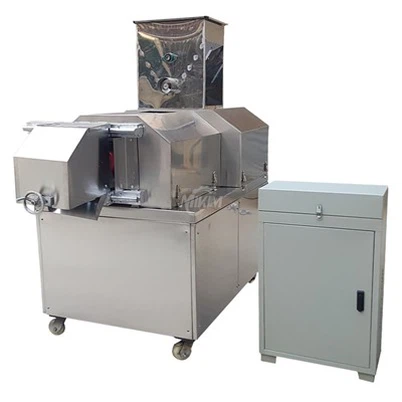
Can a small fish feed extruder machine Make Floating Feed? A 4-Step Guide
Feb 06, 2026
Leave a message

Fiona
Fiona is our company's sales manager; she has a deep understanding of feed extrusion technology and works closely with clients to ensure tailored solutions for their production needs.
Yes-With the Right Formula and Settings
A small floating fish food pellet maker machine can produce floating feed, but buoyancy is not automatic. It is the result of four factors working together: starch content, moisture, extrusion temperature/pressure, and correct drying. This guide walks through the whole procedure.
Step 1: Raw Material Pretreatment - Laying the Foundation for Buoyancy
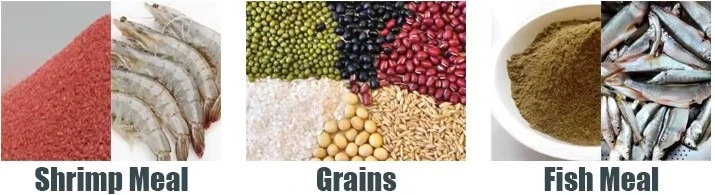
- Screening and proportioning. Core raw materials: corn 35-45%, soybean meal 25-35% and fishmeal 10-15%, supplemented with small amounts of bran, vitamins and minerals. Starch-based materials should account for no less than 30% - starch is what forms the porous structure that makes pellets float. Screen the materials to remove stones, metal shavings and other impurities to protect the machine and the feed.
- Grinding. Grind to 80-100 mesh. Too coarse affects the extrusion effect; too fine leads to particle breakage. Mix evenly after grinding.
- Moisture adjustment. Add water to reach 16-19% mixing moisture; the ideal feel is "forms a clump when squeezed in the hand, but crumbles easily when released". Excessive moisture makes particles stick during extrusion; insufficient moisture prevents the porous structure from forming. Important distinction: this is the mixed-mash moisture - the effective in-barrel moisture during extrusion is usually higher (for twin-screw machines, conditioning moisture is typically 20-25%), so always follow your machine manual.
Step 2: Equipment Settings (Reference Values - Check Your Manual)
- Temperature. Preheat the barrel: front section 120-130°C, middle 140-150°C, rear 150-160°C. Too high burns the feed; too low gives insufficient starch gelatinization and poor buoyancy. Feed only after temperatures stabilize.
- Pressure. Adjust die-head pressure to 0.8-1.2 MPa, controlled by die orifice size. Too high makes pellets too dense to float; too low over-expands and breaks them.
- Screw speed. By equipment capacity: ≤50 kg/h - 180-220 rpm; 50-500 kg/h - 150-180 rpm; ≥500 kg/h - 120-150 rpm. Too fast under-puffs; too slow cuts production efficiency. These are reference values - different machines differ, so verify with your specification sheet.
Step 3: Extrusion Operation - Standardized Work
- Uniform feeding: feed at constant speed. Overfeeding causes jamming and sudden pressure spikes; underfeeding gives uneven particle size.
- Monitor in real time: check pellet formation (round, burr-free, non-sticky) and listen for abnormal noise; stop and investigate immediately on any anomaly.
- Clean promptly: every 1-2 hours, clean material residue from the die orifices to prevent clogging that affects extrusion and pellet size.
Step 4: Cooling and Finishing - Securing Buoyancy
- Cooling: cool the expanded pellets to room temperature (25-30°C) for 15-20 minutes so moisture dissipates sufficiently.
- Drying: if moisture is above 12% (standard buoyant-feed moisture ≤12%), dry until it meets the standard to prevent mould and spoilage in storage.
- Screening and packaging: remove oversized, undersized and broken pellets; store in a dry, ventilated warehouse to prevent moisture regain that destroys buoyancy.
Acceptance Testing
Before relying on a new formula or batch, run a floatability test: pellets should float on the water surface for at least the hours your fish need (typical factory target 3-6 hours without disintegration) and keep their shape. Confirm the test method and target values with the supplier.