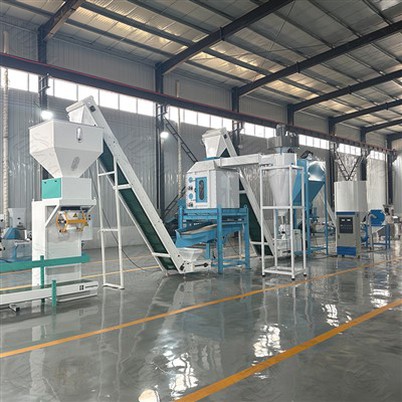
Can the process of the aquatic extruded pellet production line be optimized by upgrading the precision temperature control system?
Leave a message
The first step is to install a segmented, independent temperature control system on the fish food pellet making production line. The conditioner, extruder, and cooler in an aquatic extrusion production line all require different temperatures. Traditional processes use overall temperature control, which is prone to inconsistencies. The improved system controls temperature in segments according to each process: the conditioner temperature is controlled at 85℃ to preheat and humidify the raw materials, preparing them for subsequent extrusion; the extruder temperature is controlled according to feed type (110℃ for omnivorous fish, 125℃ for carnivorous fish); the cooler temperature gradually decreases from 100℃ to room temperature to prevent pellet cracking due to excessive temperature differences. Each stage is equipped with a high-precision temperature sensor with an error controlled within ±1℃, and the data is displayed in real-time on the control panel for easy monitoring.
The second step is to adopt "steam pressure control technology." Traditional production lines use a single steam source, resulting in unstable pressure and temperature fluctuations. The upgraded system uses a "staged steam system," with two steam tanks: a high-pressure tank provides the high-temperature, high-pressure steam required by the extruder, and a low-pressure tank supplies steam to the conditioner. The pressure in each tank is independently controlled. For example, when the extruder requires a high temperature of 120℃, the pressure in the high-pressure tank is adjusted to 0.8MPa and precisely delivered through a pressure-reducing valve; when the conditioner requires 85℃, the pressure in the low-pressure tank is maintained at 0.3MPa to prevent sudden changes in steam pressure that could lead to temperature runaway.
The third step is to add a "waste heat recovery and utilization" function. The hot air discharged from the cooler of the floating pet meal processing line has a temperature of 60-70℃. Direct discharge is both wasteful of energy and raises the workshop temperature. The improved system installs a "heat exchanger" at the cooler's outlet to recover the heat from the hot air, which is then used to preheat the raw materials in the conditioner or to heat the water in the steam tank. This reduces the production line's energy consumption by 10%-15%, and the preheated raw materials reach the conditioning temperature faster, shortening production time and improving efficiency. Simultaneously, the temperature control system is linked to the production line's PLC control system. After setting the temperature parameters for different aquatic feeds, it can be started with a single button, automatically controlling the entire process without manual intervention, reducing human error.


about Us
Customer visit
Certificate of Honor

FAQ
1. What is the price of the production line for making floating pet meal?
The price ranges from approximately $15,000-$49,000
2. Do you provide maintenance services for your customers?
Yes, we offer comprehensive after-sales maintenance services to our customers.