Diesel Engine Floating Fish Feed Extruder Machine: Off-Grid Drive and DGP Model Guide
Leave a message
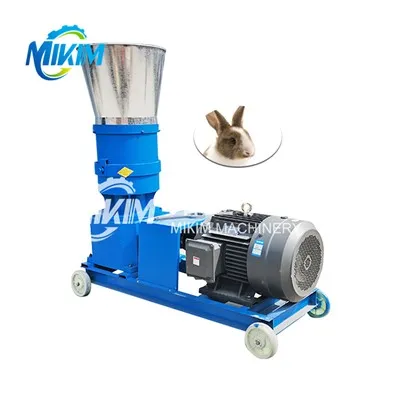
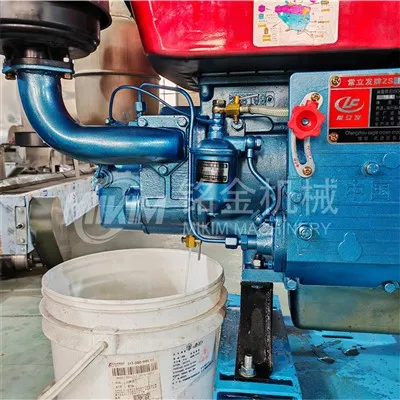
A diesel engine fish feed extruder is a floating fish feed pellet making machine used in aquaculture to produce feed pellets for fish and other aquatic animals. It works on the same principle as an electrically driven extruder: raw materials are mixed, conditioned with heat and moisture, compressed and shaped into pellets. The difference lies in the drive source. Instead of an electric motor, a diesel engine supplies the rotary drive, which makes the machine independent of the electrical grid.
What a Diesel Engine Fish Feed Extruder Is
The machine combines a feeding system, an extrusion barrel with screw and die, a rotary cutter and the diesel power unit on a single frame. Because the diesel engine delivers the same continuous rotary drive as an electric motor, the extrusion itself is identical: the screw conveys and compresses the mash, friction and injected steam raise its temperature, the starch gelatinises, and the material expands as it leaves the die before being cut to length. Pellets made this way are dense, water stable and digestible, which is the reason extruded feed dominates modern aquafeed.
Where Diesel Power Makes Sense
Diesel drive is particularly useful in rural and isolated locations where the energy supply is unpredictable. Fish farms in remote areas often face unstable electricity or very high connection charges, and a diesel engine removes that dependency entirely. Operators can start production whenever it is needed and continue through grid outages, which matters when feed must be delivered on schedule. Fuel must still be planned and stored, but for many farms the alternative is not a cheaper energy source - it is frequent stoppages and lost production days.
Applications and Pellet Range
Diesel powered extruders produce pellets for a wide range of animals, including floating fish such as catfish and tropical ornamental species, as well as frogs, tortoises, crabs and shrimp, and pet food for dogs and cats. Changing the feed machine mould allows different pellet shapes to be produced on the same machine, and because pellet diameters from about 0.4 mm to 15 mm are available, one unit can supply both fingerlings and large adult fish.
Model Specifications
The DGP series covers outputs from a small farm unit to a medium aquaculture operation. The table below lists the published specifications for each model.
| Model | Capacity (kg/h) | Main Motor (HP) | Feeder (kW) | Cutter (kW) | Screw Dia. (mm) | Machine Size (m) | Weight (kg) |
|---|---|---|---|---|---|---|---|
| DGP40 | 40-50 | 12 | 0.4 | 0.4 | 40 | 1.4*1.25*1.2 | 360 |
| DGP60 | 120-150 | 25 | 0.4 | 0.4 | 60 | 1.47*1.12*1.25 | 560 |
| DGP70 | 200-250 | 30 | 0.4 | 0.4 | 70 | 2.05*1.4*1.3 | 740 |
| DGP85 | 300-350 | 35 | 1.5 | 0.55 | 80 | 2.15*1.5*1.3 | 850 |
| DGP90 | 400-450 | 50 | 1.5 | 0.55 | 90 | 2.2*2*1.35 | 1200 |
How the Extruder Works
The screw and the die are the two primary components of the fish feed extruder. Raw material is heated and compressed while being pushed forward by the rotating screw inside the barrel. High temperature and pressure cook the mash, and the combination of heat, moisture and mechanical shear determines the density and texture of the finished pellet. At the die, the cooked material is cut by the rotary cutter into pellets whose diameter is fixed by the mould and whose length is set by the cutter speed. Because the diesel engine delivers the same rotary drive as an electric motor, the extrusion process, the achievable pellet quality and the maintenance routine are identical.
Frequently Asked Questions
Q: Is the extrusion process different with a diesel engine?
No. Only the drive source changes; the screw, die and cutter perform exactly the same extrusion process.
Q: Where is a diesel extruder most useful?
On farms in rural or isolated areas with unstable electricity supply or high grid connection costs.
Q: What pellet sizes can be produced?
Approximately 0.4 mm to 15 mm, so the same machine can feed small and large fish.
Q: Can it also make pet food?
Yes. With the appropriate mould, dog and cat food as well as feed for frogs, crabs and shrimp can be produced.
Q: How is pellet length controlled?
By the rotary cutter speed; pellet diameter is determined by the aperture of the installed die or mould.
Q: What capacity is available in the DGP series?
Published capacities run from 40-50 kg/h on the DGP40 to 400-450 kg/h on the DGP90, with a 12 HP to 50 HP main motor.