


How do I install the Floating Fish Feed Extruder Line?
Leave a message
Site survey and basic condition confirmation are the first steps. First, the length, width, and height of the site must be measured to determine the load-bearing capacity-core equipment such as pellet mills and crushers can weigh several tons, requiring the ground to be hardened with concrete with a load-bearing strength of no less than 30MPa. If the site is on the second floor or in an attic, the floor load-bearing capacity must also be calculated, and load-bearing steel beams may be added if necessary. Second, the water and electricity conditions must be confirmed. The total power of a floating fish feed pellet production line is typically 50-200kW, requiring an independent distribution box with a stable voltage of 380V±5%. The cable cross-sectional area is selected based on the total power; for example, a 100kW production line requires 35mm² copper core cables. Regarding water supply, conditioners, coolers, and other equipment require a stable water source with a pressure no less than 0.3MPa, and the water quality must meet industrial water standards to prevent impurities from clogging the pipes.
The production process planning determines the equipment layout logic. The core process of the Sinking Floating Fish Feed Pellet Processing Line is "raw material receiving - crushing - mixing - conditioning - granulation - cooling - packaging." The layout must adhere to the principle of "smooth flow and shortened conveying distance" to avoid equipment overlap that could cause congestion in raw material transport. A reasonable layout should form a "straight line" or "U-shaped" production line. The raw material receiving area should be close to the factory entrance for easy vehicle unloading; the crushing and mixing areas should be adjacent to reduce coarse material transport losses; the granulation area should be centrally located with sufficient maintenance space around it; and the cooling and packaging areas should be connected to ensure rapid packaging of finished products. Simultaneously, space must be reserved for raw material and finished product storage areas. The raw material storage area should be higher than the crusher inlet to utilize gravity for automatic feeding, reducing investment in conveying equipment.
Safety and environmental planning are paramount. The site must be divided into equipment operation areas, raw material storage areas, and finished product storage areas. Safety passages with a width of at least 1.5 meters should be provided between each area, with clear markings on the ground. Dust removal equipment must be installed in the crushing and pelleting areas, with dust removal pipes precisely connected to the equipment's inlet and outlet to prevent dust spread. Simultaneously, the site must be equipped with fire-fighting equipment, with at least two 4kg dry powder fire extinguishers placed per 50 square meters, and fire-resistant barriers erected around electrical equipment. Through scientific planning, a feed mill has increased its dust removal efficiency to 98%, controlling the site's dust concentration below 8mg/m³, meeting national environmental protection standards.
Related equipment


about Us
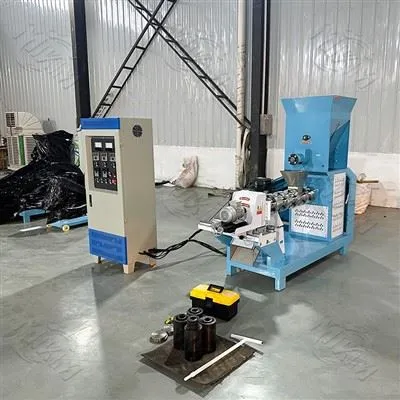
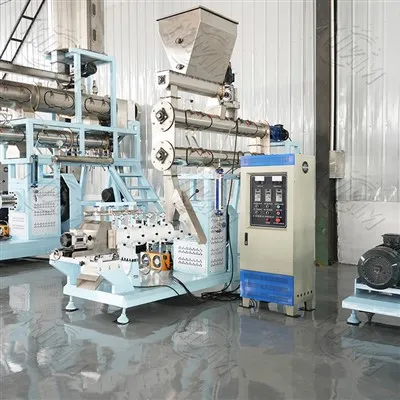
MIKIM's fish feed pellet production lines and supporting machinery offer excellent value for money. Not only are they affordable, eliminating middlemen markups and allowing small and medium-sized enterprises (SMEs) and fish farmers to purchase complete sets of equipment at reasonable costs, but they also boast exceptional efficiency. The fully automated process, from raw material crushing and precise ingredient mixing to extrusion pelleting and maturation, is completed in one continuous flow. This results in high starch gelatinization rates and uniform pellet formation, significantly improving production efficiency and feed quality, truly achieving "low cost, high output." Choosing a MIKIM fish feed pellet production line means enjoying comprehensive pre-sales and after-sales service, including 24-hour online customer support, a one-year warranty on the entire machine, professional on-site installation, commissioning, and maintenance, and a stable supply of spare parts. Customers can buy with confidence and use with peace of mind, with both excellent value and service quality!
Customer visit

Certificate of Honor

FAQ
1. What is the price of the fish feed pellet extruder?
The price ranges from approximately $3,500-$55,000
2. Do you provide maintenance services for your customers?
Yes, we offer comprehensive after-sales maintenance services to our customers.
If you would like to learn more about MIKIM machinery, please contact us. We offer one-stop service and welcome your inquiries!!!


