


How do you select the appropriate ish Feed Pet Food Extruder Machine for your requirements?
Leave a message
When selecting equipment for shrimp feed, focus on "soaking resistance and nutrient retention." Shrimp feed particles are small (2-3mm), requiring good water stability. A twin-screw extruder is recommended, as its uniform extrusion strength creates a dense structure, ensuring soaking resistance for over 40 minutes. The fish feed extruder should be equipped with a precise batching system to ensure the ratio of high-protein ingredients such as fishmeal and shrimp meal has an error of ≤±0.1%. The extrusion temperature should be controlled at 95-105℃ to avoid damaging the active ingredients in the shrimp meal. Additionally, equipment equipped with a microwave drying device is recommended, as it retains nutrients better than traditional hot air drying, increasing the crude protein retention rate to over 92%.
For feed equipment for carnivorous fish such as sea bass, focus on "protein retention and particle hardness." Sea bass feed has a high protein content (over 45%), making it prone to nutrient loss during processing. A medium-temperature pellet mill is recommended, rather than a high-temperature floating fish feed extruder. The processing temperature should be controlled at 85-90℃ to minimize protein denaturation. The pellet mill should use a high compression ratio ring die (1:10-1:12) to ensure pellet hardness of 25-30N, preventing pellet breakage when the bass feed. The pulverizer should be an ultrafine pulverizer to grind fishmeal and other raw materials to at least 80 mesh, improving feed digestibility. The matching mixer should have a mixing time of no less than 5 minutes to ensure uniform distribution of additives.
Feeding equipment for herbivorous fish such as grass carp needs to be adapted to "high-fiber raw materials." Grass carp feed contains more than 30% coarse fiber raw materials such as straw and alfalfa, requiring equipment with strong extrusion and anti-clogging capabilities. A reinforced hammer mill is recommended, with hammers made of wear-resistant alloy material, capable of grinding coarse fiber raw materials to 40 mesh. A single-screw extruder should be selected, with the screw speed controlled at 200-220 rpm to extend the residence time of the raw materials in the machine, ensuring sufficient softening of coarse fibers. Meanwhile, a vibrating screen should be installed at the feed inlet to prevent large particles from entering and causing blockages. The ring die should have a 4-5mm aperture to suit the feeding habits of grass carp.
Selection principles for other species: For tilapia, a standard extruder fish feed machine is sufficient, balancing cost and buoyancy; for high-end fish such as grouper, equipment with sterilization capabilities is required to ensure the feed meets hygiene standards.
Related equipment

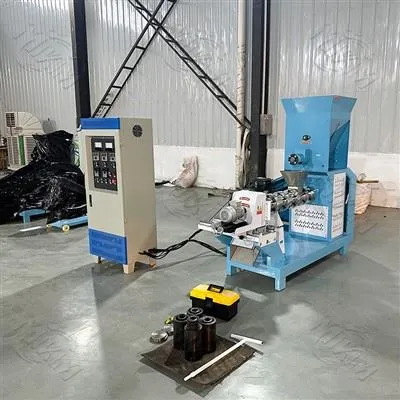
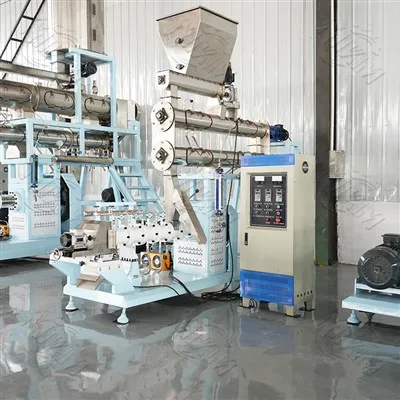

about Us
MIKIM's fish feed pellet production lines and supporting machinery offer excellent value for money. Not only are they affordable, eliminating middlemen markups and allowing small and medium-sized enterprises (SMEs) and fish farmers to purchase complete sets of equipment at reasonable costs, but they also boast exceptional efficiency. The fully automated process, from raw material crushing and precise ingredient mixing to extrusion pelleting and maturation, is completed in one continuous flow. This results in high starch gelatinization rates and uniform pellet formation, significantly improving production efficiency and feed quality, truly achieving "low cost, high output." Choosing a MIKIM fish feed pellet production line means enjoying comprehensive pre-sales and after-sales service, including 24-hour online customer support, a one-year warranty on the entire machine, professional on-site installation, commissioning, and maintenance, and a stable supply of spare parts. Customers can buy with confidence and use with peace of mind, with both excellent value and service quality!
Customer visit

Certificate of Honor

FAQ
1. What is the price of the fish feed pellet extruder?
The price ranges from approximately $3,500-$55,000
2. Do you provide maintenance services for your customers?
Yes, we offer comprehensive after-sales maintenance services to our customers.
If you would like to learn more about MIKIM machinery, please contact us. We offer one-stop service and welcome your inquiries!!!


