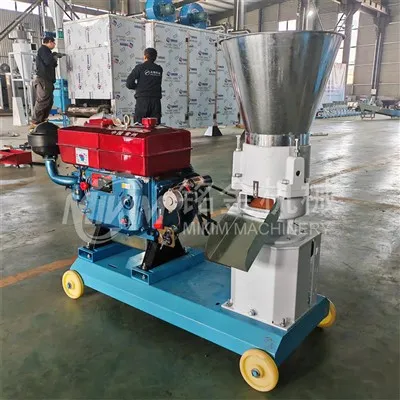
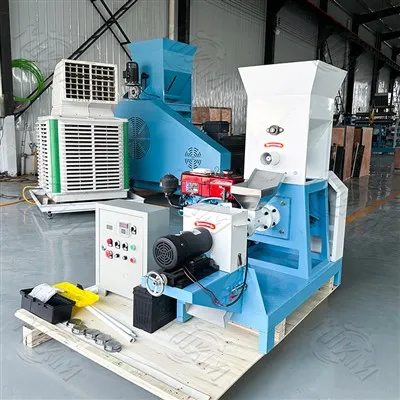
What factors should you consider when choosing the best floating fish feed extruder machine for your needs?
Leave a message
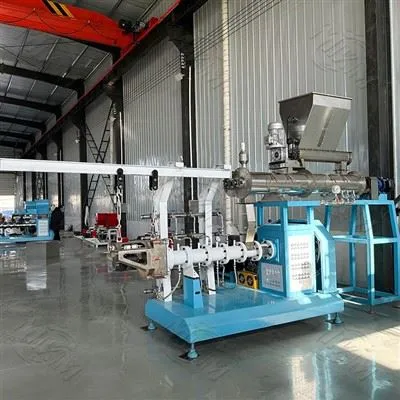
Production capacity and production line configuration must meet the demands of large-scale supply. Daily feed requirements for large-scale aquaculture often exceed 10 tons, which a single Electric Fish Feed Extruder Machine cannot meet. A fully automated fish feed production line integrating crushing, mixing, extrusion, cooling, and packaging is necessary. It is recommended to choose a twin-screw extruder with an hourly capacity of 500 kg or more as the core equipment, paired with a corresponding large hammer mill and twin-shaft paddle mixer. The entire production line can achieve an hourly capacity of 1-2 tons, and 12 hours of daily production can meet the needs of a 1000-acre aquaculture base. Simultaneously, the production line needs to be equipped with a raw material storage system, such as a 100-ton vertical silo, to achieve automatic feeding and precise batching, avoiding the inefficiency and proportioning errors of manual feeding.
Automation and intelligence are key to improving efficiency.
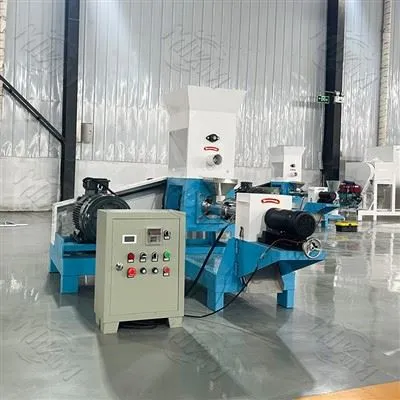
Selecting equipment equipped with a central control system allows for precise control of parameters such as feeding speed, extrusion temperature, and particle size, and also enables real-time monitoring of equipment operation status, with automatic alarms in case of malfunctions. For example, when producing shrimp feed, preset parameters can stabilize the extrusion temperature at 100-105℃, achieving a starch gelatinization rate of over 90%, ensuring the feed's resistance to soaking. When producing sea bass feed, a single button switch adjusts the pellet hardness, eliminating the need for manual adjustments. Automated control not only reduces labor costs but also lowers the feed quality fluctuation coefficient from ±8% to ±3%.
Energy consumption and maintenance costs must be considered in the long term. Variable frequency motors for animal feed pellet extruders are preferred, as their power can be adjusted according to production capacity, reducing energy consumption per ton of feed by 15%. Core equipment should be from well-known brands; for example, extruders from leading domestic brands have screw and barrel lifespans exceeding one year, 50% longer than ordinary brands, reducing replacement costs. Furthermore, the production line should have upgrade interfaces, such as adding online monitoring equipment to monitor feed moisture and nutrient content in real time, providing room for future quality improvements.
Related equipment


about Us
MIKIM's fish feed pellet production lines and supporting machinery offer excellent value for money. Not only are they affordable, eliminating middlemen markups and allowing small and medium-sized enterprises (SMEs) and fish farmers to purchase complete sets of equipment at reasonable costs, but they also boast exceptional efficiency. The fully automated process, from raw material crushing and precise ingredient mixing to extrusion pelleting and maturation, is completed in one continuous flow. This results in high starch gelatinization rates and uniform pellet formation, significantly improving production efficiency and feed quality, truly achieving "low cost, high output." Choosing a MIKIM fish feed pellet production line means enjoying comprehensive pre-sales and after-sales service, including 24-hour online customer support, a one-year warranty on the entire machine, professional on-site installation, commissioning, and maintenance, and a stable supply of spare parts. Customers can buy with confidence and use with peace of mind, with both excellent value and service quality!
Customer visit

Certificate of Honor

FAQ
1. What is the price of the automatic fish food making equipment?
The price ranges from approximately $3,500-$55,000
2. Do you provide maintenance services for your customers?
Yes, we offer comprehensive after-sales maintenance services to our customers.
If you would like to learn more about MIKIM machinery, please contact us. We offer one-stop service and welcome your inquiries!!!