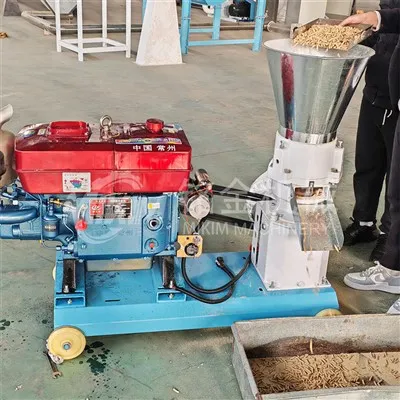
Why do hollow fractures occasionally appear in items made with animal pellet machines?
Leave a message
Cause of the fault
- Insufficient conditioning temperature or time: If the raw material is not heated enough in the conditioner (temperature below 80℃) or the residence time is too short (less than 30 seconds), the starch cannot be fully gelatinized, resulting in insufficient viscosity and easy cracking after pressing.
- Excessive cooling rate: Freshly made granules are at a high temperature (approximately 70-80℃). If they are directly cooled by strong air in the cooler, the large temperature difference between the inside and outside of the granules causes the surface to shrink faster than the inside, resulting in cracks.
- Clogged or unevenly worn die orifices: If some die orifices are blocked by residual raw material, the raw material can only be extruded from other die orifices, leading to excessive compression of the raw material in these orifices and the formation of hollow granules; or if the die is severely worn in certain areas, the granules pressed in that area will have low density and be prone to cracking.
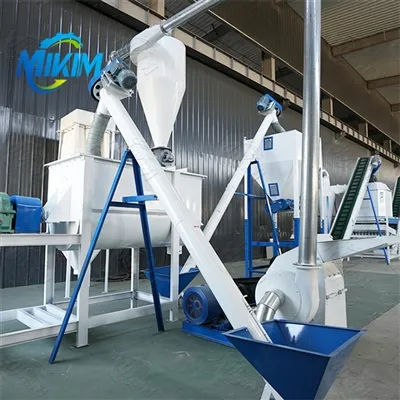


Solution
- Optimize conditioning parameters: Increase the conditioner temperature to 85-90℃ (controlled by adjusting the steam valve), while simultaneously slowing down the conditioner speed (e.g., from 20 rpm to 15 rpm), extending the raw material residence time to 40-60 seconds to ensure starch gelatinization reaches over 80%.
- Adjust cooling rhythm: First, place the freshly extruded granules at room temperature for 1-2 minutes (pre-cooling), then send them into the cooler. Adjust the cooler fan speed to medium (e.g., 1-1.5 m/s) to allow the internal and external temperatures of the granules to slowly drop to room temperature (25-30℃), avoiding excessive temperature differences.
- Clean and repair the mold: After shutting down the equipment, use a special cleaning needle (matching the mold orifice diameter) to unclog any blocked mold orifices, ensuring each orifice is clear. If the mold is locally worn, mark the worn area and temporarily avoid that area during production (adjust the feeding direction), or replace the mold directly.
Finished Product Display

about Us
MIKIM boasts extensive experience in poultry feed pellet production lines, significantly reducing the incidence of poultry diseases. Its equipment is not only widely used across various industries domestically but also exported to Southeast Asia, Europe, Africa, and South America, earning a high reputation internationally. This global presence not only demonstrates the adaptability and competitiveness of its products, but also demonstrates the company's experience in adapting to diverse market standards and logistics conditions, enabling it to provide a stable supply chain for its overseas customers. Whether serving large domestic farms or cross-border feed companies, MIKIM can leverage its global service network to ensure a consistent, high-quality experience.
Customer visit

FAQ
1. What is the price of the chicken feed production machine?
The price ranges from approximately $4,000-$25,000
2. Do you provide maintenance services for your customers?
Yes, we offer comprehensive after-sales maintenance services to our customers.