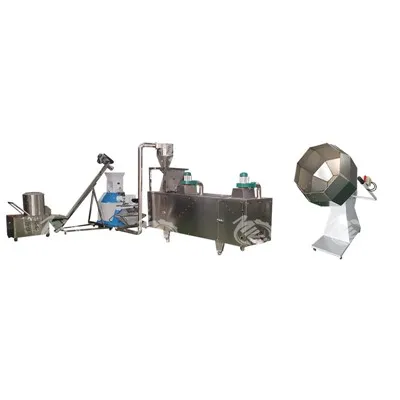
From A Low-carbon Perspective, What Are The Ecological Advantages Of Dry-type Fish Food Extruder Lines?
Leave a message
Carbon emissions from aquaculture mainly come from energy consumption in feed production, raw material processing, and waste disposal. Low-carbonization is a long-term requirement for maintaining ecological balance. Modern aquaculture feed equipment, through energy-saving technologies, environmentally friendly processes, and resource recycling, significantly reduces carbon emissions from aquaculture, becoming a core support for low-carbon aquaculture and demonstrating distinct ecological advantages.
Energy-efficient feed production equipment reduces energy consumption and carbon emissions during the production process through technological innovation. Traditional feed processing equipment has high motor energy consumption, with the energy consumption in the crushing and pelleting stages accounting for more than 30% of the total energy consumption in aquaculture. New energy-efficient feed equipment uses variable frequency motors and waste heat recovery technology. Variable frequency motors can automatically adjust their speed according to the production load, saving 20%-30% more energy than traditional motors; waste heat generated in the pelleting stage is recovered through a heat exchanger and used to preheat raw materials, further reducing energy consumption. After a feed mill in Jiangsu Province introduced this equipment, the energy consumption per ton of feed production decreased from 80 kWh to 50 kWh. Based on an annual feed production of 10,000 tons, this translates to a reduction of approximately 30 tons of carbon emissions per year. Meanwhile, the high production efficiency of the equipment reduces equipment operating time, indirectly reducing carbon emissions and forming a virtuous cycle of "energy saving-low carbon-ecology".
Environmentally friendly feed processing equipment reduces indirect carbon emissions during aquaculture by reducing the use of chemical additives. Traditional feed requires a large amount of chemical additives to improve palatability and preservation. These additives generate additional carbon emissions during metabolism and decomposition in aquatic animals. New biological feed equipment utilizes microbial fermentation technology to ferment plant materials into biological feed. Through the metabolic action of microorganisms, the palatability and shelf life of the feed are improved, reducing the use of chemical additives by more than 60%. For example, in tilapia feed production, this equipment uses lactic acid bacteria to ferment soybean meal.
The resulting feed can be stored for more than 30 days without the addition of preservatives, and the digestibility and absorption rate of tilapia is significantly improved, reducing carbon emissions from fecal discharge. In addition, the probiotics produced during fermentation can improve the aquatic microecological environment, promote the growth of beneficial algae, enhance the carbon sequestration capacity of the water body, and further reduce the carbon footprint of the aquaculture ecosystem.
Resource-recycling feed equipment achieves carbon recycling and emission reduction through the resource utilization of waste. Uneaten feed, excrement, and processing byproducts from aquaculture, if directly emitted, would produce large amounts of methane (a strong greenhouse gas). Resource recycling equipment, however, can convert these wastes into biogas or organic fertilizer, achieving carbon resource recovery and utilization. A large-scale aquaculture farm in Guangdong is equipped with waste treatment equipment that can process 10 tons of uneaten feed and excrement daily, producing 500 cubic meters of biogas for heating feed production.
This reduces natural gas consumption by approximately 18,000 cubic meters annually, corresponding to a reduction of about 40 tons of carbon emissions. Simultaneously, the resulting biogas residue can be made into organic fertilizer for surrounding crop cultivation, forming a circular agricultural model of "aquaculture-waste treatment-planting," achieving closed-loop carbon utilization. The application of this equipment not only reduces carbon emissions from aquaculture but also enhances both the ecological and economic benefits of aquaculture, providing a feasible path for the low-carbon development of aquaculture.



about Us
We offer:
One-Year Whole Machine Warranty Service
On-site Installation, Commissioning, and Technical Guidance
24/7 Online Technical Support
Qualifications and Honors

Customer visit

FAQ
1. What is the price of the floating fish feed production line?
The price ranges from approximately $10,500-$50,000
2. Do you provide maintenance services for your customers?
Yes, we offer comprehensive after-sales maintenance services to our customers.