High-quality Feed, Healthy Sheep: The Important Role Of Sheep Feed Processing And Production Equipment
Leave a message
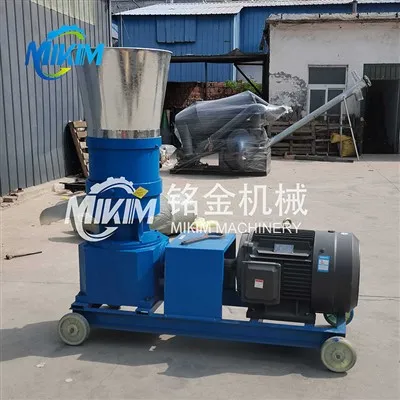
Feed pellet production line equipment can not only improve the production efficiency and quality of feed, but also effectively reduce waste and reduce production costs, thereby promoting the development of the entire sheep farming industry.
First of all, the use of sheep feed processing and production equipment can improve feed production efficiency. The traditional way of making feed manually is very expensive in terms of both manpower and time costs, and cannot meet the needs of large-scale production. The modern feed production line adopts an automated design, which can achieve continuous, efficient and precise production, greatly improving the production efficiency of feed.

|
Model |
Capacity |
Power |
|
MK-150 |
120-150kg/h |
4kw |
|
MK-210 |
200-300kg/h |
7.5kw |
|
MK-260 |
500-600kg/h |
15kw |
|
MK-300 |
700-800kg/h |
22kw |
Secondly, equipment can help improve the quality of feed. Through precise formulation and strict production process control, it can ensure that the nutrients of the feed are balanced and free of harmful substances, thereby improving the quality of feed. In addition, some advanced equipment can also customize special feed formulas according to the age, weight, growth stage and other characteristics of the sheep to meet the needs of different sheep.
Furthermore, sheep feed processing and production equipment can help reduce waste. By fine processing and rational use of raw materials, losses can be reduced at the source, and environmental pollution caused by surplus feed can also be avoided. In addition, efficient equipment can also achieve continuous production and reduce waste caused by production interruptions.
Finally, these equipment also help reduce production costs. On the one hand, the automated production process reduces labor costs; on the other hand, by improving production efficiency and quality, as well as reducing waste, production costs can be fundamentally reduced. This is a positive economic benefit for farmers and the entire industry.