

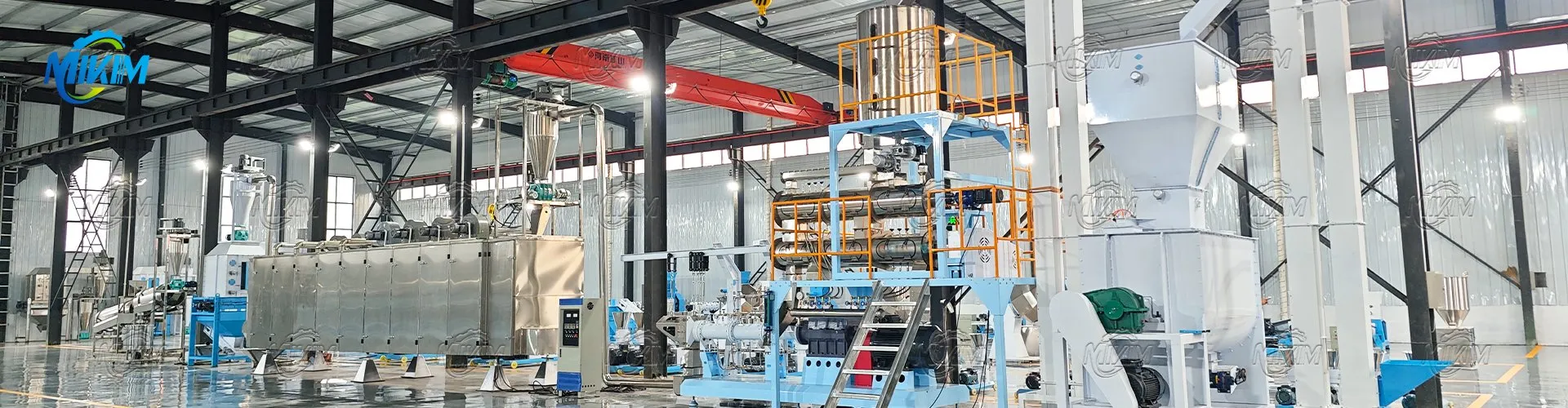
How To Choose A Suitable Production Line For Pigs
Leave a message
Pig farmers know that feed is key to healthy pig growth, and the production line determines the quality of the feed. However, many people don't realize that different production lines are needed for piglets, finishing pigs, and sows; not just any production line can meet all needs. Below, we'll discuss how to choose the right production line for pigs at different stages.
Operating procedures for livestock and poultry pellet feed equipment
Operating Steps for Piglet Feed Production Line
- Raw Material Processing: Finely grind raw materials such as corn and soybean meal, controlling the particle size to 1.0-1.2 mm for easy digestion by piglets.
- Ingredient Mixing: Precisely add protein, vitamins, and minerals according to the nutritional needs of piglets, and mix thoroughly using a mixer for 5-8 minutes to ensure uniform nutrition.
- Treating and Pelletizing: During conditioning, control the temperature at 80-85℃ and the moisture content at 15%-16% to make the feed softer. Use 2-3 mm diameter molds to make small pellets.
- Cooling and Packaging: Cool the pellets to room temperature, reducing the moisture content to 12%-13%, and then package them to prevent moisture absorption.
Operating Steps for a Fattening Pig Feed Production Line
- Raw Material Processing: Corn and soybean meal are ground to a particle size of 1.5-2.0 mm. The particle size should not be too fine to ensure the feed's energy and firmness.
- Ingredient Mixing: According to the nutritional formula for fattening pigs, combine energy feed and protein feed. Mix for 4-6 minutes to ensure uniform mixing.
- Treating and Pelletizing: Condition at 85-90℃, moisture content 14%-15%. Pelletize using a 3-4 mm diameter die, controlling the pellet hardness to 3-4 kg/cm².
- Cooling and Packaging: After cooling, control the moisture content to around 12%, then package for easy storage and feeding.
Operating Procedures for a Sow Pellet Production Line
- Raw Material Processing: Adjust the particle size according to the sow's stage. During gestation, the particle size should be 1.8-2.2 mm; during lactation, 1.5-1.8 mm.
- Feed Mixing: Reduce the proportion of energy feed and increase crude fiber during gestation; increase the proportion of protein and energy during lactation. Mix for 5-7 minutes.
- Treating and Pelletizing: Condition at 80-85℃ during gestation and 85-90℃ during lactation. Moisture content should be controlled at 14%-15%. Use a 4-5 mm diameter die for pelleting.
- Cooling and Packaging: Pack promptly after cooling to prevent nutrient loss and moisture absorption.
Main equipment


about Us
MIKIM is a high-tech enterprise integrating R&D, production, and sales. Its feed extrusion equipment utilizes a high-temperature, high-pressure process, which sterilizes, improves puffing density and digestibility, and saves 8%-15% on feed costs. Pellet diameters are adjustable from 1-16 mm, and it features controllable cutting and floating adjustment to suit the needs of fish, shrimp, crab, and pet food. Core components are sourced from international brands and undergo special treatment, ensuring stability and durability while balancing safety, efficiency, and peace of mind.
Qualifications and Honors

Customer visit

FAQ
1. What is the price of the Pellet machine production line?
The price ranges from approximately $10,000-$42,000
2. Do you provide maintenance services for your customers?
Yes, we offer comprehensive after-sales maintenance services to our customers.


