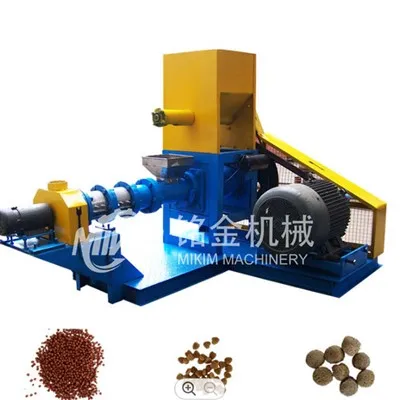
The Significant Differences Between Poultry Farm Feed Machines And Animal Food Extruders in Raw Material Processing
Leave a message
content
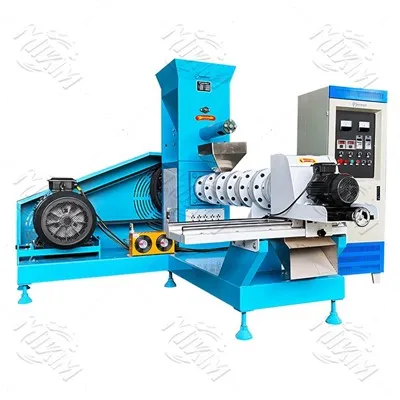
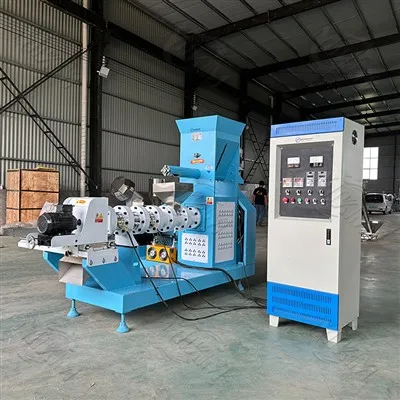
Pet feed extruders are natural "wet feed experts," particularly adept at processing high-protein, high-moisture ingredients. For example, when making bass feed, fishmeal often accounts for up to 50%, and to enhance palatability, 10%-15% fresh fish paste is added. These ingredients can have a moisture content exceeding 25%, making them prone to leakage and clumping with ordinary machines. However, the extruder's feeding system features a fully sealed screw conveyor structure, ensuring no leakage from the moment the raw material enters the hopper until it's fed into the extruder chamber. Furthermore, the screw blade speed can be precisely controlled to prevent wet material buildup and blockage.
Dry-type fish food extruders also excel in grinding precision. Fish have shorter digestive tracts than poultry, requiring finer feed. Therefore, the extruder's pulverizer is ultra-fine, capable of grinding fishmeal and shrimp shell powder to over 100 mesh-fine enough to easily pass through gauze. This fine powder, when mixed, is more easily digested and absorbed by fish, increasing feed conversion ratio by over 15%. More importantly, extruders have an exceptionally fast production process, taking only 3-5 minutes from raw material input to pellet output. For perishable materials like fresh fish paste, processing can be completed quickly, maximizing nutrient and flavor retention and minimizing spoilage risk. One manufacturer of high-end ornamental fish feed stated that using an extruder to process fresh squid paste resulted in feed that fish eagerly consumed, with a 20% higher survival rate compared to feed made from dry feed.

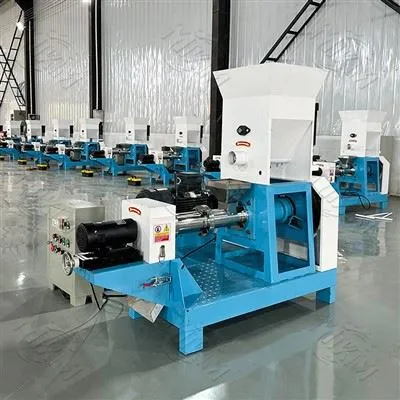
Poultry feed maker machines, on the other hand, prefer "dry and coarse feeds," being specifically designed for raw materials like corn and soybean meal. Chickens and ducks have strong digestive systems with high grinding capabilities and don't require high feed fineness, so an 80-mesh pulverizer is sufficient. This allows them to easily handle not only main feeds like corn and soybean meal but also coarse fiber materials like straw powder, distiller's grains, and peanut shell powder. By pre-grinding to the appropriate particle size, these materials can be mixed with the main feed for pelleting, reducing feed costs while meeting the poultry's fiber requirements.
The feeding system of the poultry feed manufacturing machine is open; dry feed can be poured directly into the hopper, making operation very convenient. One worker can complete the entire process of feeding and starting the machine. However, if you try to use it to process wet feeds such as fresh fish paste or seaweed paste, problems arise: the wet feed will stick to the feeding hopper and conveyor screw, either failing to pass through or leaking everywhere. Even if it manages to enter the machine cavity, it will stick to the pressure rollers and ring die, forming clumps and jamming the machine. Cleaning takes at least an hour each time. One duck farmer tried using the pellet mill to make fishmeal duck feed, and the machine jammed after adding only a small amount of fish paste. After cleaning, he found that the pressure rollers were full of hardened clumps of feed, which he had to scrape off bit by bit with a scraper. Since then, he has never dared to feed his ducks indiscriminately.


about Us
We offer a one-year warranty on all machines. MIKIM's feed pellet mills, charcoal briquetting machines, and other equipment all come with a one-year warranty. During the warranty period, if any quality issues arise due to materials, design, or manufacturing defects, we will replace the damaged parts free of charge and perform repairs and adjustments. However, easily damaged parts are unlikely to be covered under the free warranty, thus ensuring stable operation of the equipment throughout its core lifespan.
On-site installation, commissioning, and technical guidance: For complex complete sets of equipment such as feed production lines and extruders, we will dispatch professional technicians to the customer's location to handle on-site installation and commissioning, ensuring the equipment can be smoothly integrated into the customer's production process and meet preset production standards. Our technicians will also visit regularly to resolve various technical malfunctions and provide long-term on-site guidance on equipment operation and routine maintenance.
Qualifications and Honors

Customer visit

FAQ
1. What is the price of the floating feed making machine?
The price ranges from approximately $5,500-$30,000
2. Do you provide maintenance services for your customers?
Yes, we offer comprehensive after-sales maintenance services to our customers.