Which Should You Choose A Small Fish Feed Machine Or A Poultry Feed Pellet Making Machine, Considering Energy Consumption And Output?
Leave a message
content
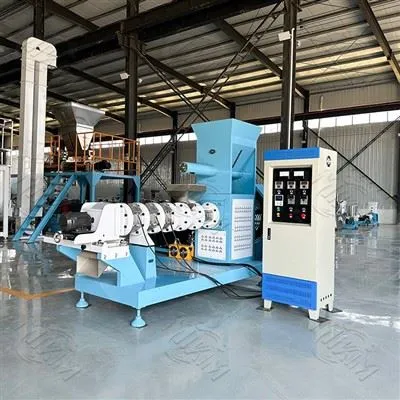
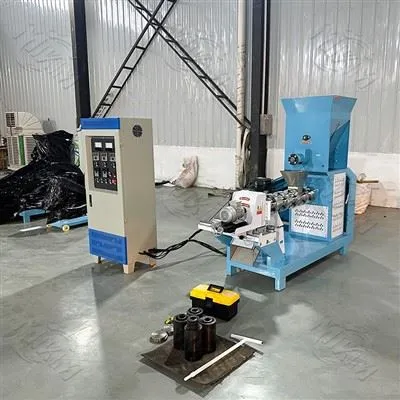
While small fish feed making machines do consume more energy than pellet mills, this increased energy consumption translates into stable output and consistent quality, making it particularly worthwhile for large-scale aquaculture. To achieve high-temperature extrusion and high-pressure pelleting, the motor power of an extruder is typically 20%-30% greater than that of a pellet mill with the same output. For example, an extruder producing 500 catties of feed per hour generally requires a 15 kW motor, consuming 15 kWh per hour; whereas a poultry pellet mill with the same output only needs a 12 kW motor, saving 3 kWh per hour.
However, the advantage of small fish feed pellet machines lies particularly in continuous production. Their reinforced structure allows for 24-hour continuous operation. A 100-acre fishpond requiring 2000 catties of fish feed daily can be completed with a single extruder running continuously for 8 hours. Furthermore, each batch of feed produced exhibits consistent water resistance and buoyancy, avoiding situations where some feed disintegrates after 3 minutes while others remain submerged for 5 minutes. A large aquaculture base uses three extruders, producing a stable 6,000 jin (3,000 catties) of fish feed daily, supplying 300 mu (20 hectares) of fishponds. Feeding has never been delayed due to supply shortages. Although the daily electricity cost is over 200 yuan more than using a pellet mill, the feed utilization rate is increased by 10%, making it more cost-effective overall.


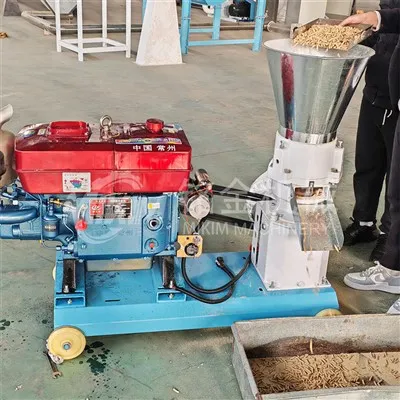
The poultry mash feed machine takes a "cost-effective" approach, making it particularly suitable for small and medium-sized aquaculture farmers. Its equipment price is 30%-40% cheaper than an extruder. A small pellet mill producing 200 jin (100 catties) of feed per hour can be bought for a few thousand yuan, while an extruder with the same output would cost at least 10,000 yuan. It also has advantages in energy consumption. The 12 kW pellet mill mentioned earlier consumes 12 kWh per hour. At an industrial electricity price of 1 yuan/kWh, the hourly electricity cost is only 12 yuan, saving 3 yuan compared to an extruder. Operating it for 5 hours a day saves 15 yuan, which adds up to over 5,000 yuan per year.
Moreover, dog food making machines are easy to operate, requiring no special training; two people can easily master them. Feeding, starting the machine, and changing the ring die are all very convenient. Farmers raising thousands of chickens can operate it themselves, saving the cost of hiring professional workers. However, its continuous operation capacity is not as high as that of an extruder; 4-5 hours of operation per day is more suitable. If it runs continuously for a long time, problems such as excessive wear of the pressure rollers and overheating of the motor can easily occur. But it is perfectly adequate for small and medium-sized farms. For example, raising 1,000 chickens requires 100 kilograms of feed per day, which can be completed in half an hour with a pellet mill, leaving the remaining time for other tasks. A farmer who raises 3,000 laying hens said that his pellet mill, which he bought three years ago, has only required two replacements of the pressure rollers and has not experienced any other problems. He calculated that his annual investment in feed equipment is more than 20,000 yuan less than the cost of buying finished feed.


about Us
We offer a one-year warranty on all machines. MIKIM's feed pellet mills, charcoal briquetting machines, and other equipment all come with a one-year warranty. During the warranty period, if any quality issues arise due to materials, design, or manufacturing defects, we will replace the damaged parts free of charge and perform repairs and adjustments. However, easily damaged parts are unlikely to be covered under the free warranty, thus ensuring stable operation of the equipment throughout its core lifespan.
On-site installation, commissioning, and technical guidance: For complex complete sets of equipment such as feed production lines and extruders, we will dispatch professional technicians to the customer's location to handle on-site installation and commissioning, ensuring the equipment can be smoothly integrated into the customer's production process and meet preset production standards. Our technicians will also visit regularly to resolve various technical malfunctions and provide long-term on-site guidance on equipment operation and routine maintenance.
Qualifications and Honors

Customer visit

FAQ
1. What is the price of the fish feed production machine?
The price ranges from approximately $5,500-$30,000
2. Do you provide maintenance services for your customers?
Yes, we offer comprehensive after-sales maintenance services to our customers.