


Differences Between Poultry Feed Production Machines And Floating Pellet Machines in Adapting To Animal Dietary Habits
Leave a message
content
The pellets produced by fish feed mills are designed to be "firm on the outside and soft on the inside, chewy but not gritty," perfectly suited to the feeding characteristics of fish. Fish have no teeth; they rely entirely on swallowing their food and digesting it through their intestines. If the pellets are too hard, they can scratch the digestive tract and cause infection; if they are too soft, they will fall apart before being swallowed, resulting in very little consumption. Extruders perfectly solve this problem through high-temperature puffing and precise conditioning: 80-90℃ steam fully softens the raw materials, gelatinizing the starch to form a viscous network. High-pressure extrusion then makes the pellet surface firm and smooth, while the interior, due to puffing, forms fine pores, giving it a soft, elastic feel like candy. This ensures that fish won't be scratched when swallowed and is easily digested and absorbed.
Furthermore, the puffing process enhances the natural aromas of the raw materials; for example, the fishy smell in fishmeal becomes more intense, strongly attracting fish and causing them to quickly gather and feed. Many mini fish feed machines are also equipped with oil spraying devices. When the pellets cool to around 40°C, a layer of fish oil or vegetable oil is automatically sprayed on them. This not only supplements unsaturated fatty acids but also makes the pellets smoother, further enhancing the fish's appetite. A grass carp farmer conducted a comparison and found that feed made by an extruder resulted in grass carp eating 30% faster and shortening their growth cycle by half a month compared to ordinary pellet feed.


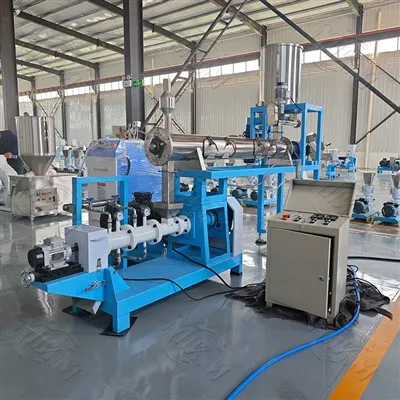
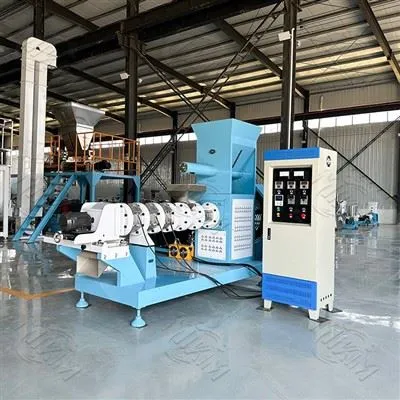
Pellets produced by poultry feed production machines are "crispy, easy to peck, and don't stick to their beaks," specifically designed for the hard beaks of chickens and ducks. Chickens and ducks' beaks are like small hammers, easily crushing the pellets. Furthermore, their gizzards can grind coarse feed, so the hardness of the pellets is not critical; in fact, the crisper the pellets, the easier they are to digest. The gap between the pressure rollers and the ring die in a pellet mill is larger than that in an extruder, resulting in lower extrusion pressure. After simple conditioning, the raw materials are compressed into pellets with low density, easily crumbling into fine powder with a gentle squeeze. Chickens and ducks peck at them effortlessly, and the pellets don't stick to their beaks.
This crunchy texture can also increase feed intake in poultry. Studies have shown that crunchy pellets can increase chickens' daily feed intake by 5%-8% compared to compacted pellets, and egg production in laying hens will also increase accordingly. However, feeding chickens compacted pellets made by an extruder presents problems: the chickens can't peck at them and can only circle around the pellets, either going hungry or wasting pellets after struggling to break them up; even if they do eat them, the compacted pellets increase the burden on their gizzard, leading to indigestion and a decrease in egg production. Similarly, feeding fish with soft pellets made by an Alfalfa pellet mill results in them crumbling into dust within a minute of being put into the water. The fish don't eat much, and the residue pollutes the water, causing an increase in ammonia nitrogen in the fishpond, which is counterproductive.


about Us
We offer a one-year warranty on all machines. MIKIM's feed pellet mills, charcoal briquetting machines, and other equipment all come with a one-year warranty. During the warranty period, if any quality issues arise due to materials, design, or manufacturing defects, we will replace the damaged parts free of charge and perform repairs and adjustments. However, easily damaged parts are unlikely to be covered under the free warranty, thus ensuring stable operation of the equipment throughout its core lifespan.
On-site installation, commissioning, and technical guidance: For complex complete sets of equipment such as feed production lines and extruders, we will dispatch professional technicians to the customer's location to handle on-site installation and commissioning, ensuring the equipment can be smoothly integrated into the customer's production process and meet preset production standards. Our technicians will also visit regularly to resolve various technical malfunctions and provide long-term on-site guidance on equipment operation and routine maintenance.
Qualifications and Honors

Customer visit


FAQ
1. What is the price of the fish feed making machine?
The price ranges from approximately $5,500-$30,000
2. Do you provide maintenance services for your customers?
Yes, we offer comprehensive after-sales maintenance services to our customers.


