

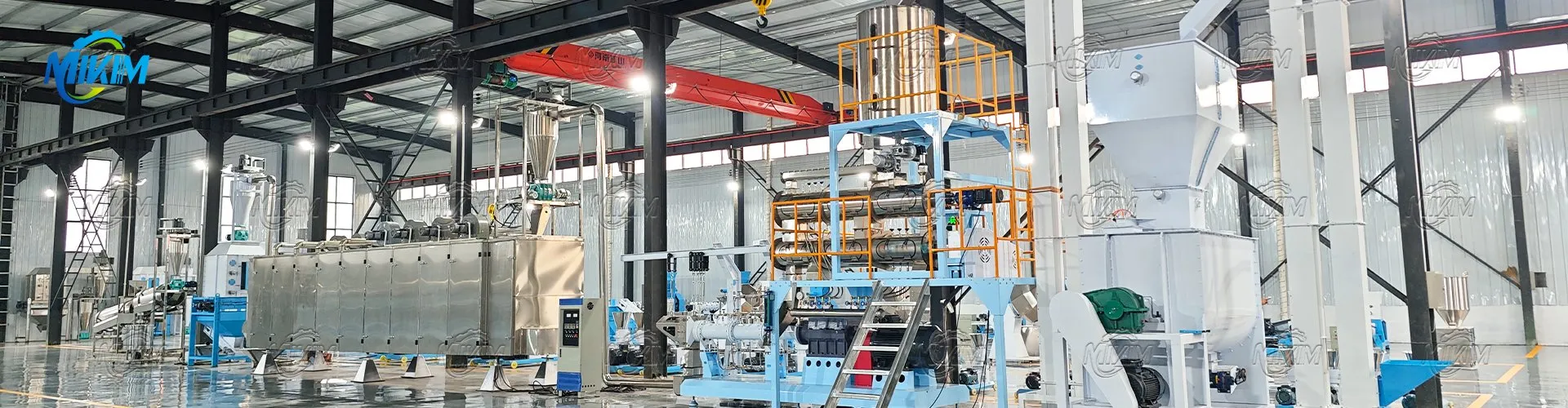
What Are The Structural Differences Between Ring Die And Flat Die Pellet Mills?
Leave a message
The core difference between ring die and flat die pellet mills lies in the structure of their extrusion systems, leading to differences in transmission methods, production capacity, and efficiency. These structural features determine their suitability for small-scale individual operations versus medium-to-large-scale production.
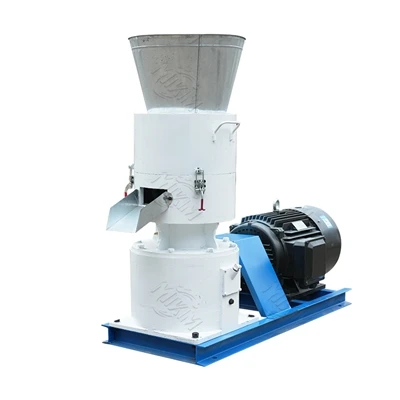
The structural differences in the core extrusion components are most significant. The flat die pellet mill's extrusion system consists of a flat die (disc-shaped mold) and pressure rollers. The flat die is stationary, while the pressure rollers rotate around its center. Raw materials enter from above and are extruded through the die holes on the flat die under the pressure of the rollers. The die holes in the flat die are evenly distributed, but its force-bearing area is relatively small, resulting in a relatively limited extrusion pressure, typically 2-4 MPa. Ring die pellet mills, on the other hand, use a ring-shaped die with evenly distributed die holes on its inner wall. The pressure rollers are installed inside the ring die. During operation, the ring die rotates at high speed, and the pressure rollers rotate passively. The raw material is extruded through the die holes under centrifugal force and pressure. The force-bearing area of the ring die is 3-5 times that of the flat die, and the extrusion pressure can reach 3-8 MPa, making it more suitable for processing raw materials with high coarse fiber content.
The structural differences in the transmission methods directly affect production capacity. Flat die pellet mills typically use a single motor and belt drive, transmitting power to the pressure roller shaft via the belt. This design is simple and easy to maintain, but its transmission efficiency is relatively low (approximately 85%), with a typical hourly output of 100-500 kg per unit, making it suitable for small-scale production. Ring die pellet mills, on the other hand, use gear drives or dual motor drives. Larger ring die mills often use gear reducers to directly drive the ring die, achieving a transmission efficiency of over 95%, capable of handling larger loads, and extending hourly output from 500 kg to over 2 tons, meeting the needs of medium- to large-scale production.
The feeding and discharging structures also differ. Flat die pellet mills have the feed inlet located at the top of the equipment, where raw materials fall naturally under gravity, which can easily lead to uneven feeding. Some units require a mixing feeder to assist with feeding. The discharge outlet is at the bottom of the equipment, where pellets fall directly, requiring a receiving device. Ring die pellet mills typically have the feed inlet located on the side, using a screw feeder for forced feeding, resulting in uniform and stable feeding. The discharge outlet is aligned with the tangent of the ring die, ensuring smooth pellet discharge, allowing direct connection to a conveyor belt for subsequent cooling.
The structural differences lead to different applicable scenarios: flat die pellet mills have a simple structure, low cost (about 10,000-30,000 yuan), and small footprint, making them suitable for small-scale farmers to produce concentrated feed or a small amount of roughage pellets; ring die pellet mills, although more expensive (30,000-100,000 yuan), have a large capacity and stable pellet quality, making them suitable for feed mills or large-scale farms to process coarse fiber raw materials such as straw and forage.


about Us
We offer:
One-Year Whole Machine Warranty Service
On-site Installation, Commissioning, and Technical Guidance
24/7 Online Technical Support
Qualifications and Honors

Customer visit

FAQ
1. What is the price of the poultry pellet machine?
The price ranges from approximately $2,500-$20,000
2. Do you provide maintenance services for your customers?
Yes, we offer comprehensive after-sales maintenance services to our customers.


