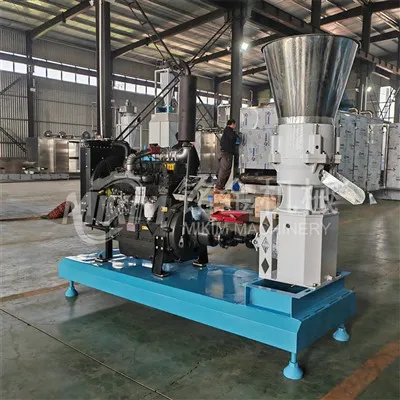
Why Can The Design Of An Animal Feed Pellet Production Line Improve Production Efficiency?
Leave a message
Pellet's machine production line design utilizes three core strategies-seamless process integration, precise equipment matching, and automation to minimize intervention-to completely resolve the efficiency bottlenecks of traditional single-machine production, achieving a multiplier increase in production efficiency.
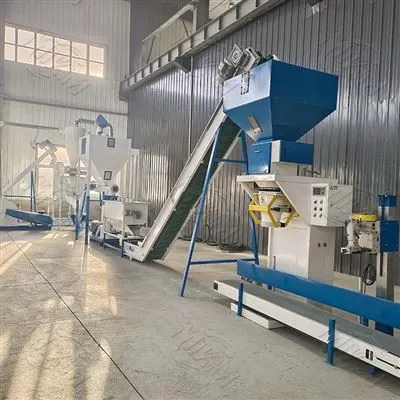
The streamlined design of the process integration is the foundation of this efficiency improvement. In traditional single-machine production, raw materials, after being crushed, need to be manually bagged and transported to the mixer, and then transported to the granulator after mixing. Each step involves loading and unloading waiting time, accounting for more than 40% of the total production time. The scientifically designed production line employs a closed conveying system of "pipelines + elevators," connecting crushing, mixing, granulation, and cooling equipment in sequence. From the moment raw materials enter the production line to the finished product output, no manual intervention is required. Taking a production line in Shanghai as an example, raw materials enter the crusher through an automatic feeding system, are then directly fed into the mixer through pipelines, and the mixed material is transported to the granulator by a bucket elevator. The entire process is tightly integrated, reducing waiting time to zero, and extending the continuous operating time of a single production line from the traditional 4 hours/day to 16 hours/day.
The precise matching design of equipment capacity avoids the "bottleneck effect." Before designing an animal feed production line, equipment selection is based on target output to ensure a tiered matching of capacity across all stages. For example, the capacity of the crusher is set to 1.2 times that of the mixer, and the capacity of the mixer is 1.1 times that of the pellet mill. This avoids raw material accumulation in upstream processes and prevents idle capacity in downstream processes. A fish feed production line in Jiangsu province, using this design, reduced pellet mill downtime from 30% due to insufficient crusher capacity to below 5%, increasing equipment utilization to over 90%. Simultaneously, the production line uses variable frequency motors to control the speed of each piece of equipment, allowing for flexible adjustments based on raw material characteristics and output requirements, avoiding idle waste and further improving efficiency.
The integrated design of the automated control system reduces manual operation time. The automatic animal feed production line is equipped with a PLC central control system. Operators can set parameters such as feed rate, crushing particle size, and mixing time via a touchscreen, and the system automatically controls the operation of each piece of equipment. Compared to the traditional single-machine operation requiring dedicated personnel, a 20-ton-per-day production line only requires 2-3 people to monitor, reducing labor costs by over 60%. In addition, the system has automatic alarm and fault diagnosis functions. When the equipment malfunctions, it will stop immediately and indicate the location of the fault, so as to avoid production delays due to fault diagnosis and further ensure production continuity.



about Us
We offer:
One-Year Whole Machine Warranty Service
On-site Installation, Commissioning, and Technical Guidance
24/7 Online Technical Support
Qualifications and Honors

Customer visit

FAQ
1. What is the price of the Chicken feed production line?
The price ranges from approximately $6,500-$20,000
2. Do you provide maintenance services for your customers?
Yes, we offer comprehensive after-sales maintenance services to our customers.