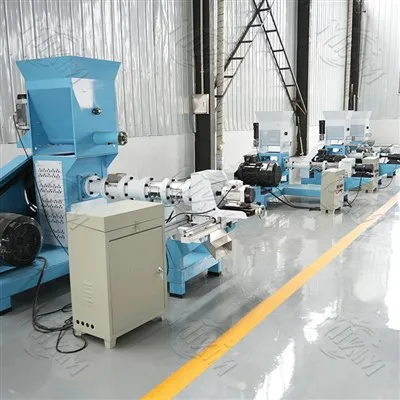
Wet Type Floating Fish Feed Extruder Machine Line (1-12 T/H)

Wet Type Floating Fish Feed Extruder Machine Line (1-12 T/H) suppliers

Wet Type Floating Fish Feed Extruder Machine Line (1-12 T/H) factory

Wet Type Floating Fish Feed Extruder Machine Line (1-12 T/H) best

Wet Type Floating Fish Feed Extruder Machine Line (1-12 T/H) high quality

Wet Type Floating Fish Feed Extruder Machine Line (1-12 T/H) price
Wet Type Floating Fish Feed Extruder Machine Line (1-12 T/H)
Complete turnkey wet Type floating fish feed pellet extruder machine line: crushing, mixing, extruding, drying, cooling, coating, packaging. Full-line solution for commercial aquafeed mills.
Description
Quick Answer
A wet Type floating fish food extruder machine cooks and expands starch-rich mixtures with steam and screw shear, producing floating pellets for tilapia, catfish, and koi. Unlike sinking ring die pellets, extruded feed stays buoyant on the surface. Mikim wet extruder lines run 1-12 t/h.
Key Takeaways
- ✓ Wet type means a steam jacket plus preconditioner for high cook and expansion.
- ✓ Complete floating aquafeed lines run 1-12 t/h.
- ✓ Stages: preconditioner, extruder, dryer and vacuum coater.
- ✓ Floating feed suits surface-feeding species; ring die makes sinking feed.
On This Page
- What Is a wet type fish feed pellet maker machine?
- How Extrusion Makes Feed Float
- What Components Are in a Wet Type Floating Fish Feed Extruder Line?
- Wet Type fish feed production equipment Specs
- Raw Materials and Recipes for a Wet Type Floating Fish Feed Pellet Extruder Machine
- Wet Type vs Dry Type Extruder - Which Line Fits?
- Making Floating, Slow-Sinking and Sinking Feed on One Line
- Recipe Formulation for Floating Aquafeed
- Drying, Vacuum Coating and Packaging the Feed
- Cost and Capacity of a Wet Extruder Line
- Troubleshooting Extrusion Faults
- Sink Rate and Feed Conversion in Aquafeed
- Crew, Training and Daily Start-Up
- Water, Steam and Utility Requirements
- Spare Parts and Consumables to Stock
- What a Wet Type Floating Fish Feed Extruder Costs to Run
- Related Extrusion and Pelletizing Equipment
- Frequently Asked Questions
01What Is a wet type fish feed pellet maker machine?
A wet type fish feed pellet maker machine cooks and expands aquafeed under steam pressure so the pellet floats.
- • This page keeps its original extruder type.
- • The "wet type" means a steam jacket and preconditioner add moisture and heat before the screw - gentler on starch and protein than a dry extruder, and the standard for 1-12 t/h commercial aquafeed.
Floating feed lets pond and cage farmers see what fish eat, cuts waste, and spreads feed across the surface. Species such as tilapia, catfish and salmonids are fed floating pellets.
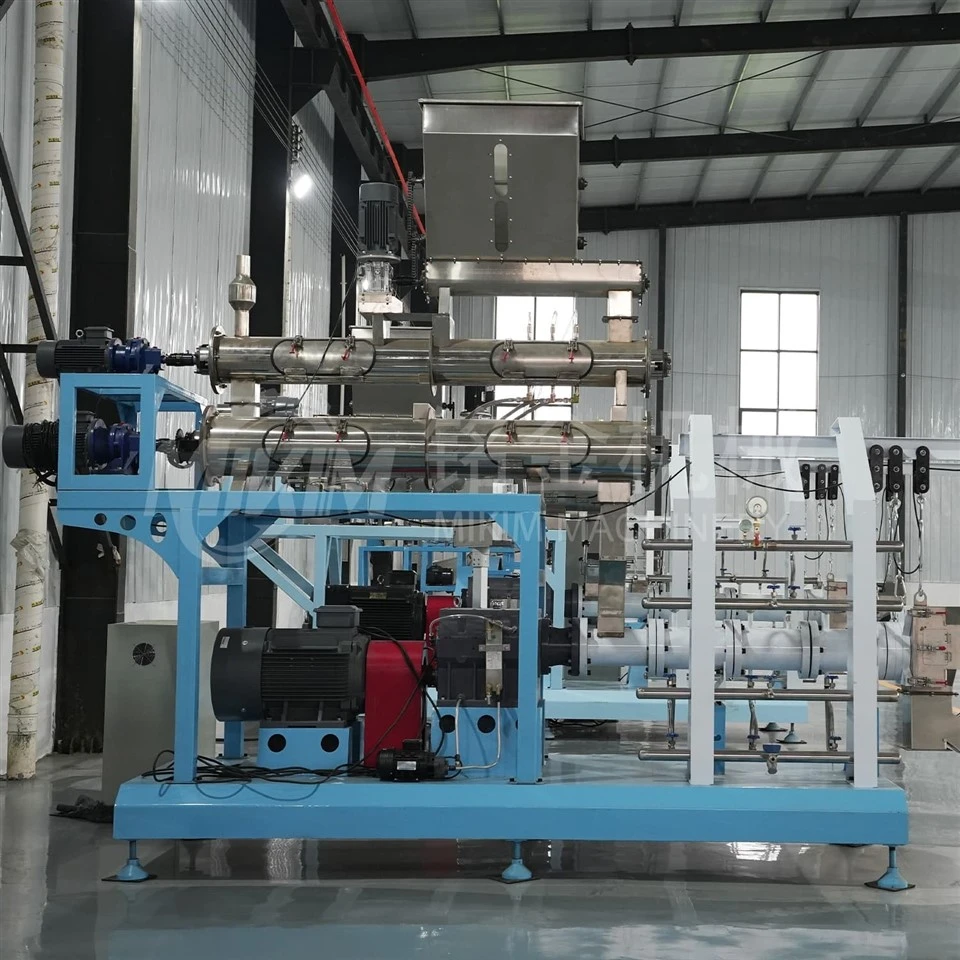
02How Extrusion Makes Feed Float
Cook, then expandMash is preconditioned with steam, then forced through the extruder screw at high shear. Pressure builds and, at the die, drops to atmosphere; trapped steam flashes and expands the pellet like popcorn. That cellular structure is what keeps it on the surface. |
Wet type vs dry typeWet type uses a steam jacket, so it cooks at lower screw temperature and holds more protein quality at higher throughput. Dry type skips steam and suits small 20-200 kg/h runs - see our small fish feed extruder for that scale. |
03What Components Are in a Wet Type Floating Fish Feed Extruder Line?
| Unit | Function | Why it matters |
|---|---|---|
| Preconditioner | Steam + mix | Gelatinises starch |
| Extruder | Cook & expand | Makes feed float |
| Dryer | Removes surface water | Stops mould |
| Coater | Adds oil/vitamins | Post-press, saves heat |
| Cooler | Stabilises | Bag-safe pellets |

04Wet Type fish feed production equipment Specs
| Model | Capacity (t/h) | Main power (kW) | Steam | Float time |
|---|---|---|---|---|
| DSP60 | 1-2 | 22 | Yes | >12 h |
| DSP70 | 2-4 | 37 | Yes | >12 h |
| DSP90 | 4-6 | 55 | Yes | >12 h |
| DSP120 | 6-9 | 110 | Yes | >12 h |
| DSP135 | 9-12 | 132 | Yes | >12 h |
Fat and vitamins are sprayed after extrusion, not before - the coater protects heat-sensitive additives that the cooking screw would destroy.
05Raw Materials and Recipes for a wet Type floating fish feed pellet extruder machine
Fishmeal, soybean meal, corn, wheat flour, rice bran, fish oil and premix. Grind fine, precondition, extrude, dry, coat and cool.

06Wet Type vs Dry Type fish feed extruder machine - Which Line Fits?
| Factor | Wet type (this line) | Dry type |
|---|---|---|
| Added water/steam | High - preconditioned mash | Low - relies on friction heat |
| Feed density control | Wide - floating to sinking | Narrow |
| Capacity | 1–12 t/h | 0.1–1 t/h |
| Pellet quality | High, uniform, oil-absorbing | Good for small runs |
| Best buyer | Commercial aquafeed plant | Farm or trial line |
| Cost | Higher | Lower |
Wet type extrusion adds water and steam before the barrel, which is what lets a single line swing between floating, slow-sinking and sinking feed by changing the die, the water rate and the barrel temperature.
- • Dry type extrusion makes its heat from friction alone and suits small, single-product operations.
- • Choose wet type when you sell into more than one species or sink-rate market.
07Making Floating, Slow-Sinking and Sinking Feed on One Line
The same wet extruder produces all three sink rates by moving three levers: moisture in the conditioner, barrel temperature, and die open area.
- • High moisture and high temperature expand the pellet into a light, floating feed; lower both and the pellet stays dense and sinks.
- • Vacuum coating then pulls oil and vitamins into the porous floating pellet after drying.
This flexibility is the reason a commercial aquafeed plant standardises on a wet line: one machine, several products, one spare-parts inventory.
08Recipe Formulation for Floating Aquafeed
Floating feed wants starch it can gelatinise - wheat, cassava or corn - plus a protein base of fishmeal, soybean meal and rapeseed meal.
- • Fat goes in after extrusion by vacuum coating, not in the barrel, because barrel fat stops the expansion the pellet needs to float.
- • Target 25–35% protein for grow-out feed and adjust the starch fraction until the pellet floats without a binder.
Keep a recipe card on the panel for every product you run. Once a floating feed works, the exact moisture, temperature and die combination is worth more than any written formula.
09Drying, Vacuum Coating and Packaging the Feed
An extruded floating pellet leaves the die soft and wet and must be dried to under 10% moisture before it will float reliably or keep in store.
- • A multi-pass dryer does this without cracking the pellet.
- • Vacuum coating then draws oil, vitamins and pigments into the porous surface, which is how you hit the fat spec floating feed is sold on.
Cool the coated pellet before bagging, and bag in breathable sacks. Fat-coated feed in a sealed damp sack is the classic route to rancidity.

10Cost and Capacity of a wet Type fish feed pellet production Line
A wet extrusion line is a system, not a machine: grinder, mixer, preconditioner, extruder, dryer, vacuum coater, cooler and packer.
- • Capacity of 1–12 t/h covers everything from a regional aquafeed mill to an export plant.
- • Because the line is modular, most buyers phase it - start at the low end of the range and add dryer and coater passes as the market grows.
Running cost is energy-heavy: drying and steam dominate the electricity and fuel bill, so thermal efficiency in the dryer is where the margin hides.
11Troubleshooting Extrusion Faults
| Symptom | Likely cause | Fix |
|---|---|---|
| Feed sinks that should float | Low starch or too little expansion | Raise starch; increase barrel temp |
| Pellet cracks in the dryer | Too fast a drying curve | Lower initial dryer temperature |
| Oil not absorbing | Pellet surface closed | Check vacuum coating level and pellet porosity |
| Surge in extruder amps | Unstable feed or moisture | Stabilise preconditioner and feeder |
| Colour drifts batch to batch | Inconsistent barrel temperature | Log and hold temperature setpoints |
12Sink Rate and Feed Conversion in Aquafeed
Sink rate is not a cosmetic choice; it decides how much of the feed the fish actually catch.
- • A pellet that sinks too fast is gone before mid-water species see it, and one that drifts too long dissolves before it is eaten.
- • Both waste feed and foul the water.
- • Match the sink rate to the species and the feeding method, then hold it consistent batch to batch, because fish adapt to a rhythm and a drifting pellet disrupts intake.
Consistent density is therefore a commercial spec, not a technical nicety. Log the moisture and temperature that produced a good batch and treat them as fixed setpoints.
13Crew, Training and Daily Start-Up
A wet extrusion line rewards a trained operator more than any other feed machine.
- • The daily routine is simple but unforgiving: warm the barrel, confirm water and steam, check the die and cutter, run a short purge, then open the feeder.
- • Skipping the warm-up cracks pellets and spikes amps.
Train at least two people per shift to read amps, moisture and pellet appearance, and keep a one-page start-up and shutdown checklist on the panel. Most extrusion downtime is a skipped step, not a broken part.
14Water, Steam and Utility Requirements
A wet extrusion line is a utility project as much as a machine purchase.
- • Budget for a boiler sized to the conditioner and barrel demand, a water supply with a flow meter on the preconditioner, and enough electrical capacity for extruder, dryer and coater running together.
- • Steam quality matters: wet, carry-over steam gives an inconsistent cook, so fit a separator and trap before the extruder.
Map the utility loads before you pour concrete. Retrofitting a boiler or a heavier cable into a finished building costs far more than planning it in from the start.
15Spare Parts and Consumables to Stock
An extrusion line stops for worn screws, dies and cutter blades far more often than for a failed motor.
- • Keep one spare screw, one die set and a set of cutter blades on the shelf, plus seals for the preconditioner and a spare temperature probe.
- • Consumables are inexpensive next to a lost production day, and having them on-site is what keeps a wet line running through a busy season.
16What a wet-type aquatic feed pellet extruder machine Costs to Run
Running cost for a wet Type Floating fish feed extruder machine is dominated by energy, not labour: steam generation and drying together account for most of the variable cost per tonne, with barrel heating and grinding behind them.
- • Two levers move it most - a well-insulated, multi-pass dryer that recovers heat, and a preconditioner tuned so the barrel does less of the cooking.
- • Measure kWh and fuel per tonne every shift and treat a rising trend as a maintenance signal, not an accounting one.
17Related Extrusion and Pelletizing Equipment
A full plant adds grinding and mixing via a feed pellet making line. For small-batch snacks on the same screw principle, see the small corn puff extruder.
Further reading: Feedipedia, the FAO-backed feed resource - ingredient data for floating aquafeed formulation
18Frequently Asked Questions
What does wet type mean on a floating fish feed pellet extruder machine?
A steam jacket and preconditioner cook the mash before the screw, protecting protein quality at 1-12 t/h commercial throughput. Dry type omits steam for small runs.
Why does extruded feed float?
Steam pressure flashes to atmosphere at the die, expanding the pellet like popcorn. The cellular structure is what keeps it on the water surface.
Do I need a dryer after the wet Type fish feed pellet extruder machine?
Yes. Extruded feed leaves hot and moist; the dryer stops surface mould and the cooler makes it bag-safe.
Can one line make both floating and sinking feed?
Floating comes from the extruder; sinking from a ring die mill. Run them as two streams - the extruder cannot make true sinking pellets.
When do I add fish oil?
After drying, in the coater. Spraying post-press protects heat-sensitive fat and vitamins the screw would otherwise break down.
Get a wet Type floating fish feed pellet maker machine Quote
Mikim wet type floating fish feed extruder lines run 1-12 t/h, with single-screw or twin-screw options and a complete pre-conditioning, extrusion, drying and coating train. Pellet sizes 0.5-12 mm, main power 75-250 kW, floating ratio of 95% and above. Send your recipe; we will return a sized quote in 24 hours.
Request a Wet Extruder Line Quote →Hot Tags
wet type floating fish feed extruderfloating fish feed extruder machineaquafeed extrusion linering die feed pellet millsmall fish feed extrudersmall corn puff extruderfeed pellet making linefloating fish feed extruder
Our factory



Hot Tags: Wet Type Floating Fish Feed Extruder Machine Line (1-12 T/H), China Wet Type Floating Fish Feed Extruder Machine Line (1-12 T/H) manufacturers, suppliers, factory, reliable fish pellet production machine, fish feed forming line, mini floating fish feed machine, fish feed forming machine, durable aquaculture feed production machine, fish feed maker machine
Send Inquiry
You Might Also Like