What are the advantages of a complete fish feed production line in terms of production efficiency?
Leave a message
In aquatic feed production, "efficiency" directly determines a company's production capacity and order delivery capability. If production line equipment is fragmented and poorly integrated, not only will the hourly production capacity be less than 1 ton, but frequent downtime for adjustments will also result in less than 8 hours of effective daily production time. A complete production line, through automated integration and precise control, can significantly improve efficiency, becoming a core support for cost reduction and efficiency improvement for aquatic feed companies.
Production line process
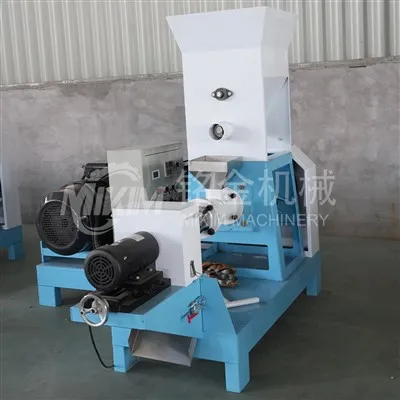
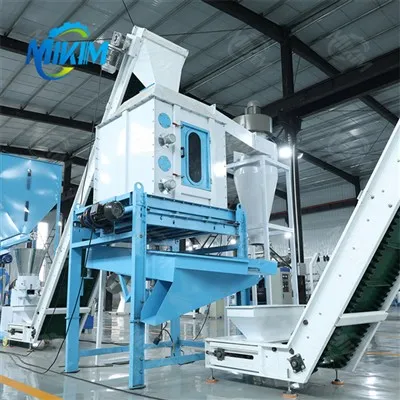
The core process is as follows: raw material receiving and cleaning → crushing (ultra-fine crushing) → ingredient mixing (precise metering + oil addition) → conditioning (steam conditioning + heat preservation) → granulation/expansion (aquatic-specific ring die/die head) → cooling (gradient cooling) → screening and grading (double-layer screen) → packaging (automatic weighing and sealing). The entire process is seamlessly connected with equipment, eliminating the need for frequent manual transfers.


Core Production Advantages
1. Automation reduces human intervention and enhances continuous production capacity.
A complete production line is equipped with automated conveying equipment (such as scraper conveyors and bucket elevators), eliminating the need for manual handling of raw materials from cleaning to packaging, thus avoiding production interruptions caused by low efficiency of manual handling (less than 500 kg per person per hour). Key equipment (such as crushers, mixers, and granulators) is controlled by a PLC system, with start-up, shutdown, and parameter adjustments performed synchronously. During continuous production, the hourly capacity can reach 2-5 tons (depending on the production line specifications), which is 3-5 times higher than that of scattered equipment.
2. Stable equipment performance reduces downtime.
The core equipment of a complete production line (such as ultrafine pulverizers and aquatic-specific pelletizers) uses wear-resistant materials (such as 38CrMoAlA screws and ring dies with a hardness of HRC58 or higher) and is equipped with a fault warning system (such as motor overload warnings and bearing temperature monitoring). This system can identify equipment abnormalities in advance (such as pulverizer screen damage and pelletizer ring die blockage), avoiding prolonged downtime due to sudden equipment failures. Data shows that the monthly downtime of a complete production line is typically ≤4 hours, while the monthly downtime of scattered equipment is often over 20 hours, increasing time utilization by 80%.
3. Precise parameter control reduces ineffective production.
The production line is equipped with online testing equipment (such as raw material moisture analyzers and particle size analyzers) to monitor the quality of raw materials and finished products in real time, avoiding rework of unqualified products due to parameter deviations (such as uneven particle size or insufficient conditioning temperature). For example, the ultrafine pulverizer uses frequency conversion to control the speed (2800-3200 r/min) to ensure that the particle size is stable at 80-120 mesh (required for aquatic feed), reducing the amount of rework caused by excessive particle size. The proportion of ineffective production has been reduced from 15% of scattered equipment to less than 3%, indirectly increasing effective production capacity.
Why Choose Us
MIKIM boasts extensive experience in poultry feed pellet production lines, significantly reducing the incidence of poultry diseases. Its equipment is not only widely used across various industries domestically but also exported to Southeast Asia, Europe, Africa, and South America, earning a high reputation internationally. This global presence not only demonstrates the adaptability and competitiveness of its products, but also demonstrates the company's experience in adapting to diverse market standards and logistics conditions, enabling it to provide a stable supply chain for its overseas customers. Whether serving large domestic farms or cross-border feed companies, MIKIM can leverage its global service network to ensure a consistent, high-quality experience.
For more information on process flow design, equipment layout, factory construction plans, individual equipment pricing, or turnkey project proposals, please feel free to contact us!!!
FAQ
1. What is the price of the fish floating meal production line?
The price ranges from approximately $8,000-$55,000
2. Do you provide maintenance services for your customers?
Yes, we offer comprehensive after-sales maintenance services to our customers.