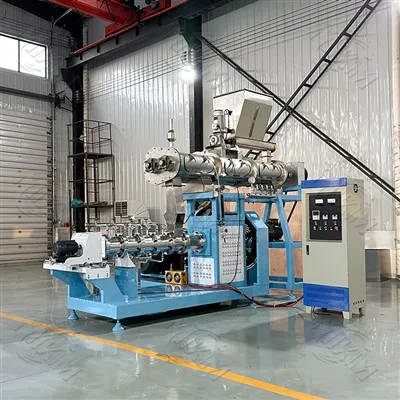
What are the systematic troubleshooting and standardized handling methods for common faults in pet food extruder machines?
Leave a message
Step 1: Safety Power-Off Inspection. Regardless of the type of feeder, the power must be disconnected before troubleshooting to ensure personal safety. For household screw pet feed extruders, remove the batteries; for industrial feeders, disconnect the main power supply and display a "Under Repair" sign. Then manually operate the rotating parts (feeding disc, feed rod, etc.) to determine if there is any mechanical obstruction-easy rotation indicates normal operation; jamming or inability to rotate indicates a mechanical malfunction.
Step 2: Detailed Troubleshooting of Pet Pellet Making Machine Mechanical Faults. The core causes of mechanical obstruction include raw material jamming, component wear, and foreign object blockage. For raw material jamming, clean the feed hopper of any residue and break up any clumps; for component wear (such as damaged bearings or poor gear meshing), replace the corresponding parts, ensuring size compatibility during replacement; for foreign object blockage, open the inspection port and remove the foreign object (such as pet hair, poultry feathers, or aquatic plants from aquaculture). For linked feeding lines, focus on checking the transmission connections; loose belts or detached chains can be fixed by retightening or reinstalling.
Step 3: Electrical Fault System Detection. First, check the power supply line. Use a multimeter to check if the voltage is normal and if the line is continuous. Then check the motor. If the motor is unresponsive, check the winding resistance (normal range is usually tens of ohms). Abnormal resistance indicates the motor is burnt out. If the motor makes abnormal noise but does not turn, it may be due to a damaged starting capacitor (single-phase motor) or a faulty contactor (three-phase motor). Replace the corresponding parts. For intelligent pet food pellet making machines, check the control module and sensors. If the timing module is faulty, restore factory settings. If the sensor is faulty, clean or replace it.
Step 4: Trial Run and Confirmation. After troubleshooting, run the machine unloaded for 5 minutes to observe if the rotating parts rotate smoothly and if the motor overheats. Then load feed and run the machine to check if the feeding amount is uniform. If there are no abnormalities, normal use can be resumed. Simultaneously, establish a fault record log, detailing the fault location, cause, and handling method to provide data support for subsequent prevention.
Related equipment


about Us
Customer visit

Certificate of Honor

FAQ
1. What is the price of the pet feed maker machine?
The price ranges from approximately $3,500-$55,000
2. Do you provide maintenance services for your customers?
Yes, we offer comprehensive after-sales maintenance services to our customers.